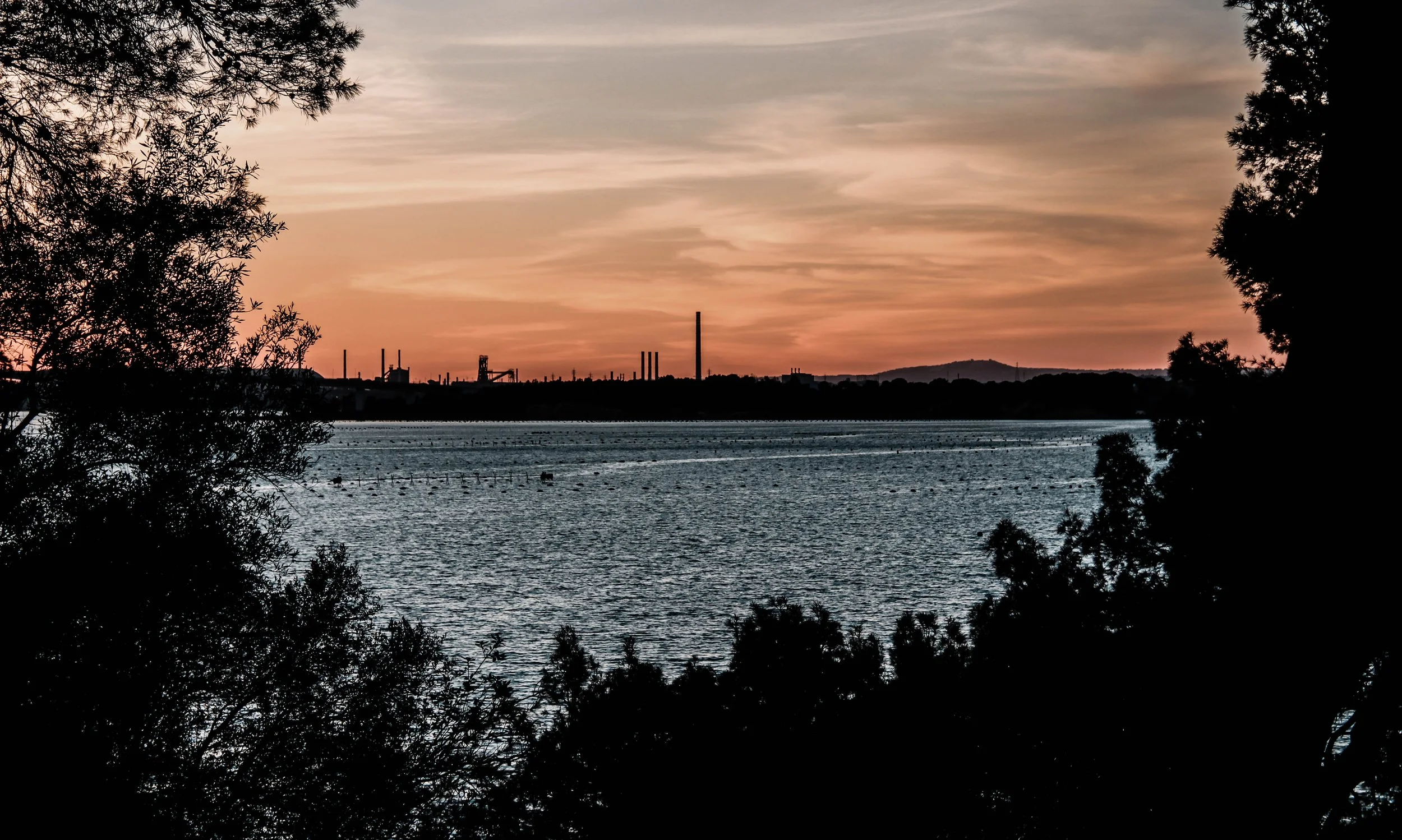
Why We Photograph: Between Control and Surrender
Photography is often described as a way to capture reality, but perhaps it would be more honest to say that photography is an attempt to negotiate with reality. Between what we want to see and what the world is willing to give us, there is a fragile space, and it is in that space that photography happens. We choose the lens, the framing, the moment, and yet something always escapes us. Light changes, people move, weather shifts, and meaning transforms. In this constant tension between intention and accident, between control and surrender, photography finds its most authentic voice.
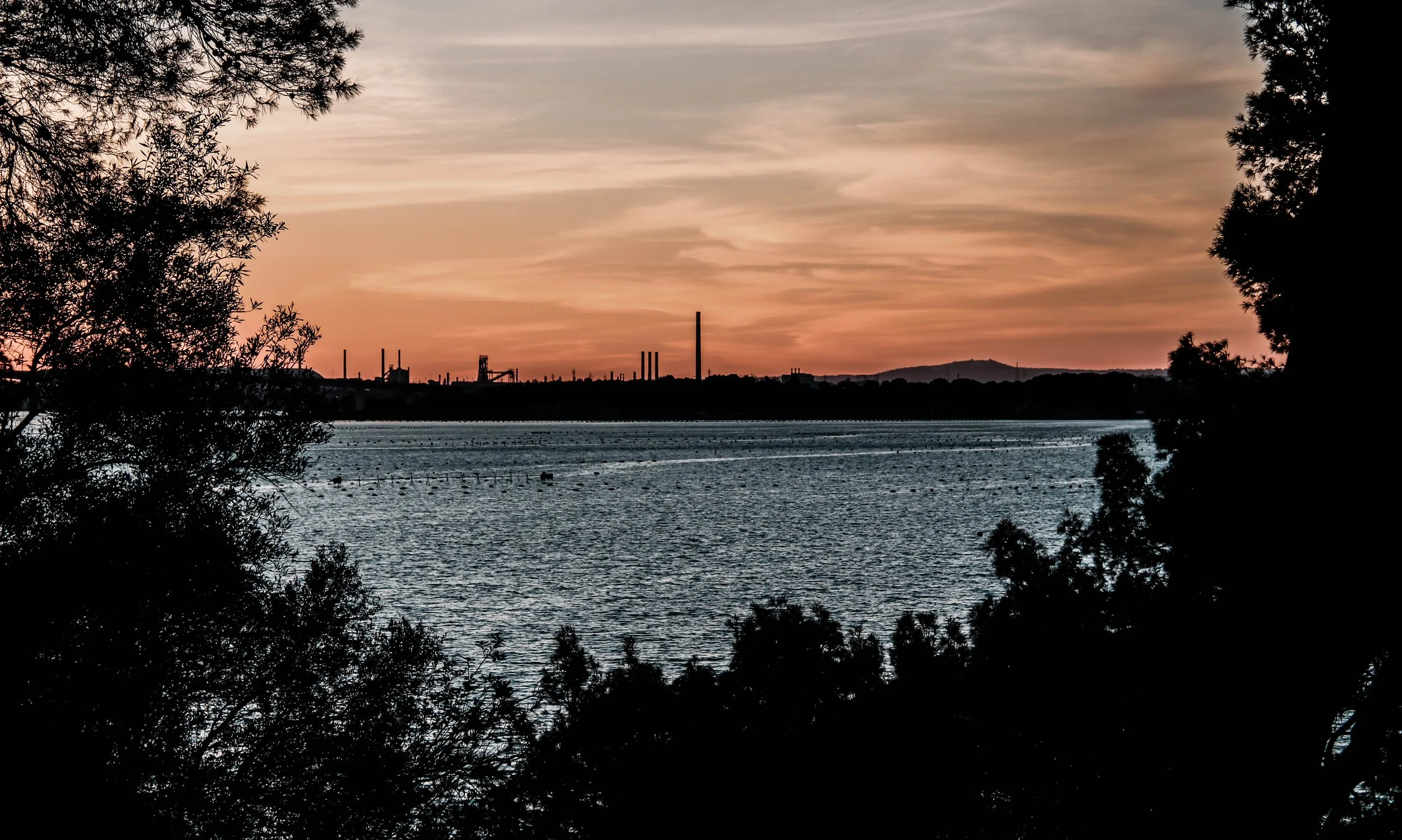
Photography is often described as a way to capture reality, but perhaps it would be more honest to say that photography is an attempt to negotiate with reality. Between what we want to see and what the world is willing to give us, there is a fragile space, and it is in that space that photography happens. We choose the lens, the framing, the moment, and yet something always escapes us. Light changes, people move, weather shifts, and meaning transforms. In this constant tension between intention and accident, between control and surrender, photography finds its most authentic voice.
From a technical point of view, photography is built on control. We control exposure, focus, composition, color, depth of field and perspective. We study rules, we learn a grammar, we refine technique. All of this is necessary, but it is not sufficient. No matter how precise our preparation is, the world does not follow our plans. Even in a studio, with artificial lights and fixed subjects, something unpredictable always enters the frame: a reflection, a gesture, a shadow, a hesitation. Outside, in streets, landscapes and human encounters, control becomes even more fragile, and perhaps that is exactly the point. As Henri Cartier-Bresson famously said, photography is an immediate reaction, and that immediacy means that the photograph is born in a fraction of a second that never fully belongs to us.
At some point, every photographer learns that the image does not belong entirely to them. You can wait, you can search, you can prepare, but when the moment arrives you must accept what is there, not what you imagined. This is where surrender begins. Surrender is not weakness, it is attention. It is the ability to recognize that reality has its own rhythm, its own intentions, its own mysteries. When we surrender, we stop forcing meaning onto the scene and we start listening instead. Often, what we receive is richer, more complex and more alive than what we had planned. In this sense, photography becomes less about taking and more about receiving, less about conquering and more about encountering.
We all know the difference between a technically perfect image and an image that feels alive. The first can impress, the second can move. That difference does not come from resolution, sharpness or equipment. It comes from the presence of something that cannot be fully controlled: emotion, tension, silence, contradiction. An image feels alive when it carries a trace of uncertainty, when it suggests more than it explains, when it leaves space for the viewer to enter. Roland Barthes called this the punctum, the detail that wounds, that disturbs, that breaks the surface of the image. You cannot plan a punctum, you can only be open to it.
Too often we think of photography as an act of capture, as if we were taking something away from the world. But capture implies possession, and photography in its deepest form is not about possession, it is about dialogue. A dialogue between the inner world and the outer world, between memory and presence, between intention and chance. When that dialogue is absent, the image may still be correct, but it will rarely be meaningful. Meaning is not imposed, it emerges, and it emerges precisely in the space where we accept that we are not fully in charge.
When photography becomes a physical object, a print, a book, an exhibition, the question of control becomes even more complex. A print freezes an instant and gives it weight, duration and material presence. It says that this moment deserves to stay. But even then, interpretation remains open. The same image will live differently in different homes, under different lights and within different personal histories. Once the photograph leaves the author’s hands, it becomes part of someone else’s story, and this too requires surrender. Perhaps this is why choosing which images deserve to become prints is such a delicate act. Not every photograph wants to be permanent, not every image is meant to inhabit walls and rooms. Some images belong to the flow, others ask to stay. Learning to listen to that difference is part of the photographer’s responsibility.
There is a dangerous myth in photography that mastery comes from eliminating uncertainty. In reality, mastery often comes from learning how to stay present inside uncertainty. Technique gives us tools, but vulnerability gives us access. It takes courage to accept that we do not always know what we are looking for and that sometimes we discover it only after we have pressed the shutter. In this sense, photography is not only a visual practice, it is also an emotional and philosophical one. It teaches patience, humility and attention, and perhaps more than anything else, it teaches us to tolerate not knowing.
So why do we keep photographing if we cannot fully control the outcome? Because in that fragile balance between control and surrender, something true can appear. Because photography allows us to meet the world halfway, not as masters and not as passive observers, but as participants. Because every photograph is, in its own way, a small act of trust: trust that what is happening matters, trust that this fraction of time is worth remembering, trust that meaning can arise even when we do not fully understand it. In the end, photography may not be about freezing life. It may be about learning how to be present while life moves, and accepting, again and again, that some of the most beautiful images are not the ones we planned, but the ones we were humble enough to receive.
If this image resonates with your space, you can explore the full collection.
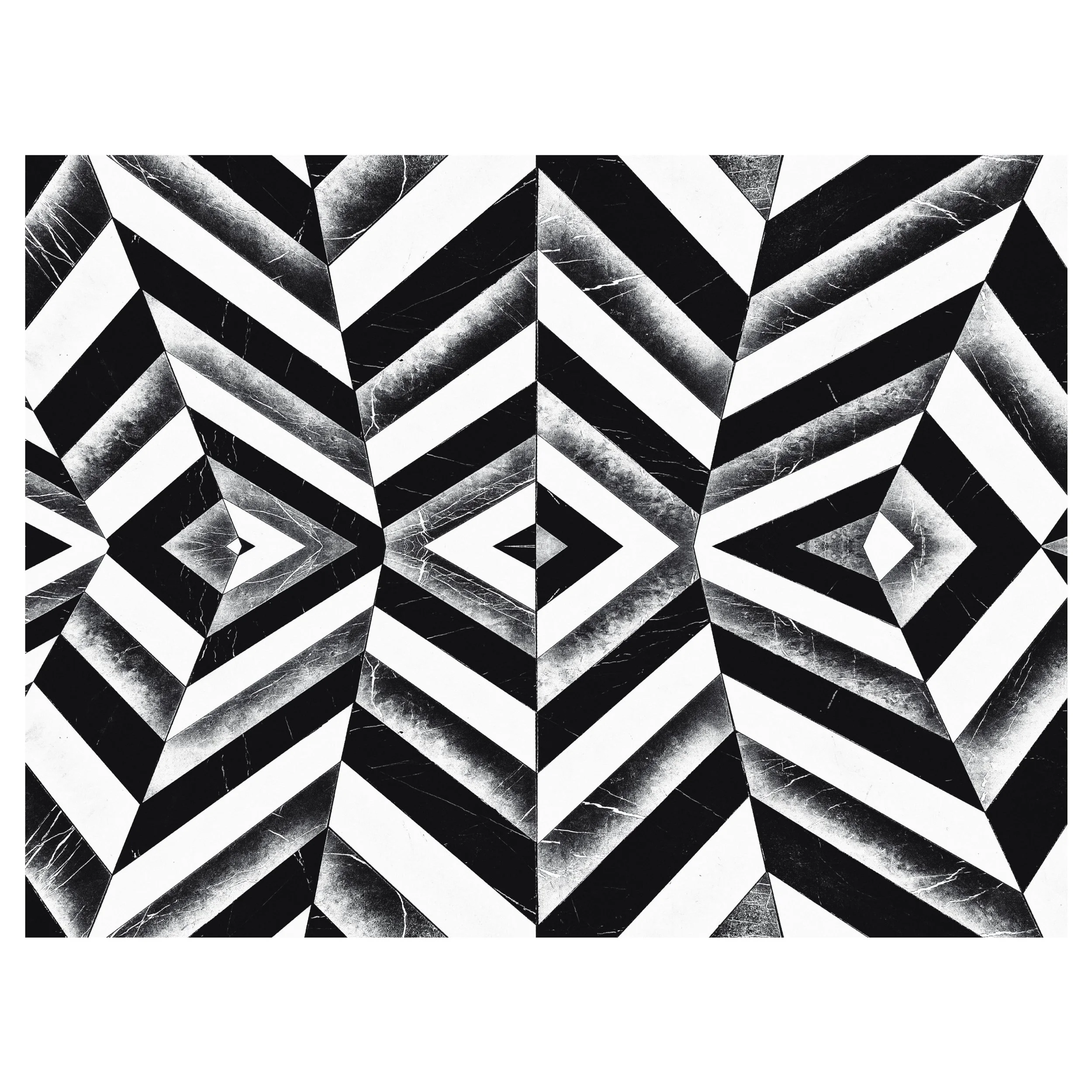
Photography Does Not Exist. There Are Many Photographies
Saying that photography does not exist may sound provocative.
In reality, it is an attempt to clarify a long-standing misunderstanding that has accompanied this medium since its origins: the idea that photography is a single, homogeneous territory governed by universal rules.
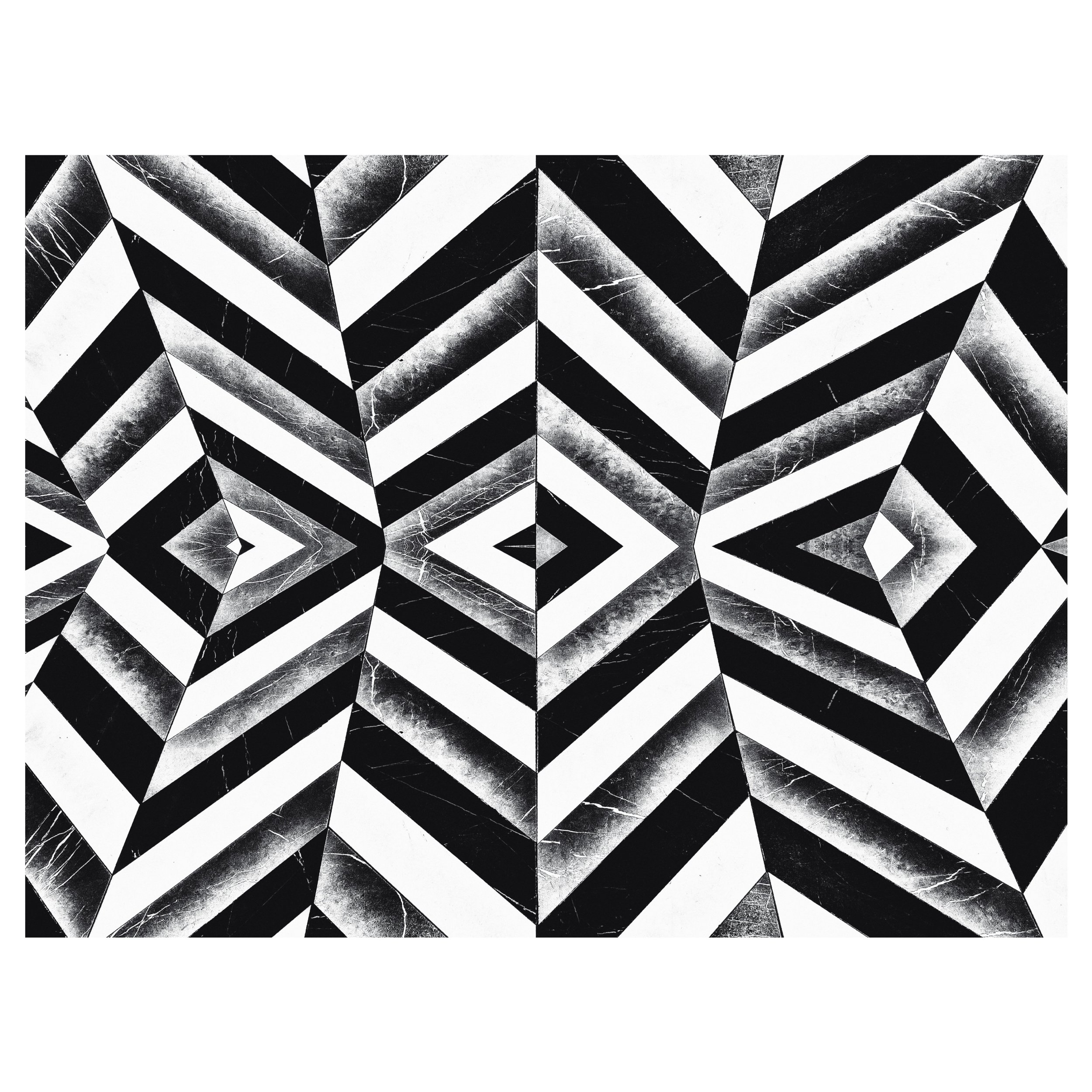
Saying that photography does not exist may sound provocative.
In reality, it is an attempt to clarify a long-standing misunderstanding that has accompanied this medium since its origins: the idea that photography is a single, homogeneous territory governed by universal rules.
Photography is, instead, a collection of different languages, each with its own purposes, responsibilities, and grammars. Speaking of photography in the singular is convenient in everyday language, but deeply misleading from a cultural standpoint.
Just as there is no single form of writing — only novels, essays, poetry, journalism — and no single cinema — only documentary, fiction, experimental film — in the same way photography does not exist as a singular entity. What exists are multiple photographies.
One Word, Too Many Meanings
Etymologically, photography means “writing with light.”
It is an elegant and poetic definition, but an incomplete one. Writing with light does not explain how, why, for whom, or according to which rules.
We use the same word to describe a wedding photograph, a medical X-ray, an advertising image, a war reportage, or a conceptual artwork shown in a gallery. These practices have little in common beyond the tool itself.
The real problem arises when we assume that all photographs should be judged by the same criteria. That is where confusion begins.
Photographic Genres as Languages
Each photographic genre is a system of shared conventions, shaped by a specific function.
Reportage photography exists to bear witness. Its grammar values clarity, narrative coherence, and contextual integrity. Excessive aestheticization or staged ambiguity can undermine its purpose.
Advertising photography, on the other hand, exists to persuade. Manipulation is not an ethical issue here, but a legitimate tool. Light, composition, color, and post-production are all carefully controlled.
Fashion photography operates within the realm of imagination and aspiration. Artifice is not concealed — it is openly embraced.
Conceptual photography allows itself ambiguity, opacity, and complexity. It does not need to explain; it needs to question.
Judging all these practices by the same standards means failing to understand the language itself.
The Fallacy of Aesthetic Judgment
One of the most evident side effects of social media is the flattening of critical judgment. Everything is reduced to I like it or I don’t like it, regardless of intention or context.
Saying “I don’t like” a documentary photograph because it is uncomfortable is like criticizing a medical report for lacking elegance.
Likewise, expecting documentary truth from conceptual photography is a misunderstanding.
The right question is not Is it beautiful?
But rather: Does it work according to its purpose?
Photography and Responsibility
This distinction is not merely theoretical — it is ethical.
In reportage and photojournalism, the decision of what to include and exclude from the frame can radically alter the meaning of a story. Photography becomes a position, not a neutral act.
In other contexts — still life, artistic, or conceptual photography — responsibility shifts from reality to conceptual coherence.
Confusing these levels leads to misplaced accusations or, conversely, to superficiality where rigor is required.
The Myth of Objectivity
Photography is often perceived as an objective record of reality. In truth, every photograph is a choice: of time, space, point of view, and language.
There is no innocent photograph.
Even the simplest image is shaped by intention, whether conscious or not.
What differentiates genres is not the presence or absence of intention, but how it is controlled, declared, or amplified.
When Photography Begins to Make Sense
Many photographers go through a phase of confusion, searching for the photography, the style, the definition. But it is often only when one accepts that photography is not a single entity that a meaningful direction emerges.
Choosing a language also means excluding others.
And exclusion is not a limitation — it is a stance.
Understanding which photography one is practicing — and which one is not — is an act of maturity.
Photography does not exist as a monolithic entity.
What exists are different photographies, often incompatible with one another, yet all legitimate when coherent with their intent.
Accepting this plurality means abandoning absolute definitions and working with greater awareness.
It means looking at images with less naivety.
And above all, it means photographing while knowing why you are doing it.
Everything else can remain outside the frame.
If this visual language speaks to your space, you can explore more works.
Can Fine Art Photography Take a Pause?
We live in a time that does not tolerate emptiness. Any unoccupied space is perceived as a lack, any silence as a mistake, any pause as a weakness. In the world of communication — and particularly in the world of photography — absence is often read as disinterest, inactivity, loss of relevance. If you don’t post, you don’t exist. If you don’t show, you are disappearing. If you stop, someone else will overtake you. But is this really true? And above all: does this constant race for attention benefit fine art photography? Does it nurture artistic research, vision, depth?
Attention, Silence, and Time in Artistic Research
We live in a time that does not tolerate emptiness. Any unoccupied space is perceived as a lack, any silence as a mistake, any pause as a weakness. In the world of communication — and particularly in the world of photography — absence is often read as disinterest, inactivity, loss of relevance. If you don’t post, you don’t exist. If you don’t show, you are disappearing. If you stop, someone else will overtake you. But is this really true? And above all: does this constant race for attention benefit fine art photography? Does it nurture artistic research, vision, depth?
Fine art photography, by its very nature, belongs to a different time. It is not always immediate, it is not necessarily reactive, and it does not inherently respond to the urgency of the present moment. It is made of observation, sedimentation, returns, second thoughts. It is made of moments in which, on the surface, nothing seems to happen, yet everything is quietly preparing itself. And still, today more than ever, fine art photography is immersed in an ecosystem that rewards visible continuity, constant presence, uninterrupted production of content. An ecosystem that often confuses the creative act with the communicative act, and that tends to measure the value of a work through the frequency of its appearance.
The question therefore becomes unavoidable: can fine art photography afford to take a pause? Or, to put it more honestly, can it afford not to be constantly visible?
For many, the answer seems obvious. No, it cannot. We live in the age of attention, and attention is a scarce resource. If you don’t cultivate it daily, you lose it. If you don’t feed the algorithm, the algorithm forgets you. If you don’t continuously offer something to the flow, the flow expels you. This reasoning has become so pervasive that it feels like a natural law, something inevitable. Yet it is a relatively recent cultural construction, not an absolute truth. It works very well for certain fields — marketing, entertainment, commercial communication — but becomes problematic when applied indiscriminately to artistic research.
Because art, and fine art photography in particular, is not born to occupy space, but to create meaning. It is not born to be seen immediately, but to be seen in the right way. It is not born to provide answers, but to raise questions. And questions need time to mature. They need silence. They need pauses.
There is a substantial difference between being present and being constantly exposed. Presence is a conscious choice; constant exposure is often a reaction. The first implies intention, the second fear. Fear of being forgotten, of losing ground, of no longer counting if one stops speaking for a moment. If left unexamined, this fear risks becoming the true engine of creative work. And when fear drives research, depth rarely survives.
Fine art photography should not arise from the need for attention, but from an inner necessity. From something that demands form, not an audience. From an urgency that does not coincide with the urgency of the feed. When research is instead bent to the rhythms of visibility, something subtle yet dangerous happens: the work stops questioning and starts pleasing. Not always in an obvious or vulgar way. Often in a refined, almost imperceptible one. Photographs are made while already thinking about how they will be received, where they will be published, what reaction they will provoke. Photography is no longer solely an act of exploration; it becomes — sometimes primarily — a strategic act.
This is not a call to demonize communication or social media. That would be naïve and detached from reality. Communication has always been part of an artist’s work, albeit in different forms. But there is a profound difference between using communication as an extension of one’s work and using one’s work as fuel for communication. In the first case, research guides presence; in the second, presence guides research. Over time, this inversion impoverishes both the work and the gaze behind it.
In this context, a pause is not a romantic retreat or an escape from the world. It is not the heroic gesture of withdrawing from the system in the name of purity. It is something far more simple and far more radical: a space of recalibration. A time in which the artist stops producing in order to be seen and returns to looking in order to understand. A time in which images do not necessarily have to go out, but are allowed to remain. To be revisited, questioned, rearranged, discarded. A time in which attention shifts from the outside to the inside.
In these moments of apparent inactivity, the most important work often happens. It is there that directions become clearer, recurring obsessions emerge, and one begins to understand what is worth pursuing and what is merely noise. It is there that photography stops being an automatic response and becomes a choice again. Yet none of this is measurable, visible, or shareable in real time. And for this reason, within the logic of continuous attention, it does not count.
And yet, if we look at the history of photography and art more broadly, the works that endure are rarely born from incessant, anxious production. They emerge from long, uneven paths, marked by accelerations and slowdowns, fertile periods and phases of apparent stillness. They are created by artists who knew how to step aside, at least partially, from the tyranny of immediacy. Not out of disdain for the public, but out of respect for the work itself.
There is also a more human, less theoretical aspect that deserves attention. The continuous pursuit of attention is exhausting. It requires constant emotional availability, perpetual mental alertness, and a readiness to expose oneself that leaves little room for fragility. Over time, this wears down not only the artist, but also the relationship with the work. Photography risks becoming a duty, a performance, a response to an external demand rather than an internal necessity. And when this happens, the gaze itself hardens.
Taking a pause, then, is not an act of weakness, but of care. Care for one’s gaze, one’s time, one’s relationship with images. It is a way of remembering that the value of a photograph does not depend on the speed with which it is shown, but on the depth with which it has been thought. That not everything needs to be said immediately, not everything needs to be seen now, not everything must be consumed the moment it is created.
Of course, a pause is not total absence, nor absolute isolation. It is modulation. A conscious slowing down. It is the ability to choose when to speak and when to remain silent, when to show and when to withhold. It is the refusal of automatism. In this sense, the pause becomes an integral part of research, not its negation. It becomes an active time, even if invisible.
Perhaps the most honest question is not whether fine art photography can take a pause, but whether it can afford not to. Whether it can truly grow, deepen, and mature while remaining constantly under the spotlight. Whether it can continue to question the world without granting itself the time to question itself. The answer is not the same for everyone, nor should it be. Every path is different, every balance personal. But ignoring the question altogether means passively accepting a logic that is not neutral, and that often works against the complexity of artistic work.
In an era that constantly demands presence, choosing, at times, to stop is a countercultural gesture. Not to disappear, but to return with greater awareness. Not to withdraw from the gaze of others, but to rediscover one’s own. Fine art photography, after all, is not only a matter of images produced, but of a gaze cultivated. And the gaze, like any living thing, needs room to breathe.
Perhaps the real challenge today is not to keep attention perpetually high, but to learn not to confuse attention with value.
If this visual language speaks to your space, you can explore more works.
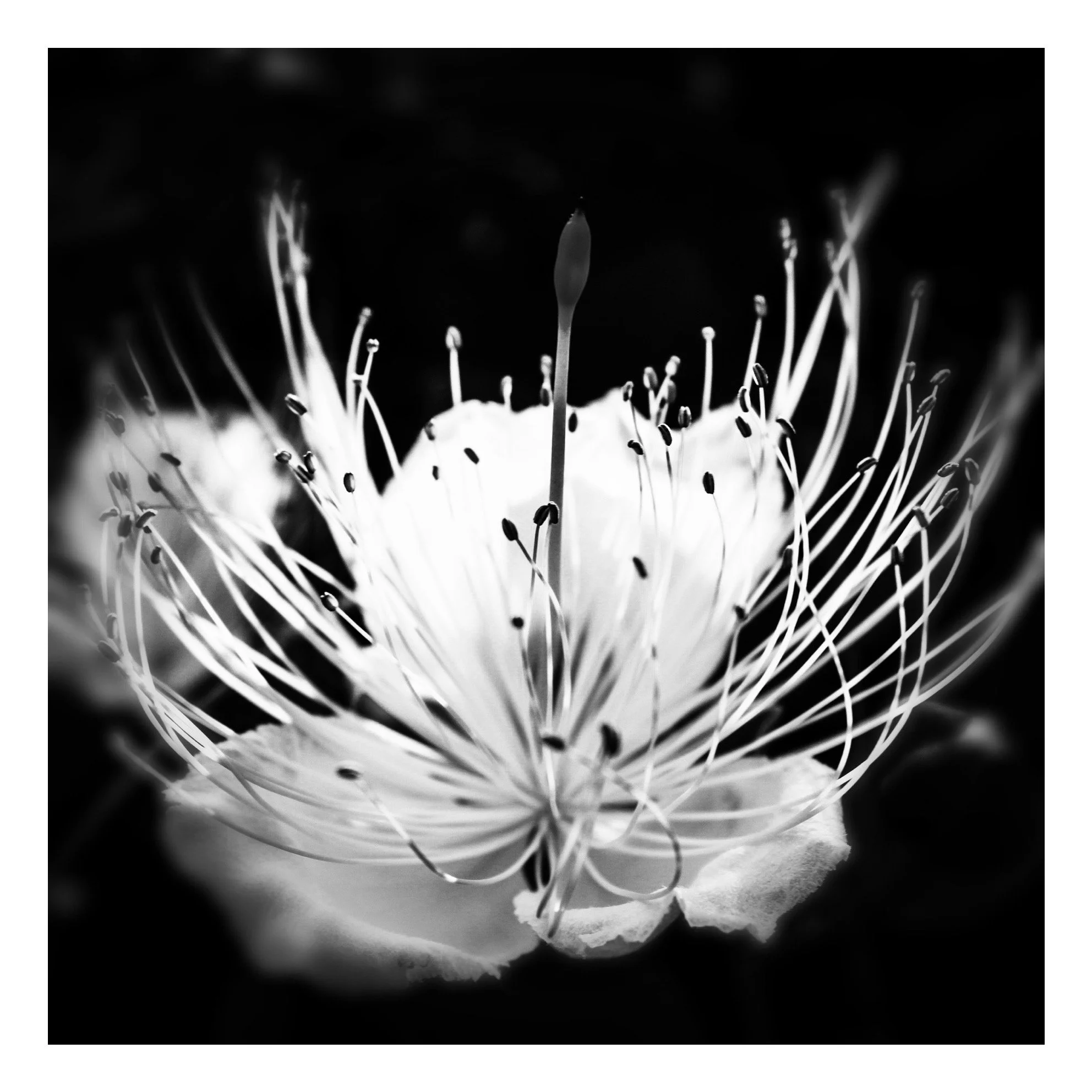
Black and White Photography: A Language, Not a Shortcut
Black and white photography has always carried a particular weight. It feels serious, timeless, cultured. It evokes history, authorship, intention. Perhaps for this reason, it is often perceived as a shortcut to depth: remove color, add gravitas. And yet, this perception is both true and dangerously misleading.
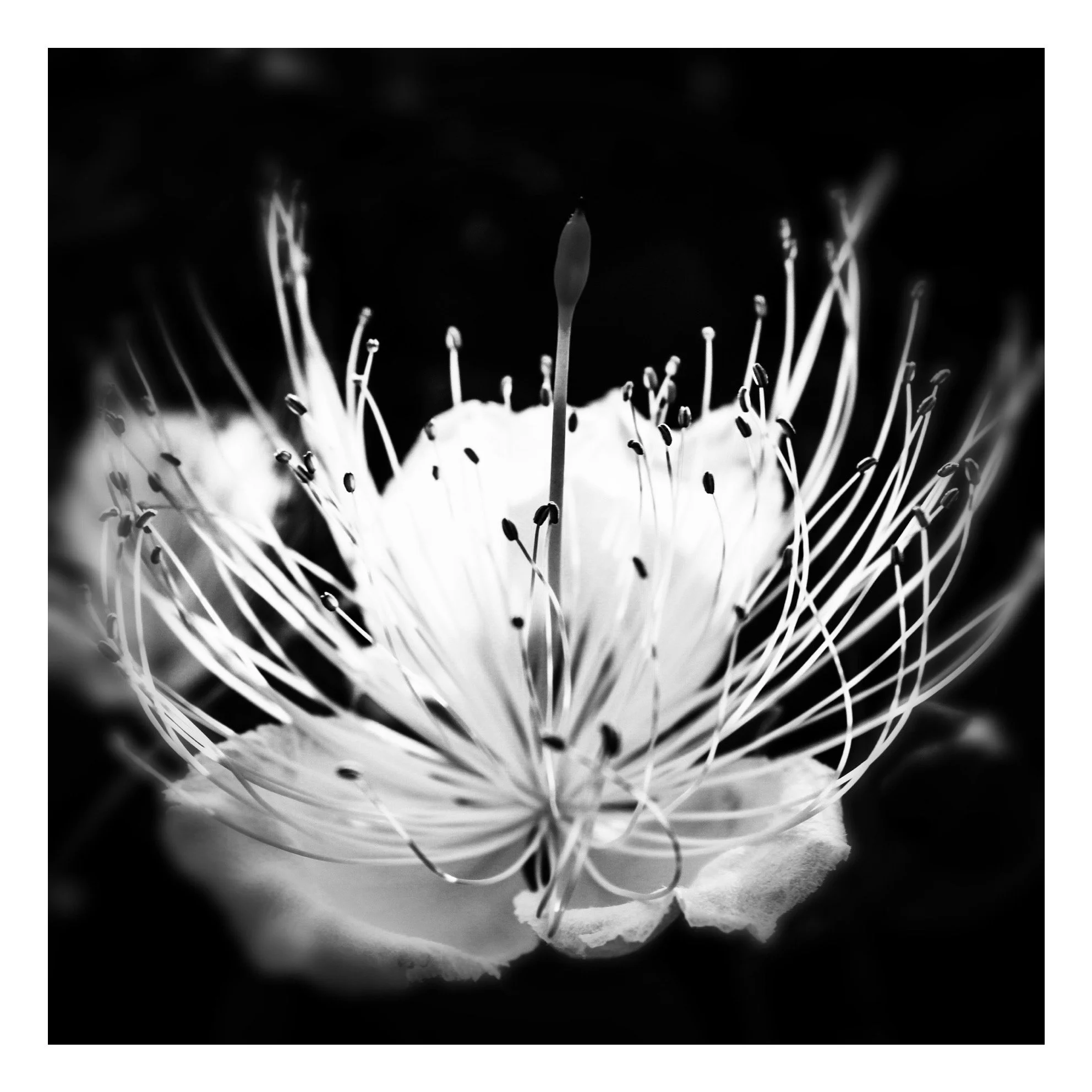
Black and white photography has always carried a particular weight. It feels serious, timeless, cultured. It evokes history, authorship, intention. Perhaps for this reason, it is often perceived as a shortcut to depth: remove color, add gravitas. And yet, this perception is both true and dangerously misleading.
Used with awareness, black and white is one of the most powerful visual languages available to photography. Used without it, it risks becoming a cosmetic gesture — a way to elevate images that struggle to stand on their own in color. The question, then, is not whether black and white is “better” than color, but why we choose it. And what kind of black and white we are actually using.
At its best, black and white is not subtraction but transformation. It does not merely remove color; it reorganizes vision. It asks the photographer to think in terms of light rather than hue, structure rather than surface, rhythm rather than decoration. When color disappears, relationships become visible: between forms, between tones, between presences in space. There is no chromatic distraction to rely on. Everything must hold together through composition, contrast, and intention.
This is why black and white demands more, not less. It is unforgiving. Weak light becomes flat. Poor composition becomes obvious. Hesitant framing loses its alibi. When the image works, it does so because the photographer has embraced the discipline of seeing differently, not because something has been hidden.
And yet, in contemporary practice, black and white is often used precisely as a hiding place. Many images are converted to monochrome not because the photographer saw the scene in black and white, but because color exposed its limitations. Unbalanced palettes, unpleasant hues, visual noise — all softened by the elegance of grayscale. In these cases, black and white becomes a form of visual makeup: tasteful, flattering, but ultimately superficial.
This is not a moral failure, but it is an aesthetic one. The problem is not experimentation, but confusion between language and effect. A true black and white photograph is conceived as such from the beginning. It is not a rescue operation performed in post-production. It is a way of seeing before it is a way of editing.
Historically, black and white was not a choice but a condition. Early photographers worked within technical constraints, yet produced images of extraordinary depth and complexity. What we admire in their work is not the absence of color, but the mastery of light. Shadows were not mistakes to be corrected but elements to be shaped. Highlights were not accidents but decisions. The image was built through tonal architecture, not chromatic seduction.
When color photography became dominant, black and white did not disappear. Instead, it transformed from necessity into statement. Choosing black and white became a declaration: this image is not about realism, but about interpretation. It is not about how things look, but how they mean.
In this sense, black and white is profoundly dialectical. It creates tension between presence and absence, between what is shown and what is withheld. Color tells us what something is; black and white asks us to consider why it is there at all. It slows the gaze. It resists consumption. It invites contemplation rather than recognition.
This is why many photographers turn to black and white during moments of introspection or transition. It can function as a refuge — a quieter space, a reduction of stimuli, a way to regain control over vision. There is nothing wrong with this. But refuge should not become avoidance. When black and white is used to escape complexity rather than confront it, its power dissolves.
A meaningful black and white image does not feel “artistic” by default. It feels necessary. Color would not add information; it would dilute it. The photograph exists in monochrome because that is the only form in which it makes sense. Anything else would be excess.
This is the difference between style and language. Style is repeatable, comforting, often marketable. Language is demanding, specific, and sometimes uncomfortable. Style asks to be liked; language asks to be understood.
In today’s visual culture, where images are produced and consumed at an overwhelming speed, black and white often benefits from an aura of seriousness. It slows the viewer down, or at least signals that slowing down is expected. This makes it appealing as a branding tool, a way to position work as “artistic” or “thoughtful.” But when this aura is not supported by substance, it collapses quickly.
The most compelling black and white photographs are those in which the photographer has accepted the risk of exposure. Nothing is hidden. The image either holds, or it doesn’t. Light is not decoration; it is structure. Contrast is not drama; it is meaning. Absence is not emptiness; it is intention.
So the real question is not whether black and white is a powerful choice. It unquestionably is. The question is: how is it being used? As a refuge or as a dialogue? As a filter or as a language? As an aesthetic mask or as a form of thought?
Every photographer who works in black and white eventually reveals their position through their images. Some seek elegance, others silence, others control. Some seek depth, others safety. None of these motivations are inherently wrong. But they are not equivalent.
Black and white photography does not make an image profound. It exposes whether depth was there to begin with.
And so the question remains, open and necessary:
what kind of black and white do you use?
If this visual language speaks to your space, you can explore more works.
WHEN IMAGES STOP TRYING TO IMPRESS
We live in an age saturated with images. Photography has never been so accessible, so immediate, so omnipresent. Screens accompany us from the moment we wake up to the moment we fall asleep, and images flow continuously through our days: social feeds, advertisements, news, entertainment. In this context, photography is increasingly asked to perform.
On subtraction, space and the value of quiet photography
We live in an age saturated with images. Photography has never been so accessible, so immediate, so omnipresent. Screens accompany us from the moment we wake up to the moment we fall asleep, and images flow continuously through our days: social feeds, advertisements, news, entertainment. In this context, photography is increasingly asked to perform. It must attract attention quickly, stand out instantly, explain itself without hesitation. The image is expected to be loud, assertive, unmistakable.
Yet this constant demand for visibility comes at a cost. The more images try to impress, the faster they are consumed. What captures attention for a second often disappears the next. Visual impact replaces visual endurance. Photography becomes an object of momentary stimulation rather than a lasting presence.
This is not a critique driven by nostalgia, nor a rejection of contemporary visual culture. It is simply an observation of how abundance alters perception. When everything competes for attention, attention itself becomes fragile. And photography, which once required time and distance, is now compressed into an instant reaction.
In this landscape, silence appears almost countercultural.
Many contemporary photographs are constructed to deliver their message immediately. They rely on strong contrasts, explicit narratives, striking subjects. There is little left unresolved. Everything is designed to be understood at first glance. This approach works well in fast-moving digital environments, but it often reveals its limits when photography leaves the screen and enters physical space.
An image that performs well online does not necessarily perform well on a wall. What feels exciting in a feed can become overwhelming in a room. When a photograph insists on being noticed, it risks exhausting the gaze over time. Instead of opening a space, it closes it.
This is where the question of subtraction becomes central.
Subtraction is often misunderstood as minimalism for its own sake, or as a lack of content. In reality, subtraction is an act of precision. It is a way of deciding what truly matters within the frame and allowing everything else to fall away. By removing what is unnecessary, the image gains clarity. By gaining clarity, it gains space. And space allows the image to breathe.
A quiet photograph does not demand attention. It does not try to convince. It does not explain itself exhaustively. It exists with a certain restraint, leaving room for the viewer to enter. This does not make it weaker; on the contrary, it gives it endurance. Images that do not shout can stay longer. They resist the fatigue of constant exposure.
This approach becomes especially relevant when photography is conceived as something that lives in a space rather than passing through it. A photograph displayed in a home, a studio or a public interior is not encountered once. It is seen repeatedly, often indirectly, sometimes without conscious focus. It becomes part of the environment, part of daily life.
In this context, photography shifts from being a statement to being a presence.
Images that coexist with architecture, light and silence require a different sensibility. They cannot rely on shock or excess. They must hold their ground quietly. They must be able to remain without overwhelming. This is why subtraction is not an aesthetic choice alone, but an ethical one. It respects both the space and the viewer.
My work moves in this direction deliberately. Not as a reaction against contemporary photography, but as a positioning within it. I am interested in images that do not compete with their surroundings, but enter into dialogue with them. Photographs that can inhabit a room rather than dominate it.
This choice affects every stage of the process: composition, colour, scale, printing. It also affects how images are presented and released. Instead of offering collections as complete sets, I introduce photographs individually. One image at a time. This is not a marketing strategy, but a conceptual one. Each photograph deserves its own space, its own time to be encountered.
Attention, today, is one of the rarest resources. Treating it with care becomes part of the work.
Quiet photography is not about emptiness. It is about density without excess. It is about images that reveal themselves gradually, that change slightly depending on light, distance and mood. Images that do not exhaust their meaning immediately, but unfold over time.
Some photographs are made to be seen once. Others are made to be lived with.
In choosing silence, subtraction and space, photography regains a certain dignity. Not as an object of consumption, but as a companion. Not as a spectacle, but as a presence that remains.
If this image resonates with your space, you can explore the full collection.
The Role of Authorial Photography in Shaping Interior Spaces
In contemporary interior design, visual choices are no longer secondary considerations. Spaces today are conceived as cultural environments—places that communicate identity, sensibility, and intention. Within this landscape, authorial fine art photography has assumed a central role, offering more than visual appeal: it introduces thought, authorship, and narrative into the built environment.
In contemporary interior design, visual choices are no longer secondary considerations. Spaces today are conceived as cultural environments—places that communicate identity, sensibility, and intention. Within this landscape, authorial fine art photography has assumed a central role, offering more than visual appeal: it introduces thought, authorship, and narrative into the built environment.
Unlike decorative imagery produced for immediate consumption, fine art photography carries the weight of a personal vision. It is the result of sustained research, formal exploration, and a conscious relationship with reality. To place such a work within an interior is to invite a point of view—one that unfolds slowly and rewards attentive looking.
Beyond decoration: photography as presence
Many interiors rely on imagery as a purely decorative device. These images often function as visual fillers, chosen for their neutrality or trend alignment. Their purpose is to complete a wall, not to activate a dialogue.
Authorial photography operates differently. Each photograph exists as an autonomous work, capable of sustaining meaning beyond its immediate context. When introduced into an interior space, it does not dissolve into the background; instead, it establishes a quiet but deliberate presence.
This presence alters the perception of the space itself. Walls are no longer surfaces to be adorned, but sites of visual and conceptual exchange.
Constructing spatial identity through images
Every interior tells a story, whether intentionally or not. The selection of visual elements—particularly photographic works—plays a decisive role in shaping that narrative.
Fine art photography contributes to spatial identity by:
Introducing a coherent visual language
Reinforcing the conceptual character of an environment
Communicating cultural awareness and authorship
In private interiors, such works often become intimate companions, images that resonate with personal memory and lived experience. In professional or public settings, they function as curatorial statements, signalling precision, depth, and aesthetic commitment.
Photography in public, professional, and transitional spaces
Increasingly, architects, interior designers, and curators integrate fine art photography into offices, hospitality spaces, galleries, and commercial environments. This is not a decorative trend, but a curatorial strategy.
In these contexts, photography operates as a mediator between architecture and human experience. It softens, complicates, and enriches the spatial narrative. A carefully chosen photographic work can slow down perception, introduce rhythm, and create moments of reflection within otherwise functional environments.
Rather than serving as branding imagery, authorial photography lends credibility and depth, allowing spaces to communicate values without explicit statements.
Time, endurance, and visual depth
One of the defining qualities of fine art photography is its relationship with time. Unlike images designed for rapid consumption, authorial works are meant to endure. Their meaning does not exhaust itself at first glance; instead, it unfolds gradually.
This temporal dimension makes fine art photography particularly suited to interiors conceived as long-term spaces. Such images age with the environment, acquiring new associations and emotional resonances as time passes.
Living with photography: a curatorial choice
To live or work with fine art photography is to make a curatorial decision. It implies an engagement with artistic research and an openness to visual complexity.
When photography enters daily life through interior spaces, it transcends institutional boundaries. Art becomes part of routine experience—quiet, persistent, and profoundly human.
Conclusion
Integrating authorial photography into interior spaces is not an act of embellishment, but one of definition. It reflects a desire to inhabit environments shaped by intention, depth, and visual intelligence.
Fine art photography does not simply decorate space—it articulates it. Through carefully produced works, interiors gain character, continuity, and a sense of presence that extends beyond design trends.
In contemporary spatial practice, photography is no longer an accessory. It is a curatorial element, capable of shaping how spaces are perceived, remembered, and lived.
If this image resonates with your space, you can explore the full collection.
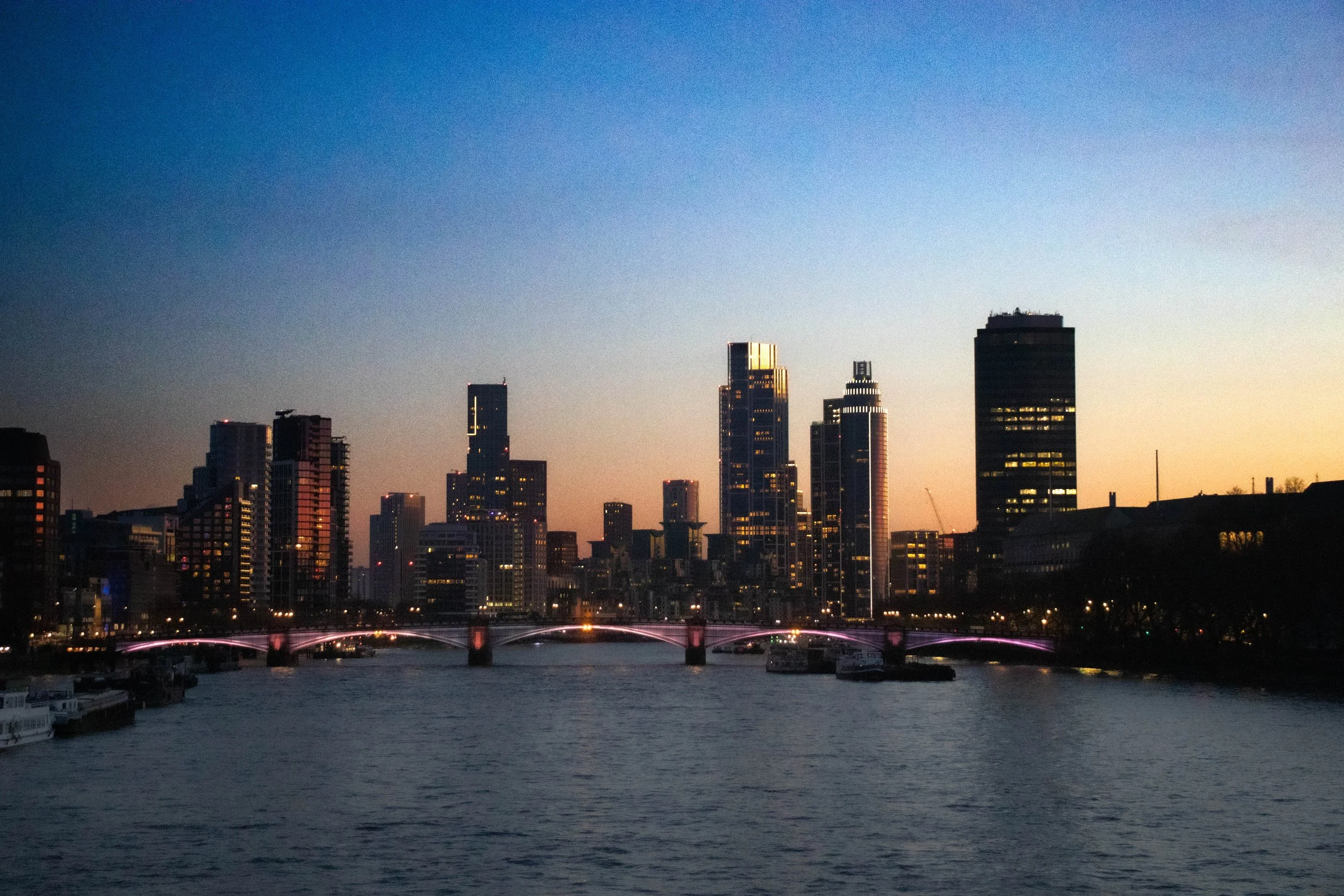
“Leaving the Provincial Mindset: The World Is Bigger Than Your Hometown”
There is a particular illusion that many people are raised with: the idea that the world begins and ends where we are born. A town, a region, a cultural habitus becomes the centre of everything — and somehow the measure of what is valuable. Yet nothing could be more limiting. The truth is brutally simple: the world is far wider, richer, and more diverse than the comfortable little corners we come from.
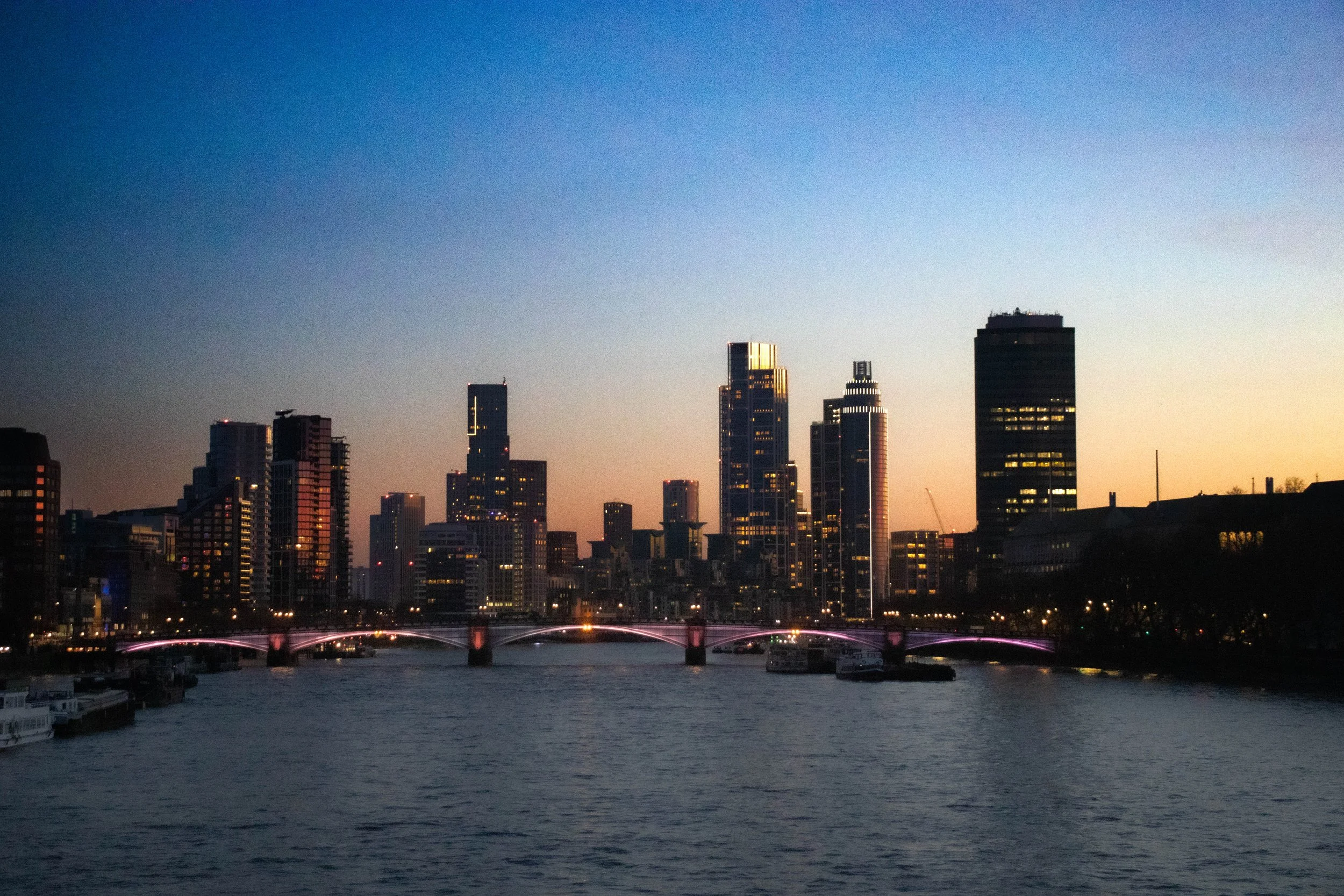
Leaving the Provincial Mindset: The World Is Bigger Than Your Hometown
There is a particular illusion that many people are raised with: the idea that the world begins and ends where we are born. A town, a region, a cultural habitus becomes the centre of everything — and somehow the measure of what is valuable. Yet nothing could be more limiting. The truth is brutally simple: the world is far wider, richer, and more diverse than the comfortable little corners we come from.
In photography, in art, and in culture in general, provincial thinking creates invisible borders long before geography does. It tells you which style is legitimate and which isn’t. It tells you what “sells” and what doesn’t. It also tells you that recognition must come from local approval — as if the value of your work needed to be validated by the neighbours.
But creativity, by nature, refuses borders. The moment you publish your work online, you don’t belong to a village anymore. You belong to a world.
What provincialism really is
Provincialism is not a matter of geography. There are provincial minds in huge cities and cosmopolitan minds in tiny villages. It is a mindset, not a location. A provincial mind believes that what happens “here” is more real than what happens elsewhere. It believes local judgment is universal truth.
A global mind knows the opposite: what we see locally is only a fragment — and often the least relevant one.
Why the digital world exposes provincialism
For decades, artists had to rely on local recognition. Today, the audience is global by default. You post a photograph and in a matter of seconds it can be seen in Tokyo, New York, Reykjavík or Singapore.
And yet, surprisingly, many still behave as if they were speaking only inside a small room. They shape their language, their topics, even their ambitions based on the expectations of people who live just a few kilometres from them.
The digital age didn’t make us global. It simply exposed who was already thinking globally and who wasn’t.
Nothing truly meaningful happens “locally” anymore
Art, culture, technology, and even taste circulate at global speed. Local validation is often the slowest and most conservative one. The same communities that hesitate today are the ones that will praise you tomorrow — when someone else (usually abroad) has confirmed your worth first.
The irony? Many of the greatest Italian artists became celebrated abroad long before Italy even noticed.
If your audience is abroad, speak their language
We live in a multilingual planet. English is a tool, not a betrayal of identity. It’s not a rejection of origins — it’s an expansion of them. When your audience is international, writing in English is not an affectation. It’s communication. It’s intelligence. It’s professionalism.
Why restrict your voice to a provincial frequency when the world speaks another language?
Where you live is not where you belong
Creative identity isn’t tied to the street you were born in. If your work resonates more in Japan, or Canada, or Australia, that’s not accidental — it’s a signal. A photograph doesn’t know geography. Beauty doesn’t need a passport.
You don’t need permission from your hometown to exist. The world already exists for you.
The world is bigger — and so are you
You can stay attached to local habits, but you’re free to move mentally and artistically anywhere you want. That’s the privilege of our time. We are the first generation that can belong everywhere.
A provincial mindset will always feel threatened by a global one. But that’s not your problem. Your job is to open windows, not close them.
Some people are born to stay local.
Others are born to cross borders — even without moving.
The world is bigger than your hometown.
And so is your work.
You don't have to belong to a place to be legitimate.
One of the greatest Italian illusions is to believe that one's career must “pass through” a certain territory: the city, the province, the association, the group, the gallery of reference. As if a local baptism were necessary in order to exist elsewhere.
It is exactly the opposite. The most interesting works are created when one frees oneself from the need to belong. When you abandon the idea that someone has to “validate” what you do. Art has no accent. Photography does not speak dialect. It is not Roman, Milanese, Apulian or Lombard. It is not even Italian, French or Japanese. It is a universal language, understandable on every continent. Images do not ask which province you live in: they only ask what you have to say.
Provincialism arises when we are more concerned with being recognised close to home than communicating with the rest of the world. The world is looking for what Italy still ignores
It is paradoxical: outside Italy, there is enormous interest in Italian photography, in Mediterranean poetics, in our light, our cultural sensitivity. But many Italian photographers, instead of engaging with that world, chase local approval. Meanwhile: the most active buyers are foreign, international platforms generate more opportunities, and the most dynamic markets are outside Italy.
It is cruel but simple: what goes unnoticed in the provinces can become valuable in other countries. You don't have to apologise for looking further afield. There is still a strange idea that leaving your local context is tantamount to betraying it. But it is not a moral choice: it is a professional choice. It is seriousness, vision, future. The only real betrayal would be to stay where there are no opportunities. The world is bigger than your home.
This statement is deliberately provocative, but it is also profoundly true. Remaining closed off to local dynamics means giving up on the world at a time in history when the world is more open, closer and more accessible than ever before.
Provincialism is a form of self-limitation. Breaking out of it is a duty to oneself. Looking far ahead is not presumption, it is survival. The future of photography — as with any creative discipline — will not be decided by a city, a province or a single local group. It will be decided by those who know how to connect with the world, engage with different cultures, build international networks, share and grow.
We don't have to ask anyone's permission to do this.
We just need to have the courage to look up.
If this visual language speaks to your space, you can explore more works.
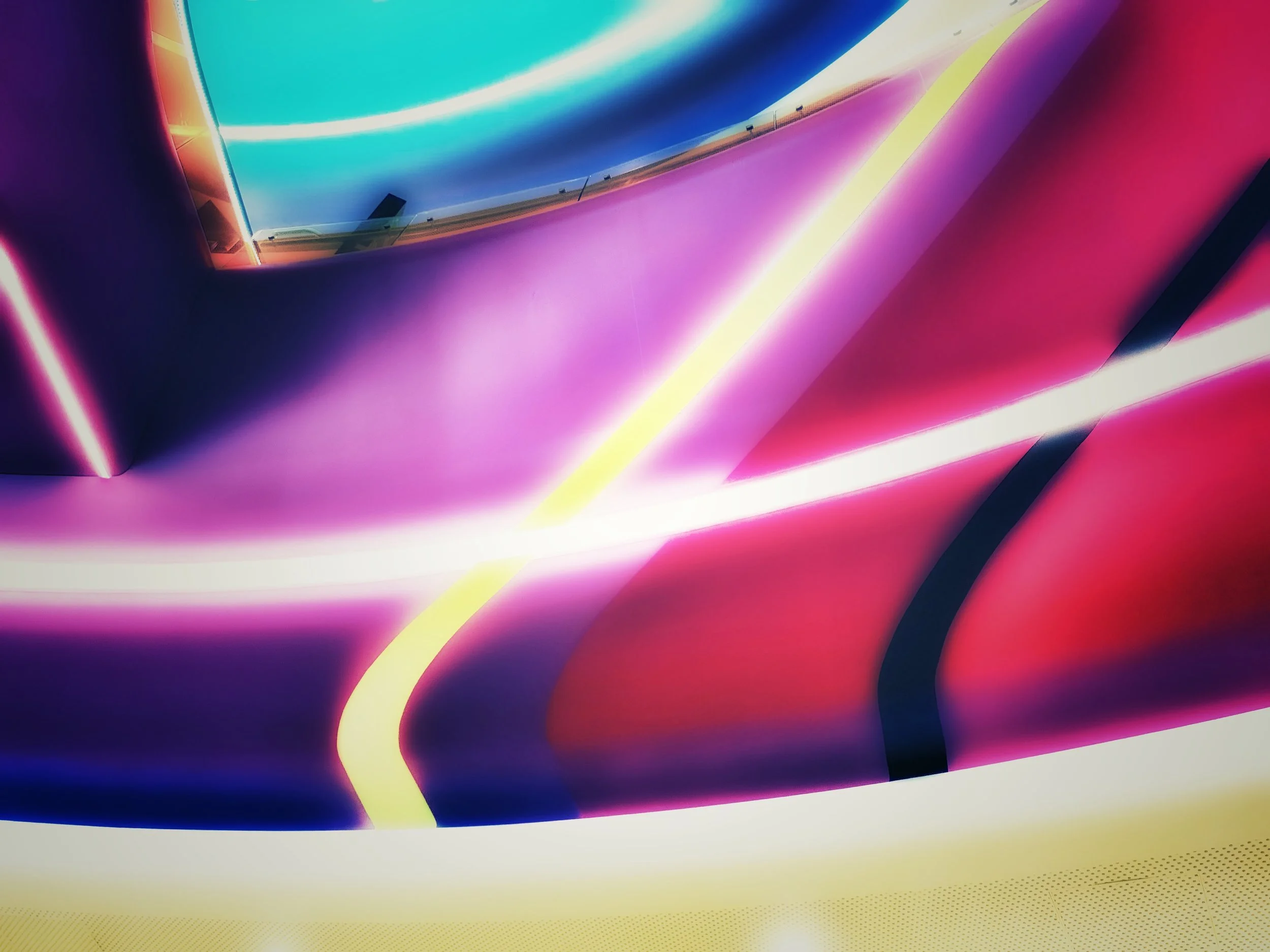
The Silent Role of Color: Emotional Architecture in Contemporary Photography
Color is often treated as a detail—an accessory, an aesthetic choice, a stylistic preference. But within contemporary photography, color has become something far more profound: a silent architect of emotional experience. It shapes the viewer’s perception long before the subject or composition is consciously processed. It structures mood, amplifies intention, and governs how an image is remembered.
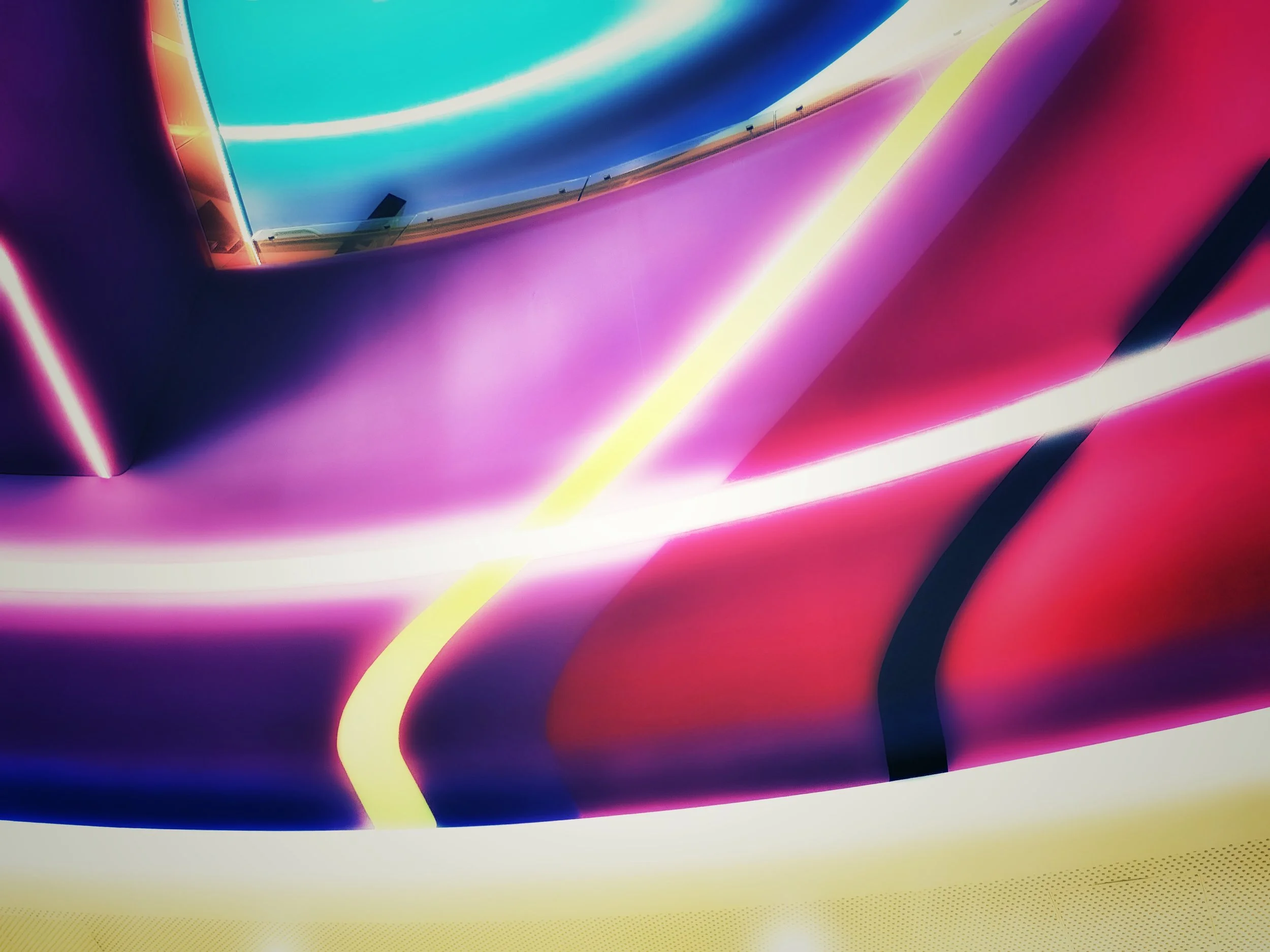
Color is often treated as a detail—an accessory, an aesthetic choice, a stylistic preference. But within contemporary photography, color has become something far more profound: a silent architect of emotional experience. It shapes the viewer’s perception long before the subject or composition is consciously processed. It structures mood, amplifies intention, and governs how an image is remembered.
We tend to speak of composition, narrative, and technical choices, but color works in a different dimension: it communicates without argument, without explanation, without noise. It simply enters the viewer and rearranges the emotional space inside them.
Today, in a world oversaturated with visuals, where attention is constantly fragmented, color is no longer a superficial attribute. It is a language. It is a story. It is a psychological tool capable of transforming even the simplest subject into a moment of deep resonance.
Color as an Emotional Blueprint
Every photograph has an emotional blueprint—an invisible structure guiding the viewer’s reaction. Color is often the foundation of this structure, even before composition begins to speak.
Warm tones pull the viewer inward, creating intimacy and a sense of human presence. Cool tones push them outward, invoking distance, silence, or contemplation. Neutral palettes can introduce stillness, humility, or timelessness. Saturated tones inject urgency, while desaturated ones convey memory, nostalgia, or an almost cinematic melancholy.
In contemporary photography, color has become less about representing reality and more about constructing reality. It moves the image into the territory of emotional design, a place where the photographer is no longer simply documenting, but orchestrating.
The emotional architecture of an image is not accidental. It is the result of how light interacts with tone, how hue guides attention, how shadows compress or release tension. Color becomes the silent “atmosphere builder”—the element that decides whether a scene feels overwhelming, serene, nostalgic, or enigmatic.
Beyond Aesthetics: Color as Concept
Aesthetic choices are only the surface. In contemporary practice, color has become conceptual. It is no longer just “beautiful”; it carries meaning.
A monochromatic palette, for example, can strip a scene of distractions and push the viewer toward form, gesture, or rhythm. A bold color contrast can introduce conflict. A muted landscape can reveal emotional fatigue. A vibrant urban scene can celebrate the chaos of modernity while hinting at our inability to fully digest it.
Color is not decoration—it is interpretation.
In architectural photography, cool metal tones can become metaphors for anonymity or ambition. In travel photography, warm light can transform distant places into emotional states rather than destinations. In portraiture, a deliberate palette can reveal psychological truths that the subject’s expression alone cannot carry.
Contemporary photographers increasingly use color to embed metaphors directly into the image. It becomes a carrier of themes such as isolation, exuberance, memory, identity, or dissonance. And in doing so, it shifts the photograph from representation to conversation.
The Psychology of Color: A Dialogue with the Viewer
The emotional power of color is rooted in psychology. Our brains process color faster than they process shape. We feel color before we understand it.
This is why:
Red triggers alertness, desire, or urgency.
Blue calms, distances, or intellectualizes.
Yellow awakens attention and evokes warmth or fragility.
Green evokes balance, natural rhythm, or renewal.
Orange and teal, a modern cinematic pairing, create tension between warmth (life) and coolness (distance).
Black and white remove color entirely—but in doing so, amplify structure, silence, and emotional clarity.
These reactions are not fixed, but intertwined with cultural memory, personal experience, and visual literacy. What matters is that color becomes a dialogue: the photographer speaks, the viewer responds—sometimes consciously, often without realizing it.
Color and Memory: How Images Linger
Every photographer knows that some images stay with the viewer long after they’re seen. Color is one of the reasons why.
A vivid palette can brand an image into memory with immediacy, like a neon sign. A soft, dusty palette might enter more quietly but linger longer, like a scent. A monochrome palette can transform a contemporary moment into something that feels mythic or timeless.
Color shapes not only how we perceive the moment, but how we remember it. A city photographed in cold blue tones becomes a place of solitude. The same city photographed in warm amber becomes nostalgic. Nothing has changed except the emotional key.
This emotional manipulation is not deceitful—on the contrary, it is intentional. It reveals that photography is never objective. It is always an act of emotional construction.
Color Grading as a Narrative Tool
In the digital era, color grading has expanded the palette of possibilities. Editing is no longer a correction—it is an authorship gesture.
Contemporary photographers are increasingly defined by their chromatic signature: a distinct palette that carries their emotional world across projects and subjects. Whether subtle or bold, this signature becomes a form of narrative consistency.
Color grading can:
unify a series,
create mood,
sculpt atmosphere,
guide storytelling,
and articulate the photographer’s voice.
Color grading is not cheating; it is writing. It is the final paragraph of the story the image wants to tell.
The Future of Color in Photography
Looking ahead, color will continue to evolve from decorative attribute to intellectual structure. As AI expands visual culture and images multiply without pause, color becomes a way for photographers to reclaim intentionality.
In a landscape of algorithm-generated visuals, human-created color choices stand out precisely because they are emotional, imperfect, and deeply personal.
Color is not simply what we see—it is what we feel.
In contemporary photography, color is not the finishing touch.
It is the architecture of emotion itself.
If this visual language speaks to your space, you can explore more works.
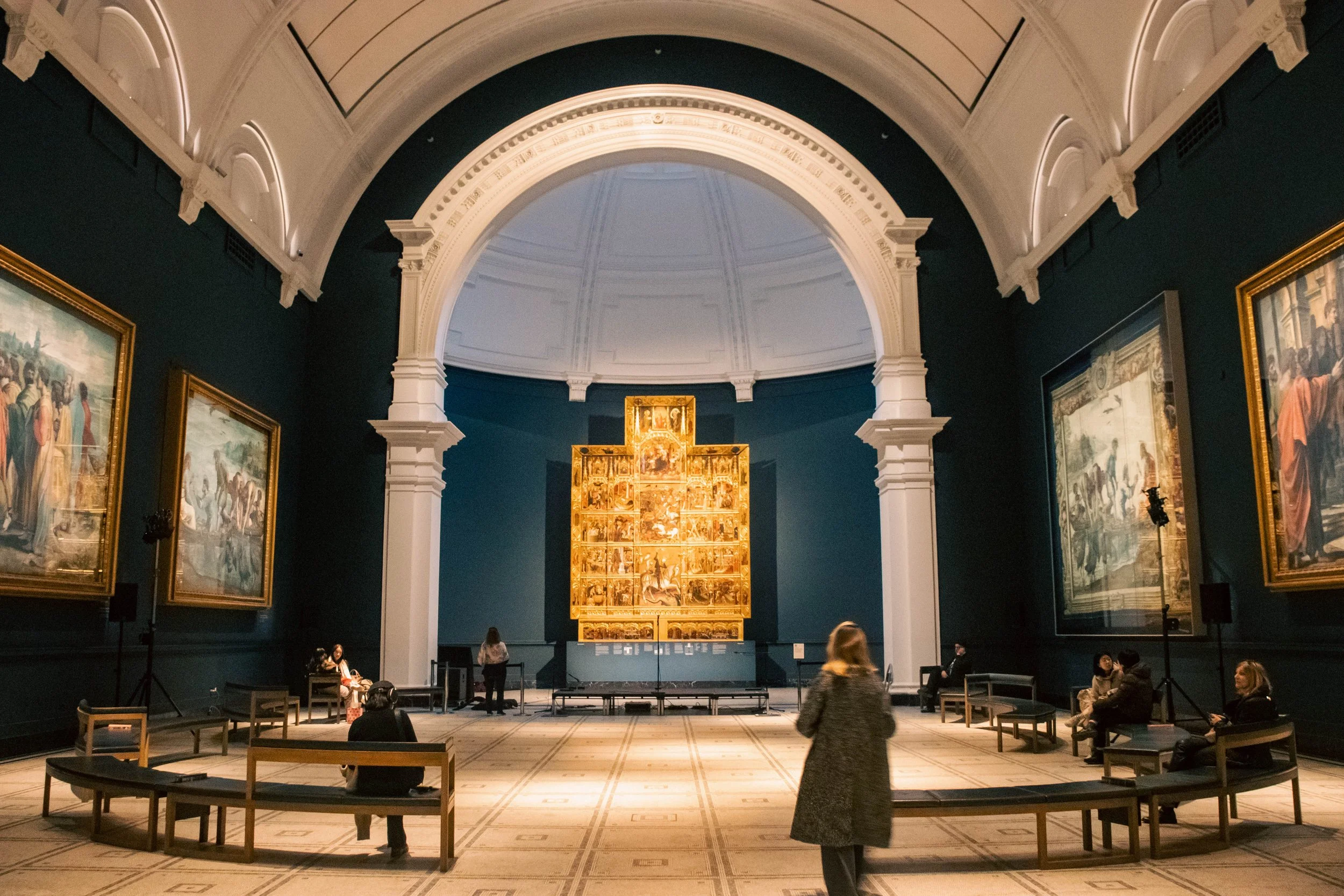
Why Photographers Feel the Need to Write About Other Photographers
There’s an old misconception in the photography world: the idea that talking about other photographers means “giving away visibility” or even helping the competition. It’s a limiting mindset, unable to capture the true nature of art: a continuous dialogue.
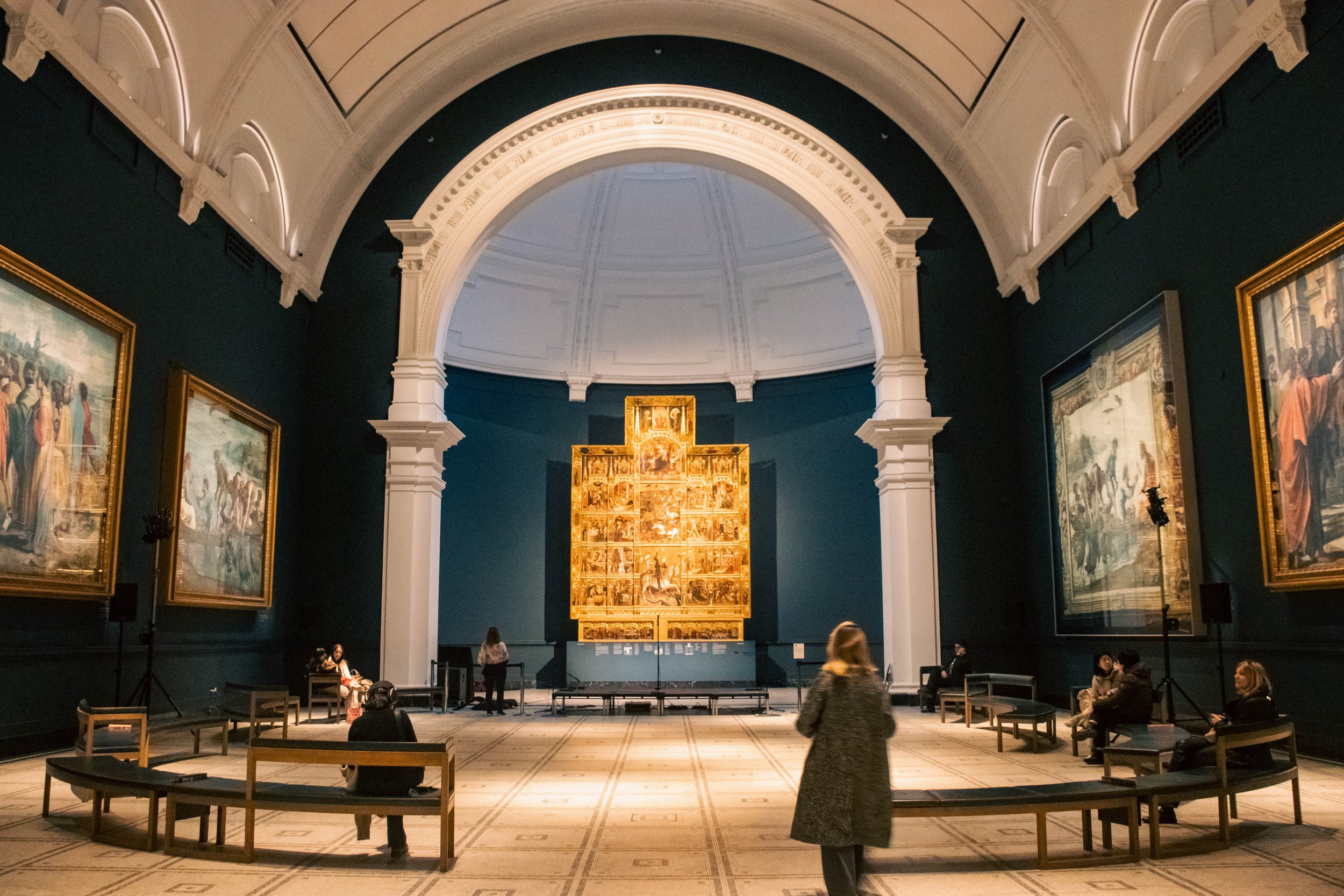
(A reflection on contemporary photography, artistic growth, and creative coexistence)
There’s an old misconception in the photography world: the idea that talking about other photographers means “giving away visibility” or even helping the competition. It’s a limiting mindset, unable to capture the true nature of art: a continuous dialogue.
The reality is simple: photographers don’t live in isolation. They exist inside a wide, diverse landscape filled with influences, stories and perspectives.
Speaking about other artists doesn’t diminish your space — it expands it.
Photography as an ecosystem, not an arena
The photography and art market is enormous. There is no single audience, no single style, no single way of seeing.
Talking about other photographers doesn’t mean stepping aside: it means positioning yourself within a living, dynamic ecosystem.
Coexistence is smarter than competition.
The most effective way to stay relevant today is not to hide, not to build walls, not to fight imaginary battles.
It is to offer your own art as an original contribution inside a shared landscape.
Discussing other artists enriches your audience
People who follow photography blogs don’t want only images. They want to understand how a photographer thinks, what inspires them, which references shape their vision.
When an artist talks about another artist, they:
show visual literacy,
enrich the reader,
educate the eye,
position themselves as a thoughtful, competent guide.
And when a photographer demonstrates cultural awareness, their perceived value increases.
Knowing others helps you understand yourself
Every photographer is the sum of the visions they have absorbed.
Studying the work of others doesn’t mean imitation — it means discovering where you stand, what you want to say, and how you can evolve from shared inspirations.
Exploring other artists allows you to:
expand your visual vocabulary,
identify what sets you apart,
develop your artistic voice.
You don’t become unique by isolating yourself. You become unique by absorbing, transforming, and transcending.
Cultural depth = authority
Google rewards content that demonstrates expertise, structure and depth.
Writing about other photographers allows you to include context, references and analysis — all elements that build trust, for both algorithms and human readers.
A blog that looks outward, not only inward, becomes far more authoritative.
The world of photography is too vast and inspiring to be approached as a battlefield.
The most intelligent way to inhabit it is through coexistence, dialogue, and shared culture.
Talking about other photographers does not reduce your space.
It increases the value of everyone, including yourself.
If this image resonates with your space, you can explore the full collection.
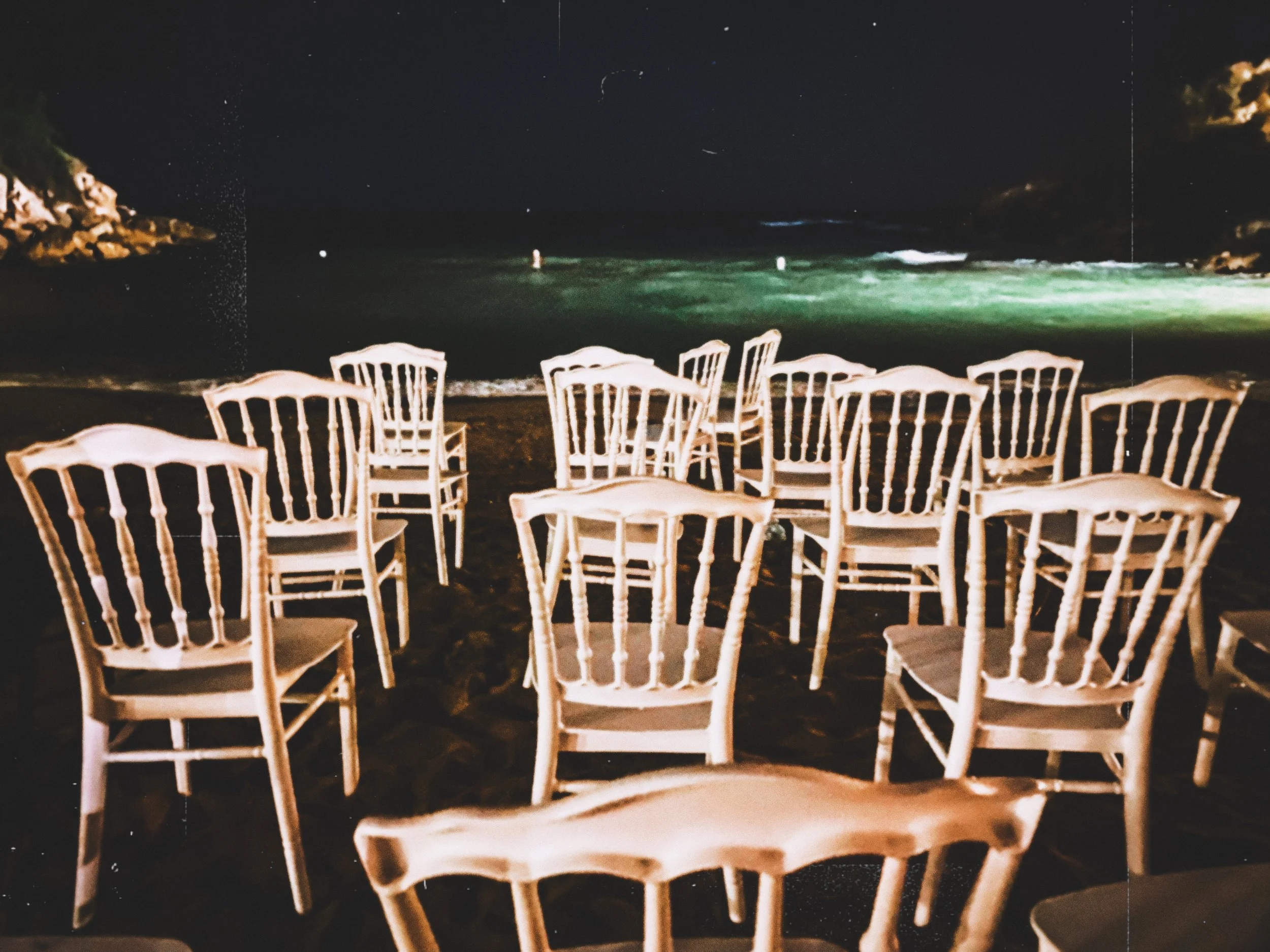
Contemporary Photography and the Art Market: Between Creative Freedom and Sustainability
There comes a moment in every artist’s life when one must look in the mirror and ask: “Why do I do what I do?”
It’s a simple, yet terrifying question. Because in today’s world, creating is never only a poetic act — it’s also an economic one. Every photograph, every work of art, exists between two extremes: freedom and necessity. Between what comes from within, and what must survive outside.
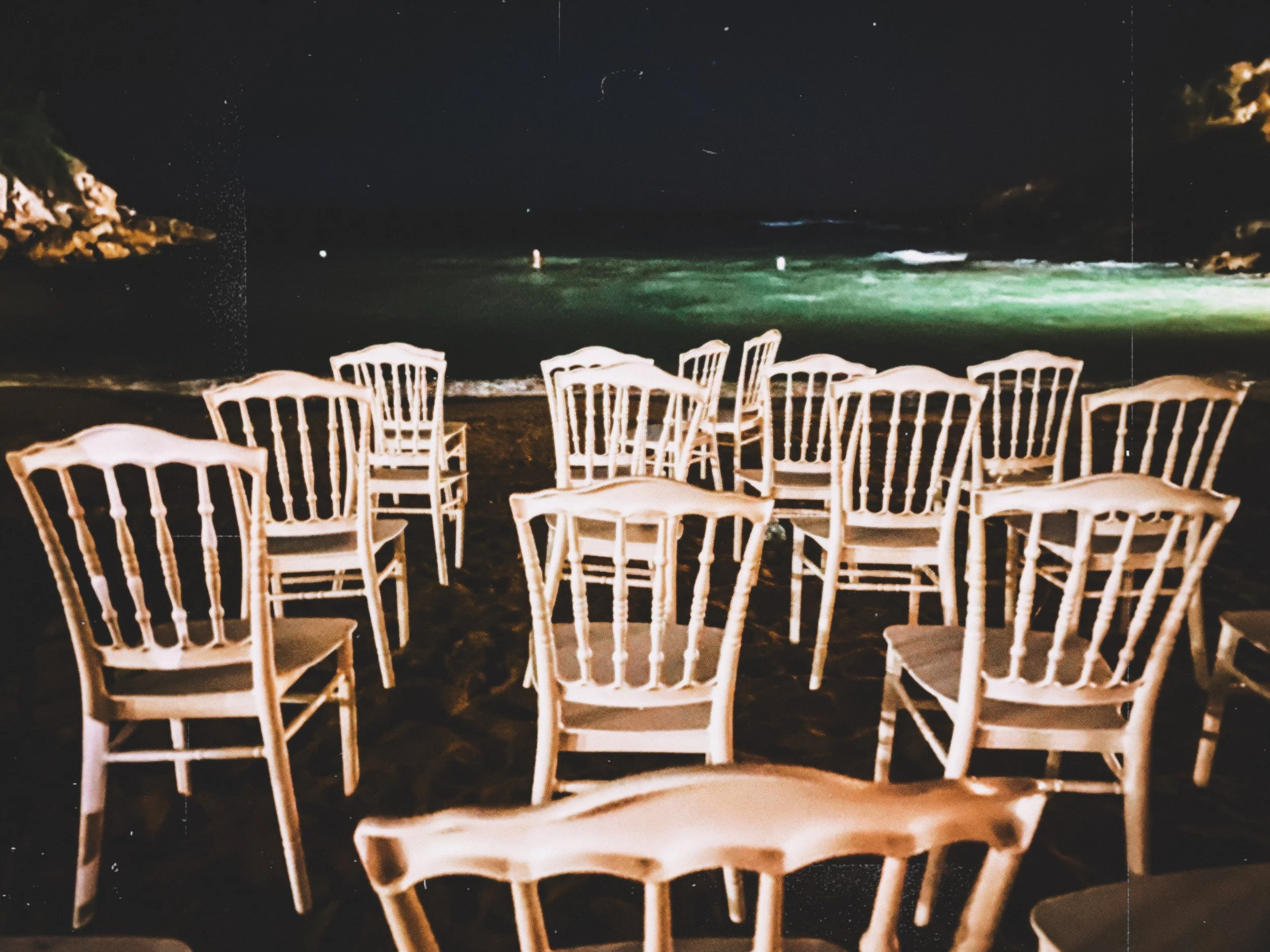
There comes a moment in every artist’s journey when a simple yet unsettling question emerges: why do I create? In the context of contemporary photography, this question extends beyond personal expression and enters a broader reflection on the relationship between creative freedom and sustainability. Today, being a fine art photographer means navigating a complex space where artistic vision meets the realities of the art market, where each photograph exists not only as an aesthetic object but also as part of a cultural and economic ecosystem.
Contemporary photography is no longer confined to galleries or traditional circuits. It lives across digital platforms, personal websites, and curated online spaces, where visibility and positioning play a crucial role. For photographers working in conceptual and fine art photography, the challenge is not only to create meaningful images but also to ensure that those images reach the right audience. This introduces an essential tension between artistic integrity and the need to build a sustainable career in photography, a tension that defines much of the modern artistic experience.
The art market is often misunderstood, especially by emerging artists who fear that engaging with it might compromise their work. However, the art market is not simply about selling photography prints or assigning prices to images. It is a dynamic system of relationships, meanings, and exchanges. It connects collectors, artists, galleries, and viewers, allowing fine art photography to circulate and gain recognition. Understanding this ecosystem is fundamental for any photographer who wants to move beyond visibility and into relevance.
Collectors do not acquire images randomly. They seek connection, narrative, and identity within the work. A fine art photograph becomes valuable not only because of its visual quality but because it communicates something distinctive. This is where conceptual photography finds its strength. By transforming everyday objects into symbolic compositions, photographers create images that resonate on a deeper level, making them more likely to stand out in an increasingly saturated visual landscape.
Being a contemporary photographer today requires more than technical skill. It involves developing a coherent artistic identity and presenting it consistently across platforms. A strong online presence, whether through a personal website or curated social media channels, is essential. SEO for photographers plays a key role in this process, allowing potential collectors and art enthusiasts to discover work organically. Titles, descriptions, and blog content are not secondary elements; they are strategic tools that contribute to visibility and positioning within the digital art market.
The fear of selling art remains one of the most persistent barriers for photographers. Many still associate selling with a loss of authenticity, as if commercial success were inherently incompatible with artistic value. In reality, the opposite is often true. Selling fine art photography prints does not diminish the work; it validates its ability to connect with an audience. The crucial distinction lies in intention. Creating work solely to follow trends can weaken artistic identity, while presenting authentic work to the market strengthens both visibility and credibility.
The value of a photograph in the fine art context is multifaceted. It is shaped by conceptual depth, composition, and the use of light, but also by tangible factors such as limited editions, print quality, and presentation. Collectors are not simply buying a photograph; they are investing in a vision, in a specific way of seeing the world. This is why photographers must pay attention to every detail, from the choice of materials to the clarity of their artistic statement. Professionalism, far from limiting creativity, provides the structure that allows artistic work to exist sustainably over time.
Sustainability in photography is not only financial but also creative. Maintaining creative freedom requires stability, and stability requires strategy. Photographers must think long-term, investing in their skills, refining their visual language, and building relationships within the art community. This includes engaging with galleries, curators, and collectors, as well as cultivating a direct relationship with their audience through digital platforms. The ability to balance artistic exploration with practical considerations is what ultimately defines a sustainable artistic career.
Digital platforms have transformed the way photography is shared and perceived. Instagram, blogs, and portfolio websites have become essential tools for photographers, but they must be used with intention. Simply posting images is not enough. Context matters. Storytelling, captions, and articles like this one contribute to a deeper understanding of the work and improve SEO performance, making it easier for the right audience to discover it. In this sense, digital communication is not separate from art; it is an extension of it.
However, increased visibility comes with the risk of standardization. The abundance of images online often leads to repetition and loss of individuality. For photographers who want to stand out, the key is not to follow trends but to develop a distinct voice. Conceptual photography, with its emphasis on meaning and interpretation, offers a powerful way to resist homogenization and create work that remains relevant over time.
Art has always been a form of dialogue, and contemporary photography is no exception. Every image establishes a connection between the artist and the viewer, inviting interpretation and emotional response. The art market amplifies this dialogue, providing the structures that allow it to reach a wider audience. Without this exchange, even the most powerful images risk remaining unseen.
Ultimately, the balance between creative freedom and sustainability is not about choosing one over the other. It is about integrating both into a coherent practice. A photographer must be both visionary and strategic, capable of creating work that is authentic while also understanding how to position it within the art market. This balance allows photography to move beyond personal expression and become part of a larger cultural conversation.
In the end, every photograph is an encounter. It is the meeting point between intention and perception, between the artist’s vision and the viewer’s experience. And it is within this encounter that contemporary photography finds its true value.
If this image resonates with your space, you can explore the full collection
Read also: Photography: Developing Your Art or Feeding the Audience?; Art Is Not Content
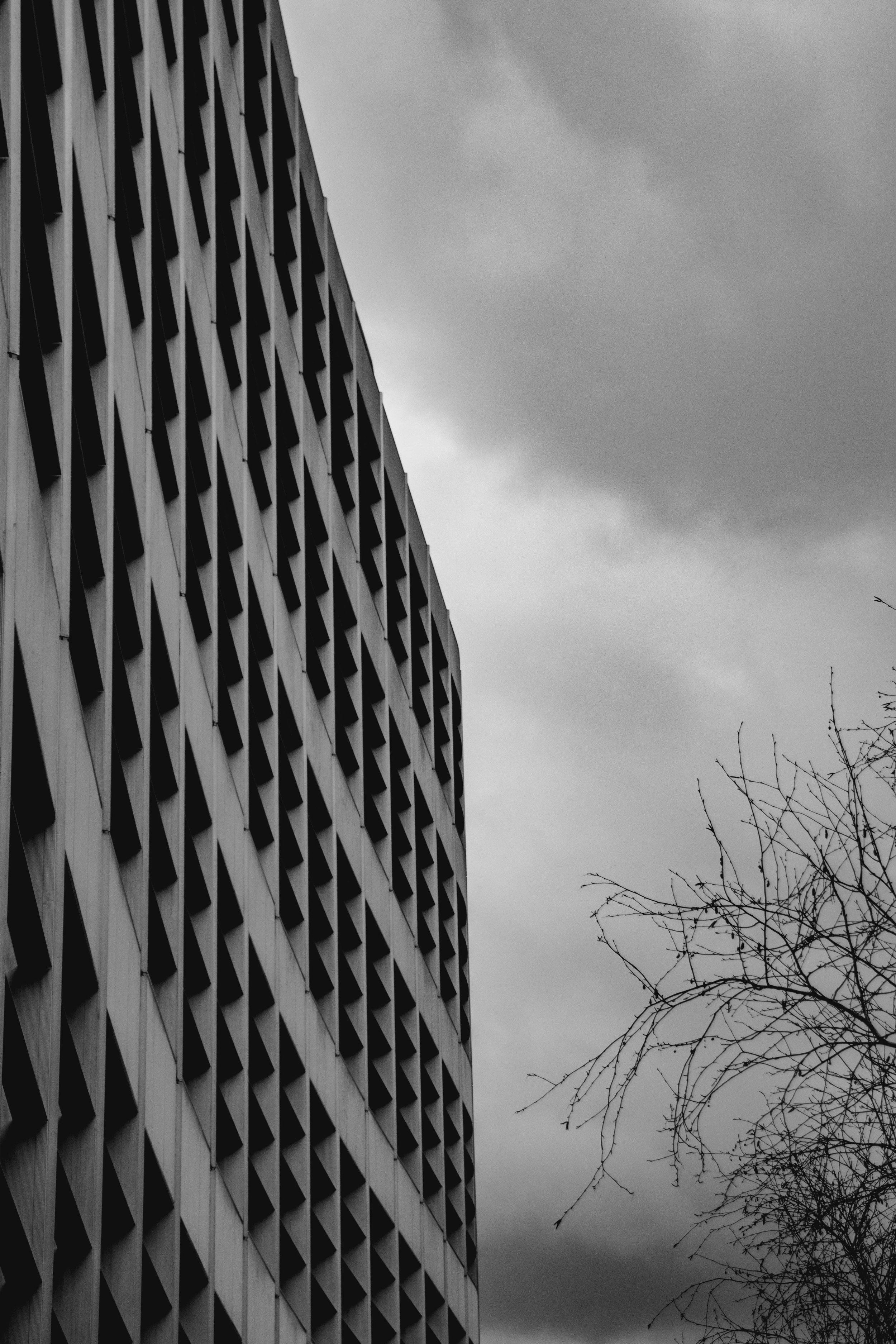
The photographic composition: the invisible order that gives meaning to the gaze
There are images that remain, and images that disappear the moment after we see them. The difference is almost never the subject itself. It is what sustains it. It is the invisible structure that makes it necessary, inevitable, alive.
When I photograph, I realise that composition comes even before the visible content: it is the secret grammar through which the world takes form — the space where an image stops being “something to look at” and becomes “something that speaks”.
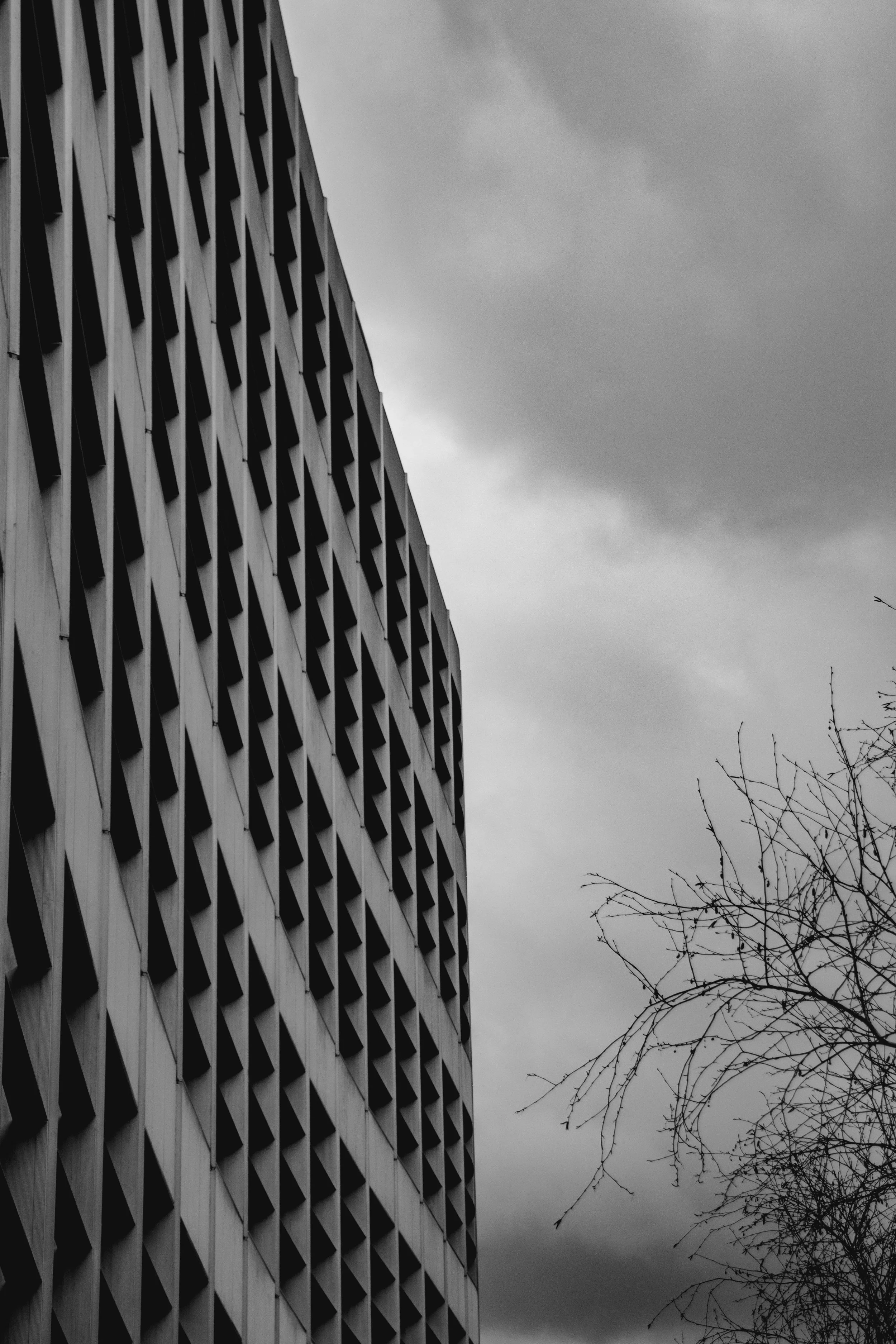
There are images that remain, and images that disappear the moment after we see them. The difference is almost never the subject itself. It is what sustains it. It is the invisible structure that makes it necessary, inevitable, alive.
When I photograph, I realise that composition comes even before the visible content: it is the secret grammar through which the world takes form — the space where an image stops being “something to look at” and becomes “something that speaks”.
Many people think of composition as a set of rules, a kind of operational system to be applied to make images “more beautiful”. Others treat it as a cage, from which they try to emancipate themselves in the name of the famous “I break the rules”, often obtaining nothing more than a confused or fragile picture.
For me it is the opposite. Composition is not ornament, not decoration, and certainly not a prison. It is the founding act of photography. Before I press the shutter, the photograph already exists — in the gaze. It lives in the act of framing, of choosing, of defining what remains and what is excluded. That is the moment in which the voice of the image is born.
Every time I frame, I perform a gesture that is both mental and perceptive: I delimit a field, I set a threshold, I decide which relationships have the right to exist and which will disappear. The camera is only the terminal medium. Real photography happens earlier — and it happens in the eye. It is worth repeating, in a world obsessed with megapixels: never confuse the pen with the text.
Choice as origin
An image is never the mere recording of what was in front of me. It is what I chose to retain. And equally, what I chose to leave outside.
The photographic act is not additive — it is subtractive. It is an act of distillation: from a world that is complex, ambiguous, and overflowing with stimuli, I extract a precise balance. A tiny but irreversible decision: here yes, here no.
When a collector encounters an image and perceives it as “complete”, what they recognise is not the subject, but the invisible order that sustains it. They sense that nothing is accidental, and that every element is necessary. That inevitability is the true hallmark of authorship — what makes an image unrepeatable. Nothing is truly “by chance”: it is the manifestation of an inner design shaped by memory, by experience, by knowledge and sensitivity.
Before the gaze, there is order
We live as if vision were natural, spontaneous, neutral. It is not. Our perceptual system constantly organises the chaos of the visible world into structures we can understand. Even someone who never picks up a camera is already “composing”, unconsciously: the mind selects, emphasises, reduces, connects.
Photography simply brings this hidden process into awareness.
To compose is to take responsibility for a gesture that the mind already performs at a primordial level. When I look, I am already shaping reality into relations; when I photograph, I give that gesture a definitive form.
The frame as a field of forces
A photographic frame is never just a rectangle: it is a field of tension. Every element inside it has weight, direction, gravity, pull.
Composition is the art of orchestrating these forces.
When I place a line in the frame, I am not “filling a space”, I am directing a movement through the viewer’s perception. When I leave a wide margin, I am not leaving emptiness — I am creating breath. When I bring a subject toward the edge, I am not merely repositioning it — I am placing it in a state of visual risk, a delicate vibration.
The images that endure are the ones in which this field of forces can be felt, even when not consciously recognised. The viewer may not know how to explain it technically — but the body understands it long before the intellect intervenes. Composition always acts before thought.
Visual sensing and recognition
Before we register what a picture shows, we feel how it holds itself: order or disorder, stability or tension, attraction or escape.
The psychology of form — from Gestalt theory to contemporary neuro-aesthetics — confirms that we do not see “objects”, we see relationships.
Meaning is not in the things, but between them.
A photograph that succeeds does not merely display: it discloses. It does not illustrate: it reveals structure. And structure is never neutral.
Composition is not a geometric exercise — it is an emotional orientation of space.
This is why I believe composition is not something that is added to the world, but the very thing that makes the world readable. It is the bridge between phenomenon and meaning. The hidden scaffolding that prevents the visible from collapsing into noise.
The decisive moment (before the click)
When I look at a scene, before asking myself what to show, I ask how that space wants to be heard. The true compositional gesture is not imposed on reality — it emerges from it. I do not force a grid onto the world; I uncover the rhythm already inscribed within it.
It is as though each scene carried a latent geometry, and the photographer were the one who allows it to surface.
This instant — the moment in which the image aligns itself internally — is perhaps the most photographic moment of all.
The click that follows is simply its consequence.
I do not photograph to test a hypothesis: I photograph because the image has already happened inside me.
The grammar of placement: balance, tension, and the living edge of the frame
To compose is not to place things inside the frame, but to define the relationships that occur because they are there.
The difference seems subtle — in realtà, it changes everything. Space is never passive. It reacts. It either breathes or it collapses, it opens or constrains, it invites or rejects. A photograph is not the sum of its elements, but the field of energy that those elements generate.
This is why balance in photography is not symmetry. Balance is resonance — the way forms weigh against one another, not in a static way, but dynamically, like tension held in suspension. A photograph that works carries this sensation of poised inevitability: it could not be otherwise.
Where the untrained eye seeks “where to put the subject,” the authorial gaze listens instead to where the subject is already speaking within the field. What matters is not placement, but relation. Composition is the craft of orchestrating gravity.
The role of the negative space
One of the most misunderstood aspects of composition is negative space.
Many treat it as “emptiness,” a remainder of the image, something left unused. But negative space is not absence. It is the territory where the image breathes — and where meaning expands. It is the room in which the gaze can move, rest, or wait.
A dense image without breathing room becomes sealed off, suffocating.
An image with calibrated emptiness allows the subject to arrive to the viewer.
Silence is to music what negative space is to composition: it does not interrupt sound — it makes sound meaningful.
When I leave space around a subject, I am not stepping back: I am giving it time to unfold, like a phrase held long enough to be heard inwardly. The more the viewer feels that room, the more they can inhabit the image rather than merely observe it.
What collectors often experience as “presence” is precisely this: not the object itself, but the resonance of its breathing space.
Edges, thresholds, and the psychology of the border
The border of the frame is not a decorative perimeter; it is an active threshold.
Each decision close to the edge creates a psychological effect — tension when the subject is pushed outward, serenity when it is centred but anchored by counterweights, uncertainty when the edge cuts through a relational line.
The border is where composition becomes irreversible.
Inside, meaning forms; at the edge, it becomes definitive.
To bring something near the threshold is to expose it to gravity.
To pull it inward is to shelter it.
These small distances change the emotional architecture of the image more than most “rules” ever will.
Rhythm, not geometry
Many visual manuals reduce composition to geometry: lines, diagonals, thirds. These are tools, certainly — but they are not the essence.
The true structure of an image is rhythmic, not mathematical. It unfolds like breath: contraction and expansion, weight and release, approach and retreat.
If geometry is the skeleton, rhythm is the bloodstream.
And rhythm is something you do not apply — you feel. When composition is alive, you don’t “think” it: you sense its rightness the same way a musician senses tempo without counting.
This is why genuine composition cannot be automated, and why high-end collectors instinctively recognise authorship: not because they understand the grammar intellectually, but because they feel the coherence of the inner pulse.
Seeing with intention
Composition is not a technique; it is a way of being present in the act of looking.
Technical mastery matters — but only when it is married to intention. Without intention, technique is ornament. With intention, even the most minimal gesture carries weight.
Before I take a photograph, I don’t ask: what is the subject?
I ask: what is the relationship that wants to become visible?
The stronger the relationship, the more the image radiates necessity.
Where technique becomes vision
There is a moment in photography when craft ceases to feel like craft and becomes intuition. You are no longer “applying” composition — you are inhabiting it. It stops being something you do, and becomes something you listen for.
At that point, technique is no longer a ladder you climb, but the floor you can finally stand on. You are free not because you have abandoned structure, but because you have interiorised it.
This is the moment in which authorship matures: when choices no longer feel like choices, but consequences of a deeper alignment between perception and form.
Every image that endures is born twice.
First inwardly — as recognition. Then outwardly — as form.
Before the shutter is released, there is a stillness in which the world arranges itself before your eyes, not because you force it, but because you grant it attention. In that moment, composition is no longer technique but listening — not intervention, but accord.
The camera captures only the second birth.
The first remains the invisible origin, the place where the act of seeing becomes an act of becoming.
This is why truly authorial photography cannot be improvised: not because it is difficult, but because it requires presence — a gaze that does not merely frame the world, but meets it.
In this meeting, composition is no longer a method, but a covenant.
An agreement between what appears, and what asks to be seen.
If this image resonates with your space, you can explore the full collection.
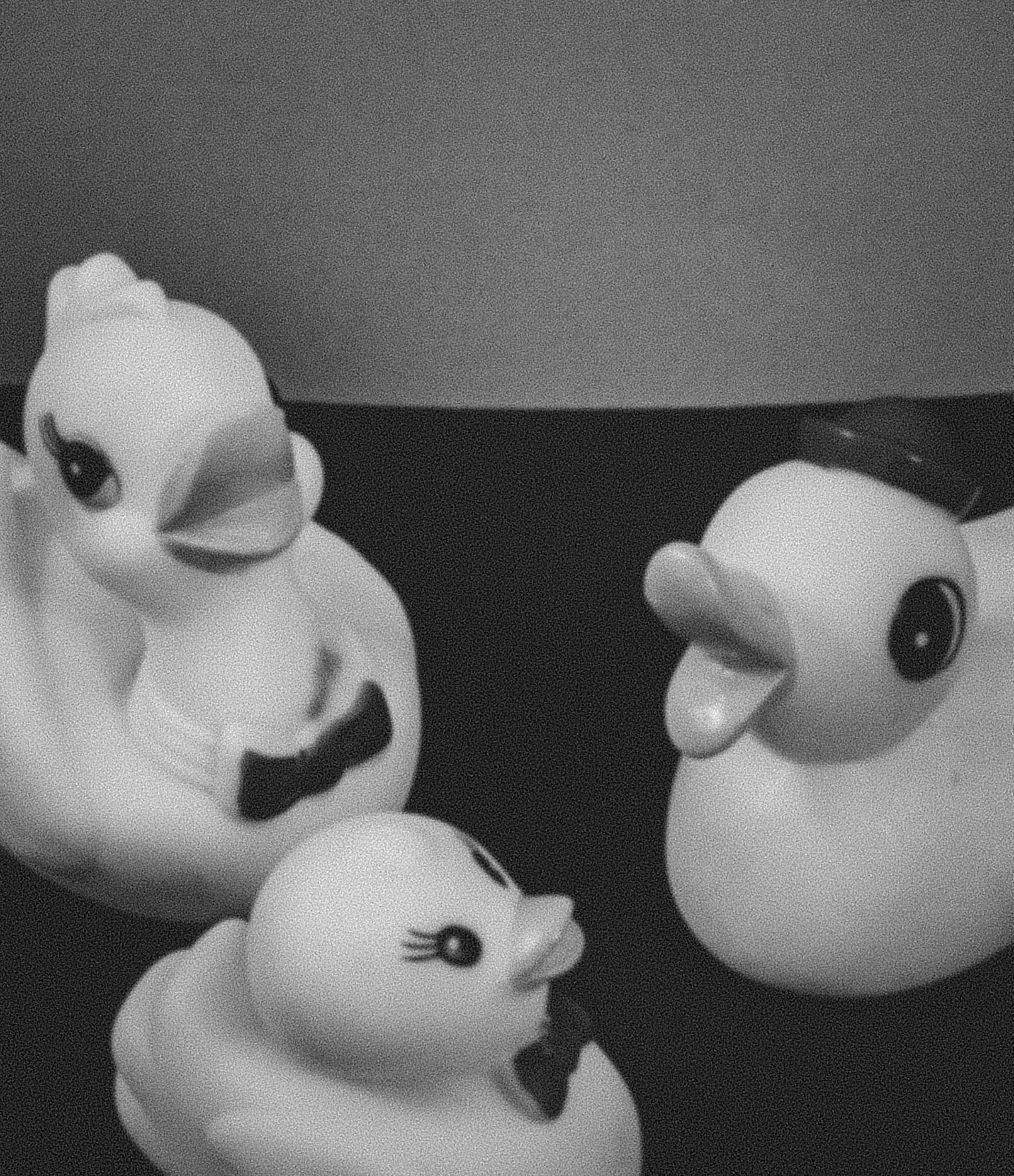
Photography: the construction of reality through the gaze
Every time I take a photograph, I remind myself that photography is not a faithful record of reality, but a construction of the eye and the mind. I do not document, I interpret. I do not record, I translate. Yet today, in a world flooded with images, I feel the need to reiterate this principle: photography is not about copying, it is about choosing what to say and what to leave unsaid.
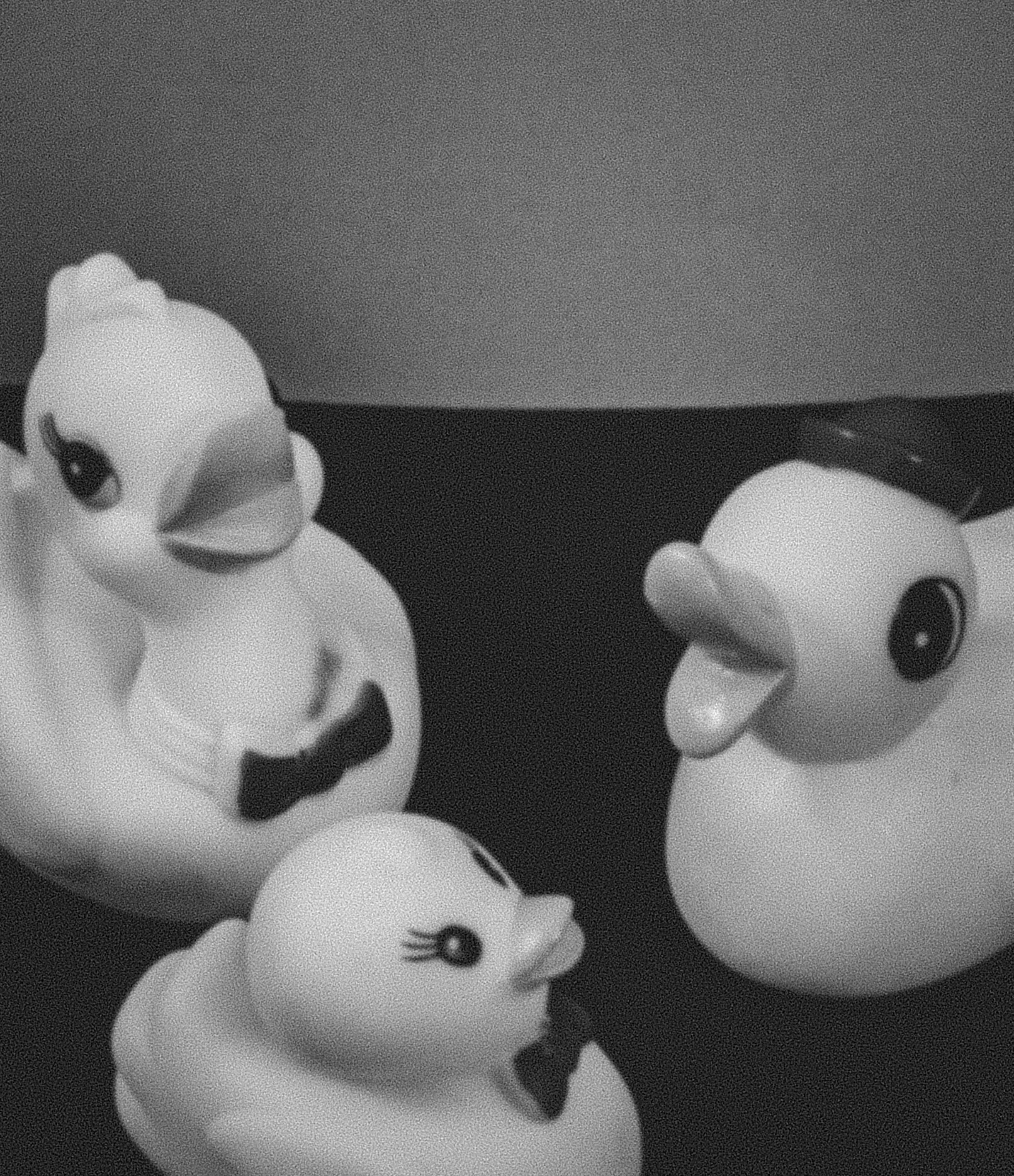
Every time I take a photograph, I remind myself that photography is not a faithful record of reality, but a construction of the eye and the mind. I do not document, I interpret. I do not record, I translate. Yet today, in a world flooded with images, I feel the need to reiterate this principle: photography is not about copying, it is about choosing what to say and what to leave unsaid.
The camera becomes a mere instrument of a language, that of photography, photography in the broad sense and not a simple mechanism that duplicates reality. It ends up being a device for selective vision, poetic synthesis, reading the world filtered through my perception and my visual conceptions.
The choice before the shot
I do not believe in “I see and I photograph”. Even before the shot, there is a recognition, a silent whisper that says: this deserves attention. And not because it is beautiful in the conventional sense, but because it carries with it a tension, an internal rhythm that resonates with what I am looking for. An unconscious mechanism that translates into Adams' aphorism: 'You put into your photography all the pictures you have seen, the books you have read, the music you have heard and the people you have loved'. The sum of the external elements that characterise the individual make their photographic vision unique.
Nevertheless, in relation to reality, the image arises as subtraction, not accumulation. I choose what to exclude as much as what to include. A choice that is as unconscious as it is better if made consciously and arbitrarily. As Luigi Ghirri writes: “The photographer, in the act of framing, decides what to leave out of the shot”. This is a powerful concept because it empowers the photographer in his vision of the “world”. Every frame is a theoretical and poetic decision, a balance between form and content, between the visible and the suggested. Every frame bears the signature of the viewer, even before the person who presses the button. As Szarkowski also reiterates. And this is a leap of awareness that not everyone embraces, ending up remaining in uncertainty, or ‘I don't know what I'm doing or why.’
The role of the gaze
Two photographers in front of the same subject will produce different worlds. The gaze is not neutral: it is already authorial, already interpretation. Observing is an act of translation, of selection, of emotional response. I reiterate this strongly.
In my work, every subject becomes a prism through which to filter my perception. I do not photograph the world “as it is”, but as I feel it: with what strikes me, what disturbs me, what fascinates me. Even the most common landscape can be transformed into a story if my gaze crosses it with awareness.
The distance between the eye and the image
There is always a fertile margin between what I see and what I feel. Photography is translation, not reproduction. Reality fragments, bends, and transforms itself in the moment when the camera captures not only light, but also the attention, memory, and internal tension of the person taking the picture.
In this interval, between the real and the imagined, the true power of the image is born: the space for interpretation, the possibility of suspending judgement, of bringing the viewer into a silent conversation with what has been seen. And it is this interval that defines the author. The author does not limit himself to slavish reproduction but presents his own interpretation.
My personal research
My way of working stems from this conviction: not to describe the world, but to transfigure its meaning. Each series, from Criptaliae to my latest explorations through individual photographs, seeks to transform landscapes, objects and other subjects into signs of experience, memory and message.
The landscape, for example, is never just a place: it becomes a metaphor, an emotion, a breath. The lines, the geometries, the shadows tell stories that exist beyond the photographed object. And in this sense, references such as Ghirri or Eggleston are not guides, but bridges: brief hints remind me that photography can convey more than what is visible, it can suggest more than it shows.
The great misunderstanding: 'beautiful = photographable'
There is a common, almost inevitable mistake: thinking that what is aesthetically pleasing is automatically worthy of being photographed. Photography is not confirmation, it is not decoration. Photography must reveal, open up invisible worlds, suspend the observer, make them question what they think they see. And in some ways, it must be fiction. Or rather, a transfiguration of the viewer's unconscious will. When we take commercial photographs of ‘juicy hamburgers’ or stylish women in evening dresses, we are telling a fiction. Not a lie, just a deliberate answer to an unconscious question.
Aesthetics is a tool, not a goal. Depth, on the other hand, comes from intentionality, from the critical act of choosing, subtracting, suspending. Pure beauty can be stunning, depth invites us to see. In my view, aesthetics is not the absence of content. This is a moral conception, which encourages us not to pay attention to elements such as shapes, lines and colours. And it is foolish to think that aesthetics is mere delusion, like pompous and uncomfortable 18th-century aristocratic clothing. No, aesthetics is its pursuit, it is a further defining element.
Photography as a way of thinking
Photography is thinking in images. It is not about preserving souvenirs, but constructing mental maps, paths of meaning. Every shot is a reflection: the subject is always the inner self, not the object outside the frame. The act of photography becomes a continuous questioning: what do I feel? What do I want to convey? How much space do I leave for silence?
The space between me and the subject, between the subject and the viewer, is a field of investigation. This is where photography ceases to be a document and becomes a way of thinking, a tool for observation and participation in the world.
Returning to the initial thesis: I do not reproduce, I construct. Each image is a choice, a subtraction, a tension between what appears and what remains suspended.
Looking at a photograph thus becomes a shared act: the observer enters into dialogue, completes the meaning, adds their own interpretation. There is no single reading, but multiple possible paths.
I therefore invite you to take this step: observe carefully, let the images breathe, feel the tension between what is shown and what is not revealed. And you will discover that each photograph not only tells the story of the world you see, but also of the world you carry within you. And I personally strongly believe that every photograph is a hand extended in dialogue rather than a simple monologue.
If this visual language speaks to your space, you can explore more works.
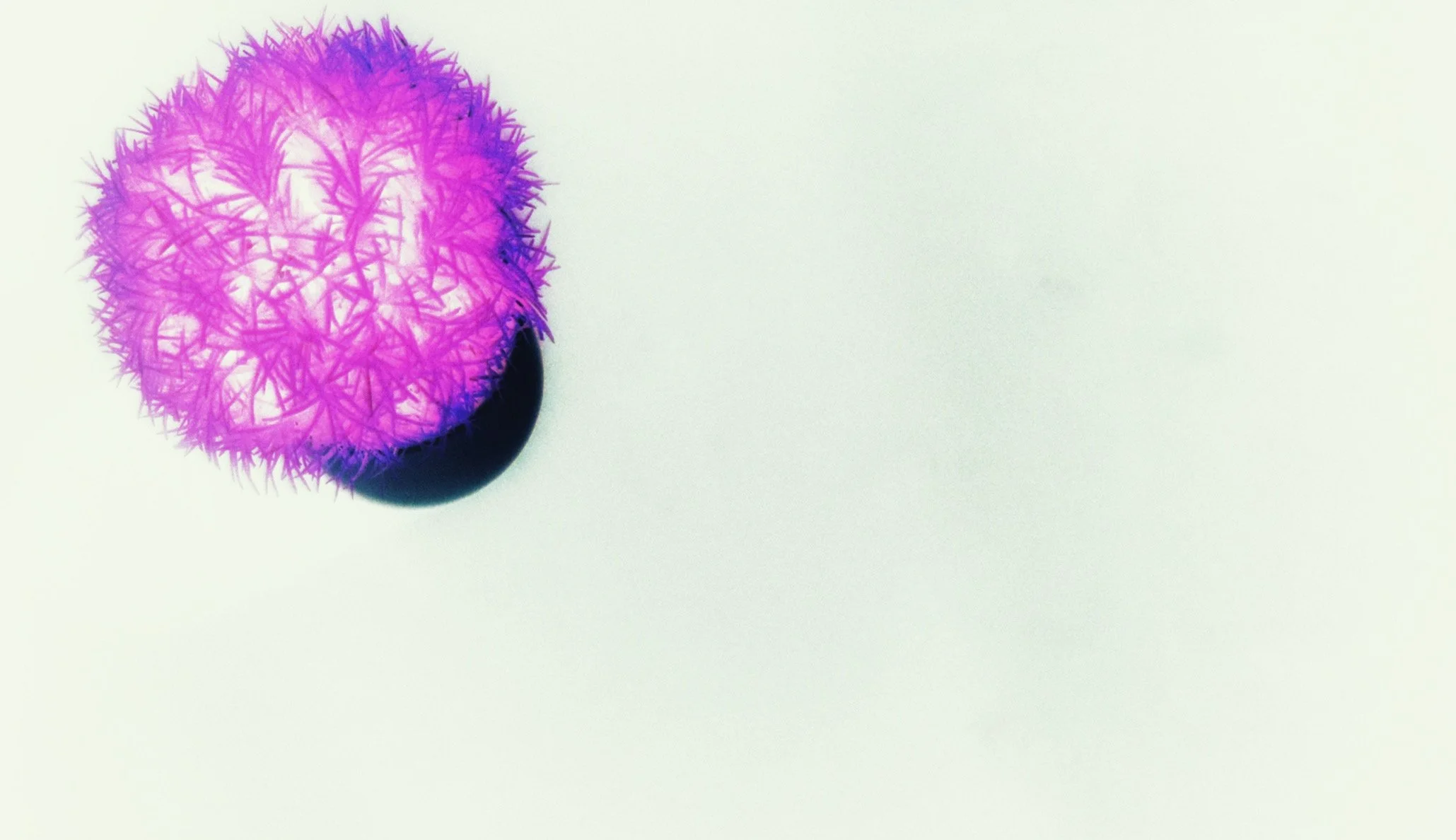
Negative Space in Contemporary Photography: Balance, Perception, and the Psychology of the Gaze
In contemporary photography, empty space is far from absence—it is form, rhythm, and visual breath. Negative space, the area surrounding a subject, often overlooked, has immense narrative and emotional power.
The brain, guided by Gestalt principles, instinctively completes incomplete shapes, seeks harmony between presence and absence, and interprets emptiness as structure. Photographers like Fan Ho and Shoji Ueda have elevated negative space from background to central character, proving that the void can carry meaning, tension, and poetry.
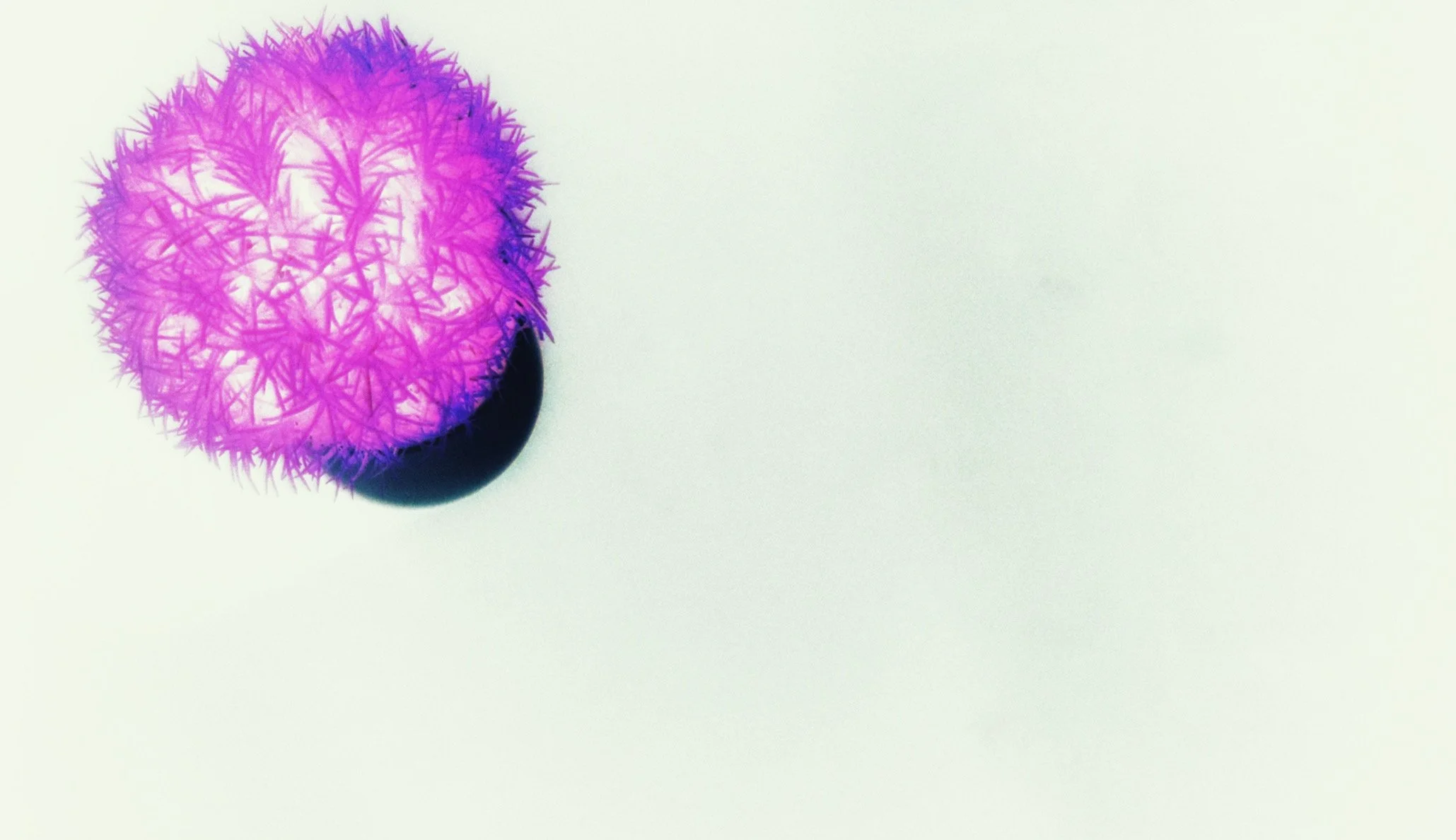
The Poetry of Empty Space
In contemporary photography, empty space is far from absence—it is form, rhythm, and visual breath. Negative space, the area surrounding a subject, often overlooked, has immense narrative and emotional power.
The brain, guided by Gestalt principles, instinctively completes incomplete shapes, seeks harmony between presence and absence, and interprets emptiness as structure. Photographers like Fan Ho and Shoji Ueda have elevated negative space from background to central character, proving that the void can carry meaning, tension, and poetry.
Even contemporary artists like Michael Wolf and Todd Hido demonstrate that negative space is not emptiness but a storytelling tool, capable of transforming urban density and suburban quietude into immersive visual experiences.
Psychology of Perception and Gestalt Principles in Photography
Understanding negative space in photographic composition requires exploring Gestalt psychology:
Figure/Ground: How Empty Space Highlights the Subject
The mind automatically distinguishes figure from ground. Thoughtful use of negative space ensures the subject emerges naturally, creating immediate clarity and visual balance. Fan Ho’s black-and-white street images illustrate this beautifully, where shadows, figures, and empty areas create visual poetry.
Closure: Completing What’s Unseen
Humans instinctively fill gaps. A subject partially surrounded by empty space is perceived as complete, enhancing compositional harmony. Shoji Ueda leveraged this in surreal landscapes and minimalistic compositions, producing tension, balance, and a dreamlike atmosphere.
Proximity and Continuity: Guiding the Viewer’s Eye
Elements placed near each other are perceived as a group, while negative space separates and accentuates them. Empty areas define rhythm, direction, and depth, guiding the viewer through the image and creating immersive poetic street photography experiences.
Negative Space as a Narrative Tool
Negative space is not just “background”: it tells stories, modulates emotion, and directs attention.
Fan Ho: Urban Poetry and Light Geometry
Fan Ho, photographer and filmmaker, famously stated:
“The space between people and buildings is what makes their forms readable and alive. Without it, the scene loses rhythm and breath.”
In his work, negative space acts as a silent protagonist, structuring rhythm and proportion while amplifying urban solitude.
Shoji Ueda: Minimalism and Surreal Poetry
Shoji Ueda declared:
“Silence is the most intense form of composition. The space around the subject defines it; it is not what is missing.”
His photographs of isolated figures within vast landscapes demonstrate that emptiness itself generates tension, mystery, and balance, guiding the viewer’s perception and emotional response.
Michael Wolf and Todd Hido: The Void as Protagonist
Michael Wolf, known for his urban density studies, observes:
“The empty space between buildings is not mere background; it is what makes forms legible and alive. Without it, the city loses rhythm and breath.”
Todd Hido, famous for his suburban nightscapes, emphasizes:
“The space around a subject tells as much as the subject itself. Absence becomes presence, and visual silence amplifies emotion.”
These photographers highlight how negative space can become the main actor, transforming urban and suburban landscapes into compelling narratives.
Practical Examples
Minimalist architecture: Empty areas accentuate lines, geometry, and materials.
Natural landscapes: Wide skies, deserts, or open spaces isolate the subject and create depth.
Poetic street photography: Even in crowded urban scenes, deliberate emptiness structures rhythm and visual breath.
Practical Applications in Contemporary Photography
Understanding and using negative space yields concrete benefits for photographers, designers, and visual artists.
Highlighting Subjects and Geometry
Empty space around the subject isolates and strengthens its presence, improving clarity, emotional impact, and compositional focus. In portraits or product photography, negative space becomes a tool of visual emphasis rather than background filler.
Creating Tension, Rhythm, and Direction
Negative space can suggest movement, leading the viewer’s eye through the frame. A diagonal void implies direction; a calm expanse conveys tranquility. Mastering the balance of full and empty areas allows photographers to orchestrate visual experience, enhancing engagement and emotional resonance.
Cross-disciplinary Connections
Negative space is central not only in photography but also in design, abstract art, and advertising. Empty areas guide attention, elevate elegance, and emphasize key messages. Its principles are crucial in minimalist campaigns and contemporary visual storytelling.
Practical Techniques
Black and white photography: Enhances contrast between figure and background, emphasizing negative space.
Rule of thirds and leading lines: Combine void and structure for visual balance.
Directional light: Shapes and deepens empty areas, as Fan Ho and Michael Wolf illustrate in their urban compositions.
The Philosophy of Void: Zen, Ma, and Visual Silence
Negative space evokes Eastern philosophy, especially Zen and the Japanese concept of ma. Here, emptiness is not absence but a zone of potential, tension, and harmony.
In contemporary photography, every empty area serves as visual breath, a meditative pause for reflection. Shoji Ueda explains:
“Silence is the most intense form of composition.”
Every well-composed void has aesthetic and narrative purpose, transforming an image from mere visual documentation into immersive artistic experience.
Curatorial Conclusion: Void as Form, Rhythm, and Emotion
Negative space in contemporary photography is not merely a technique; it is balance, narrative tool, and emotional guide. Fan Ho, Shoji Ueda, Michael Wolf, and Todd Hido demonstrate how emptiness can be protagonist, shaping urban streets, landscapes, and minimal compositions into unforgettable works.
In today’s visually saturated world, understanding negative space allows photographers to capture attention, convey emotion, and communicate profound meaning. Every carefully crafted void is a promise of form, a breath of harmony, a pause of visual silence.
Ultimately, negative space is form, rhythm, emotion, and concept. To master it is to master the art of perception, balance, and poetic storytelling in contemporary photography.
If this visual language speaks to your space, you can explore more works.
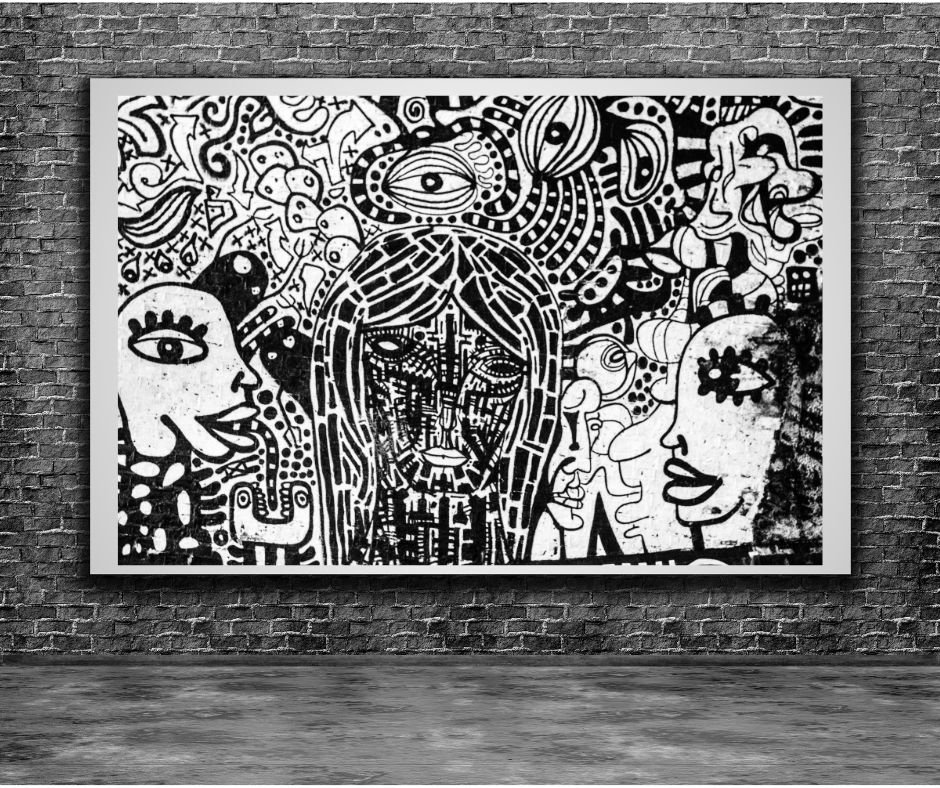
Fine Art Photography Prints: Transforming Spaces with Visual Emotion
In an era dominated by fleeting digital content, where images appear and disappear at the speed of a swipe, there is something profoundly different about a fine art photography print. A print is not just an image—it is a physical presence, a work of art that inhabits a space and reshapes it with depth, meaning, and emotion.
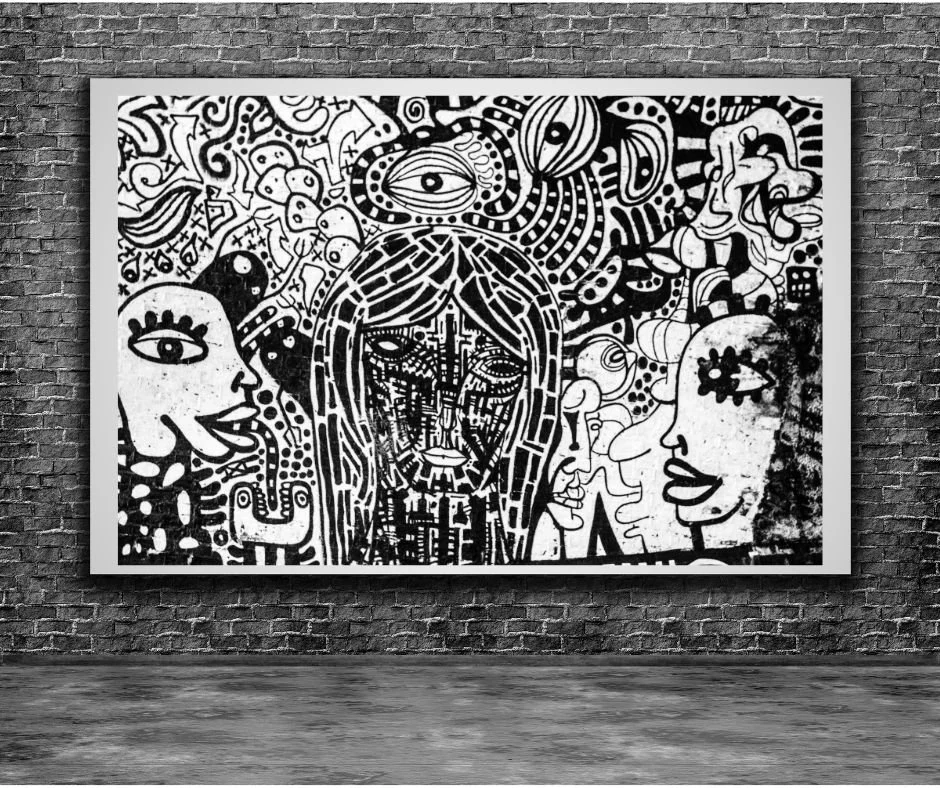
In an era dominated by fleeting digital content, where images appear and disappear at the speed of a swipe, there is something profoundly different about a fine art photography print. A print is not just an image—it is a physical presence, a work of art that inhabits a space and reshapes it with depth, meaning, and emotion.
Beyond the Screen: Why Fine Art Photography Matters
A digital photo can be liked, shared, or forgotten in seconds. A fine art print, instead, lingers. It brings with it the intention of the artist, the sensitivity of their gaze, and the atmosphere captured in a moment that cannot be repeated. To choose a print is to enter into a dialogue with the photographer’s vision—an emotional connection that matures and deepens over time.
When a print enters a room, it doesn’t merely decorate a wall. It creates resonance. It sets a mood. It becomes a silent interlocutor for those who encounter it day after day.
The Dialogue Between Photos and Interior Design
Interior designers and architects increasingly recognize the transformative role of photography. A well-placed photographic print can shift the perception of an entire environment: it can give depth to a minimalist room, inject contrast into a sleek modern space, or bring warmth to a professional office.
Unlike decorative accessories chosen for trend or color coordination, photography carries a universal language. It speaks directly to both the eye and the heart, bypassing cultural and linguistic barriers. An image can calm, energize, provoke thought, or inspire creativity. And in doing so, it becomes an integral part of design—not an addition, but a foundation.
Living with Emotions
Every photograph carries an emotional frequency. Some radiate serenity: a seascape that brings calm, a forest bathed in golden light that restores balance. Others pulse with energy: an urban scene full of movement, a bold portrait that confronts the gaze of the viewer. Still others challenge and provoke, forcing us to pause and reflect.
A photographic print is never neutral. It is a companion—silent yet eloquent—that shapes the atmosphere of a space and influences the emotions of those who inhabit it. Choosing one is not a matter of decoration, but of self-expression.
The Value of the Printed Image
In a digital world where everything seems temporary, the fine art print restores materiality and permanence to photography. Archival papers and museum-quality printing techniques elevate an image beyond reproduction: every detail, every shade, every grain of light is preserved as an authentic artistic statement.
The value of a fine art print lies not only in its aesthetic presence but also in its longevity. Resistant to time, faithful in color, tactile in its texture, it stands as a collectible object—an artwork meant to endure, to be passed on, to become part of a story larger than itself.
Photography Without Borders
One of the strengths of photography is its universality. Unlike spoken language, an image requires no translation. A photograph builds bridges between cultures, conveying sensations and meanings that words often cannot. This is why photographic prints are found not only in private homes but also in hotels, offices, studios, and public spaces worldwide. Each setting gains a unique atmosphere—welcoming, striking, contemplative—that leaves a lasting impression on those who pass through it.
Choosing to Live with Images
To hang a fine art photography print is to make a statement: to choose art, identity, and emotion as part of everyday life. It is not about filling an empty wall—it is about creating an environment that reflects who we are, what we value, and what inspires us.
Fine art photography prints are not mere wall décor. They are artworks that inhabit our spaces and, in doing so, become part of us.
If this image resonates with your space, you can explore the full collection.
Beyond Borders: the International Journey of Fine Art Photography Prints
In the world’s greatest cities, art is not a luxury – it is a language. Walking through New York, from lofts overlooking the Hudson to the galleries of Chelsea, you can feel the hunger for uniqueness, the need to surround yourself with objects that tell a story. In London, between the creative streets of Shoreditch and the refined corners of Notting Hill, walls become canvases where design meets emotion. The same is true in Paris, Berlin, Tokyo: places where exclusivity is not an excess, but a way of expressing identity.
In the world’s greatest cities, art is not a luxury – it is a language. Walking through New York, from lofts overlooking the Hudson to the galleries of Chelsea, you can feel the hunger for uniqueness, the need to surround yourself with objects that tell a story. In London, between the creative streets of Shoreditch and the refined corners of Notting Hill, walls become canvases where design meets emotion. The same is true in Paris, Berlin, Tokyo: places where exclusivity is not an excess, but a way of expressing identity.
This is where our project of fine art photography prints comes to life. We are not talking about simply decorating a wall; we are talking about bringing photography into everyday life, turning it into a living experience. Each print becomes part of a larger narrative, a bridge between cultures, a voice that speaks beyond borders.
The growing desire for originality
Those who live in a metropolis know the feeling: being surrounded by images, everywhere. Billboards, social feeds, advertisements – a visual overload. And precisely because of this, people crave authenticity.
A fine art print is not just a reproduction; it is an object of value. Carefully produced with archival materials, designed to last, and born from the unique vision of the photographer. It embodies exclusivity, intimacy, and originality.
Today, collectors and design lovers are no longer satisfied with mainstream, mass-produced images. They want to discover emerging photographers, to bring fresh perspectives into their homes and workspaces. That’s why our prints resonate in Brooklyn lofts, in London creative studios, in offices and public spaces where art becomes a statement of identity.
Building relationships, not transactions
For us, this project is not about selling photography online. It is about building connections. Every time a print leaves Italy and arrives in New York, London, Berlin, or Sydney, a new story begins. It is more than a transaction; it is a dialogue.
Our vision is to create a global community of collectors, interior designers, and art lovers who share the same passion for photography, design, and emotional storytelling.
Every collector is not just a buyer – they are a partner, a companion on this journey. We believe in creating long-lasting relationships, built on trust, appreciation, and shared values. When someone hangs one of our prints, they are not just hanging an image; they are embracing a connection.
International by nature
Our roots are in Italy, but our mission is international. Photography is a universal language: light, form, and color speak to everyone, no matter the culture or location.
This is why we look with enthusiasm to global metropolises. In New York, people search for exclusivity. In London, curiosity about emerging talent runs deep. In Berlin, the spirit of experimentation thrives. We want to be part of all these dialogues – not as spectators, but as contributors.
More than a frame
A fine art print is more than paper, ink, and frame. It is a journey. It is the chance to bring a fragment of the world into your own space. For those who live in fast-moving cities, pausing in front of an image becomes an act of balance, a moment of stillness.
This is why we believe art should have no boundaries – not geographical, not cultural, not emotional.
Our mission is simple yet ambitious: to share photography everywhere there is a desire for authenticity and beauty. From Italy to the entire world, beyond borders.
If this image resonates with your space, you can explore the full collection.
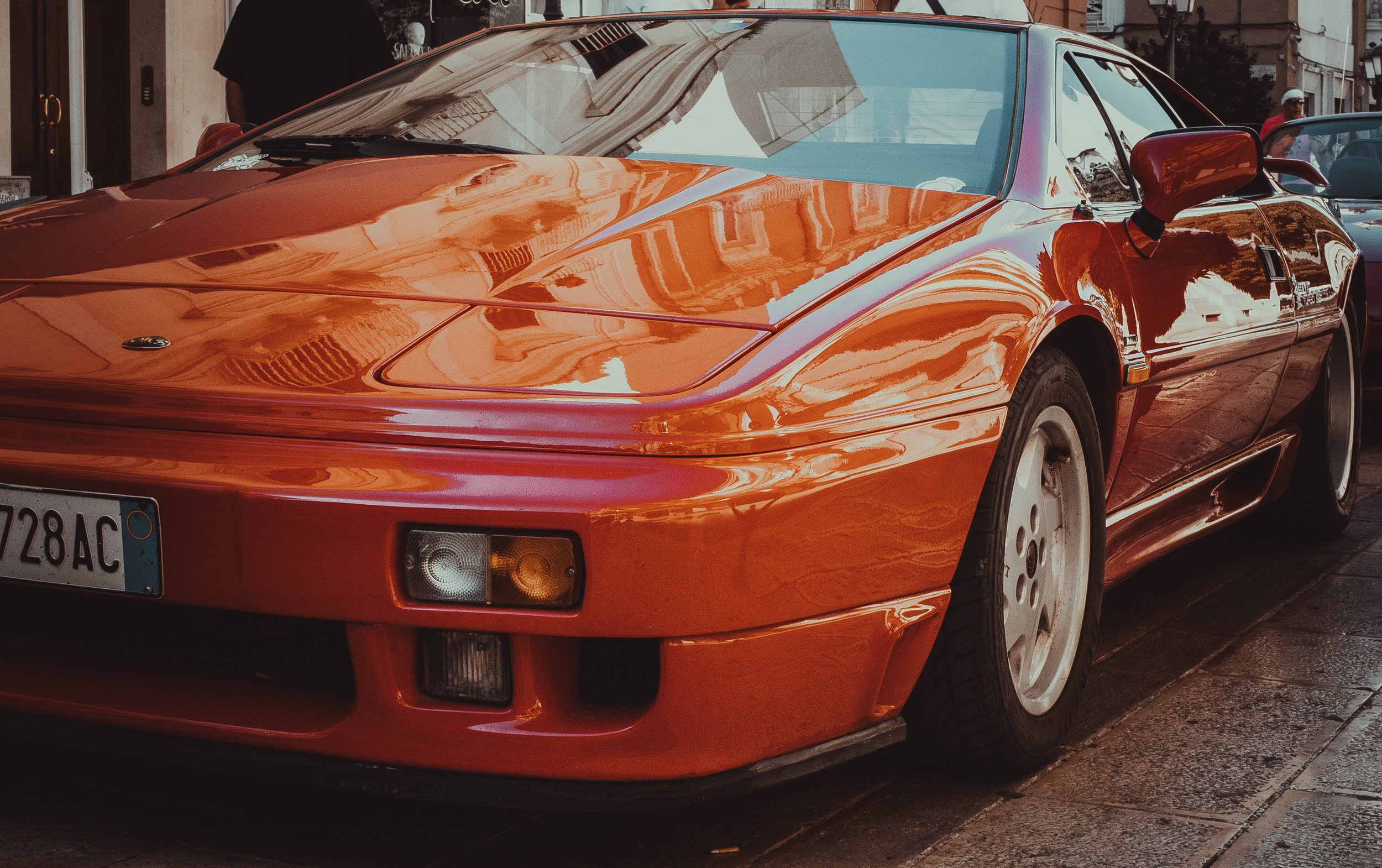
Timeless Design: From Classic Cars to Fine Art Photography
The recent classic car event in Taranto brought back to the streets not only historic vehicles but also enduring symbols of timeless design. The roar of the engines, the sculpted lines, the shining chrome — everything spoke of an era when style and durability outweighed pure function.
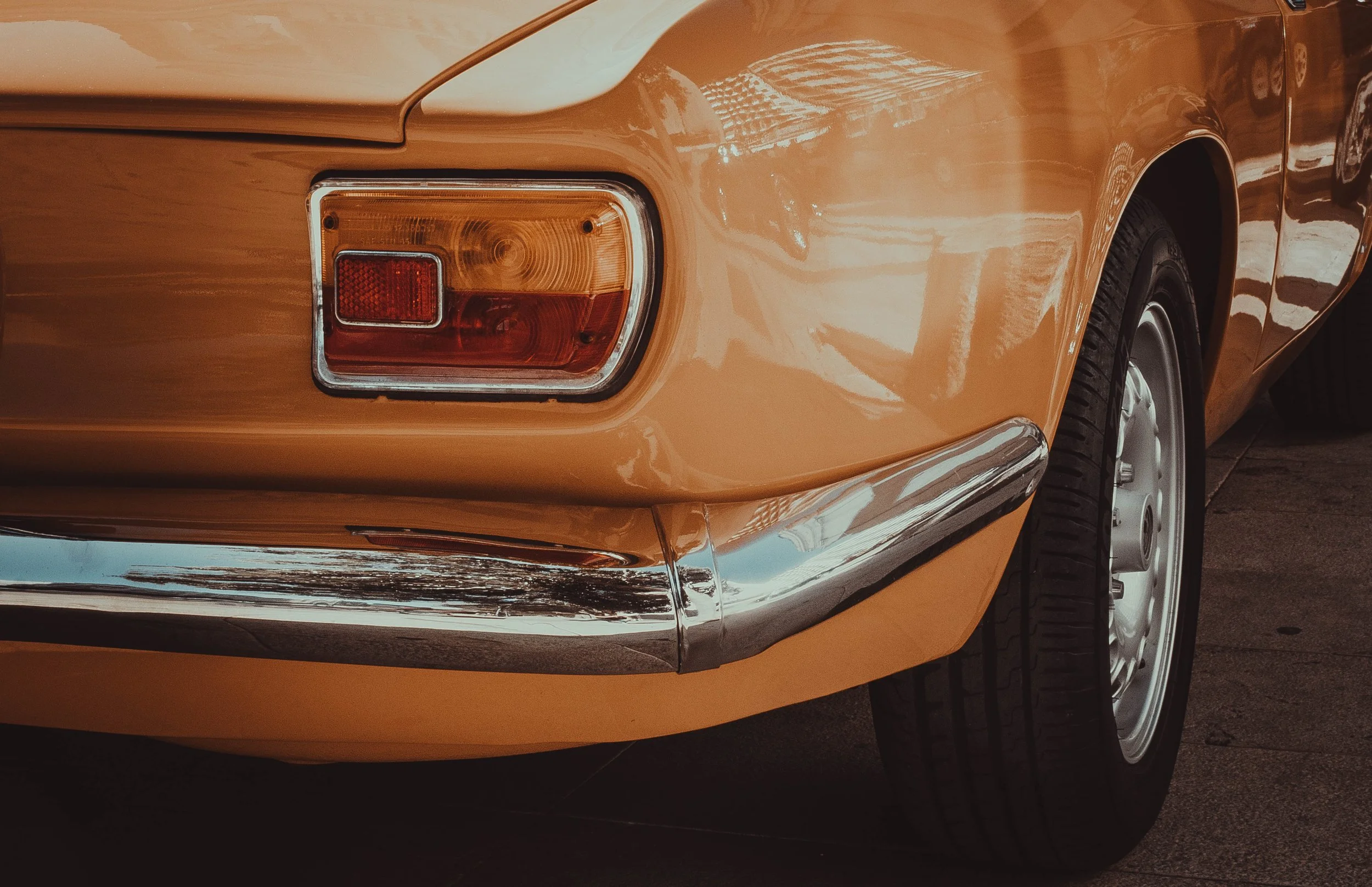
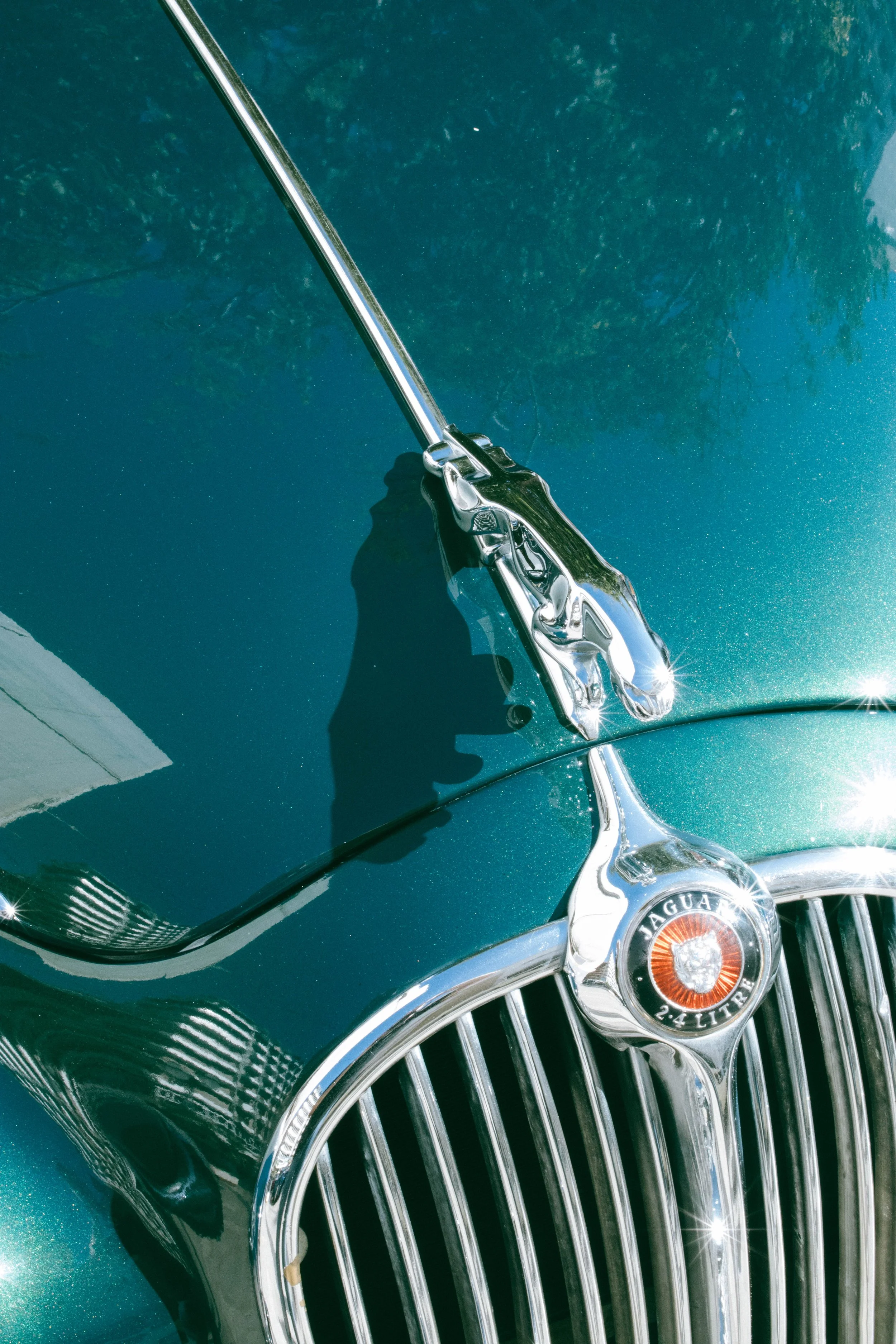
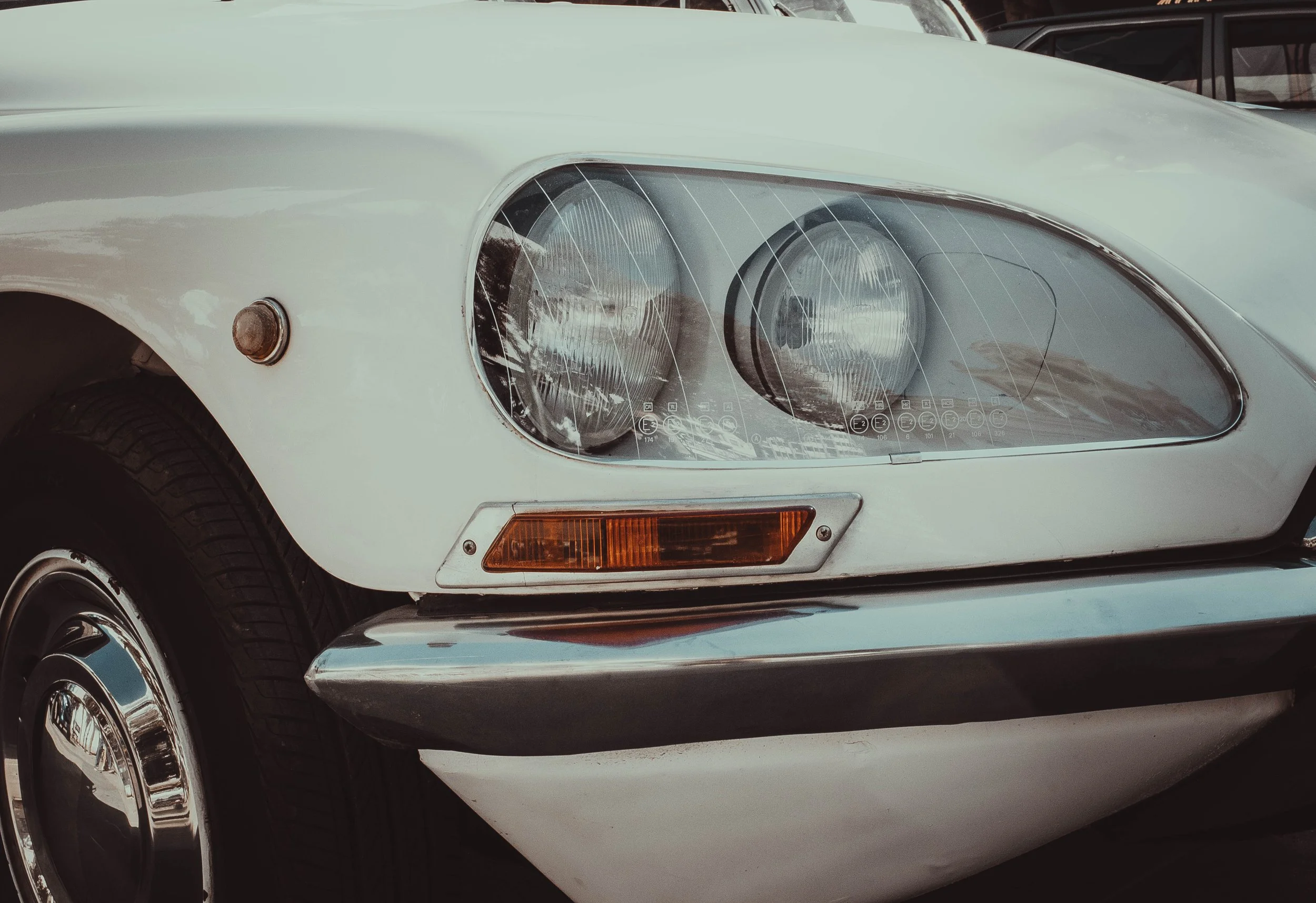
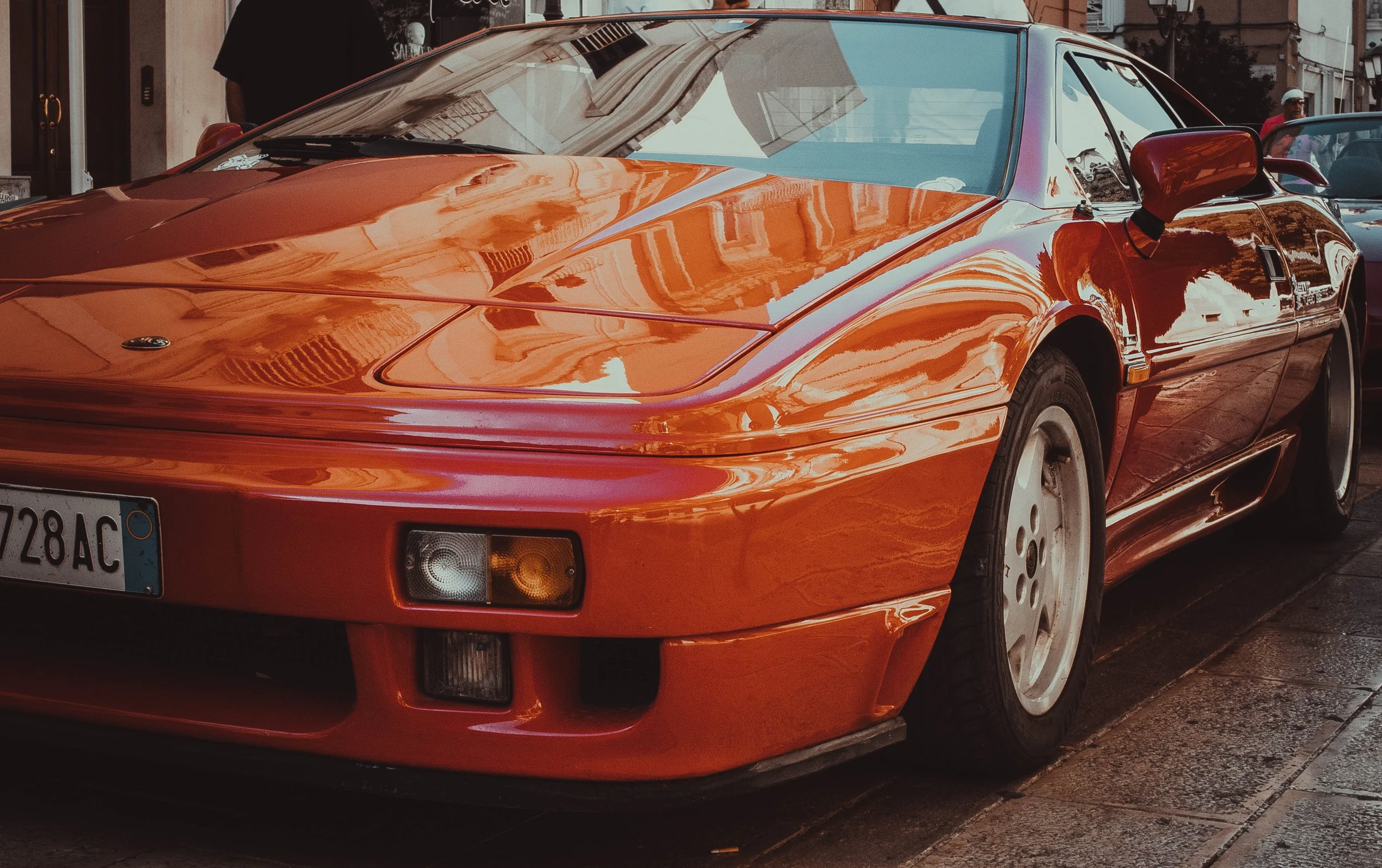
Taranto and the beauty of icons
The recent classic car event in Taranto brought back to the streets not only historic vehicles but also enduring symbols of timeless design. The roar of the engines, the sculpted lines, the shining chrome — everything spoke of an era when style and durability outweighed pure function.
Looking at a vintage Alfa Romeo or the iconic Fiat 500, we are not just admiring cars, but true masterpieces of aesthetics and engineering, created to inspire across generations.
This naturally opens a parallel with another creative discipline: fine art photography, where beauty is also preserved and celebrated across time.
Classic cars: the value of enduring design
Every classic car carries a unique story. The Alfa Romeo, with its sporty yet refined shapes, has long embodied Italian automotive passion. The Fiat 500, on the other hand, transcended its role as a vehicle to become a cultural icon — a symbol of accessible style and Italian ingenuity.
These cars are more than collectibles: they are proof that authentic design never loses its value. Their harmonious proportions, refined details, and quality craftsmanship continue to resonate today, long after their creation.
Fine art photography: not decoration, but identity
Similarly, fine art prints go beyond decoration. They do not simply fill a blank wall; they define a space and communicate a message.
A fine art photograph tells an emotion, a perspective, a moment captured with the same care that an automotive designer invested in shaping a car’s silhouette. To choose a fine art print is to make a statement of identity: to enrich a living or working environment with a piece that reflects one’s taste, style, and personality.
Timeless design: drawing the parallel
The parallel between classic cars and fine art photography is clear.
A vintage Alfa Romeo preserved in a collector’s garage is conceptually akin to a photograph displayed in a minimalist interior: both are objects of cult value.
The soft curves of the Fiat 500 echo the way photography can feel both familiar and surprising.
In both cases, these creations transcend trends and continue to express beauty across time.
An aesthetic investment
Just as classic cars are not only an aesthetic pleasure but also an investment, so too are fine art photography prints. Beyond the quality of materials, their value lies in their uniqueness.
In an era flooded with digital imagery, choosing a fine art print means embracing rarity, tangibility, and the ownership of an artwork that cannot be endlessly reproduced.
Simon Joyce Photo: looking ahead
The Taranto event sparked not only striking photographs but also reflections on the future of Simon Joyce Photo. Perhaps new collections inspired by the world of classic cars will emerge, merging automotive design with photographic vision.
Because in the end, whether it is a vintage car or a fine art photograph, the mission remains the same: to offer beauty that lasts through time.
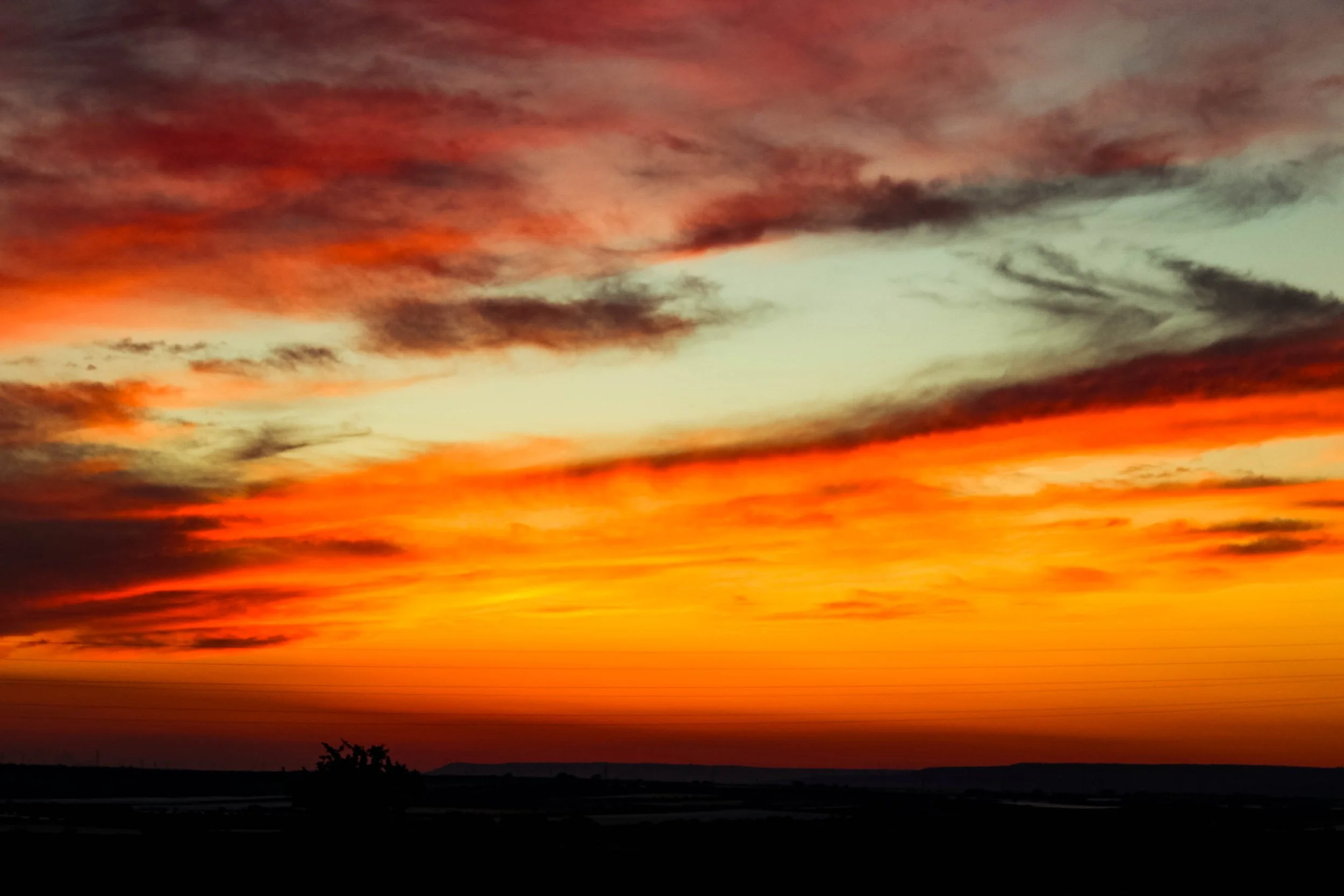
don’t be static | New Collection & Access Series
Art, like life, is never static. Every image is the outcome of a journey, of an evolving vision, of a perspective that changes with the artist. That journey never stops: it grows, it deepens, it shifts. This constant transformation is the essence of fine art photography.
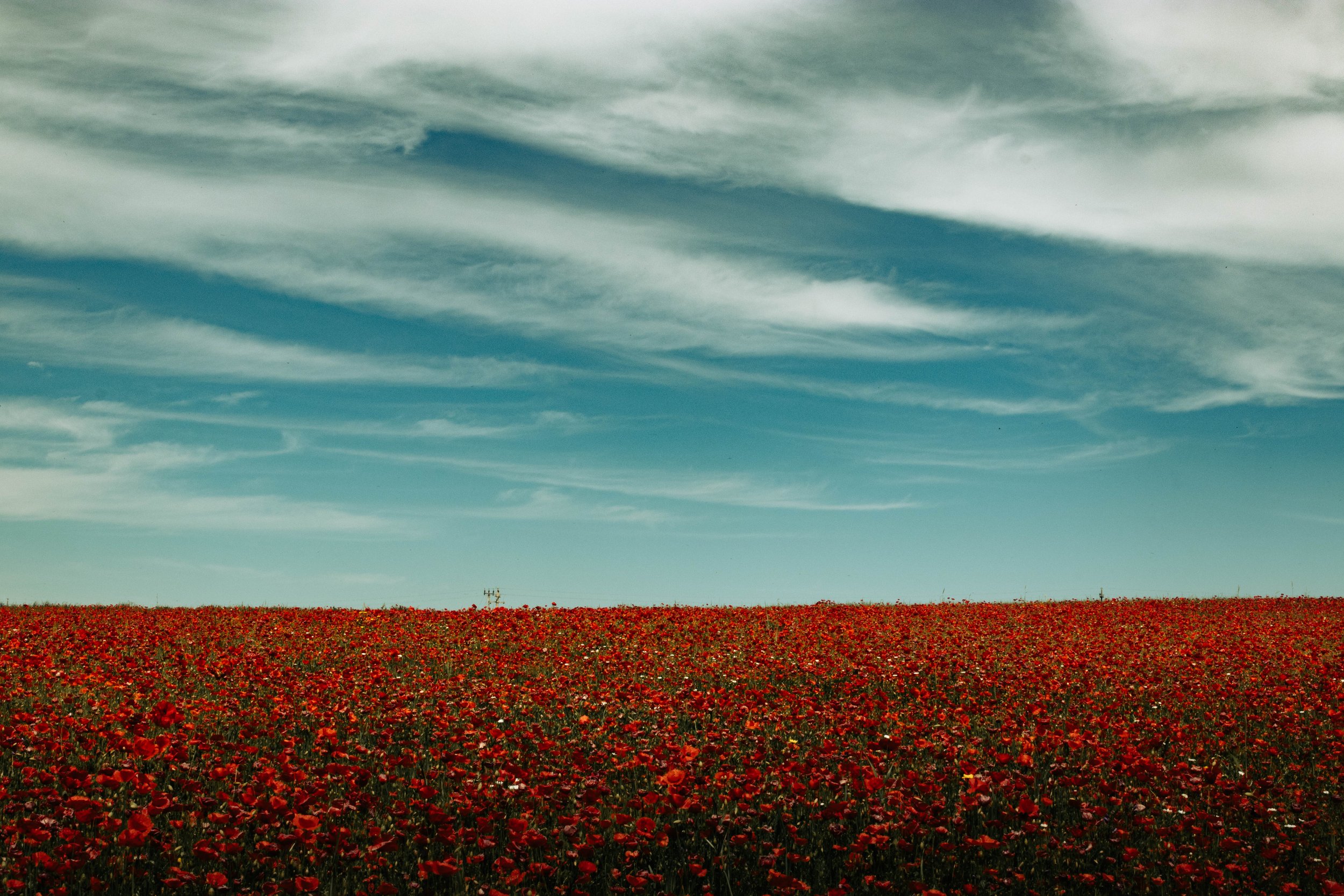
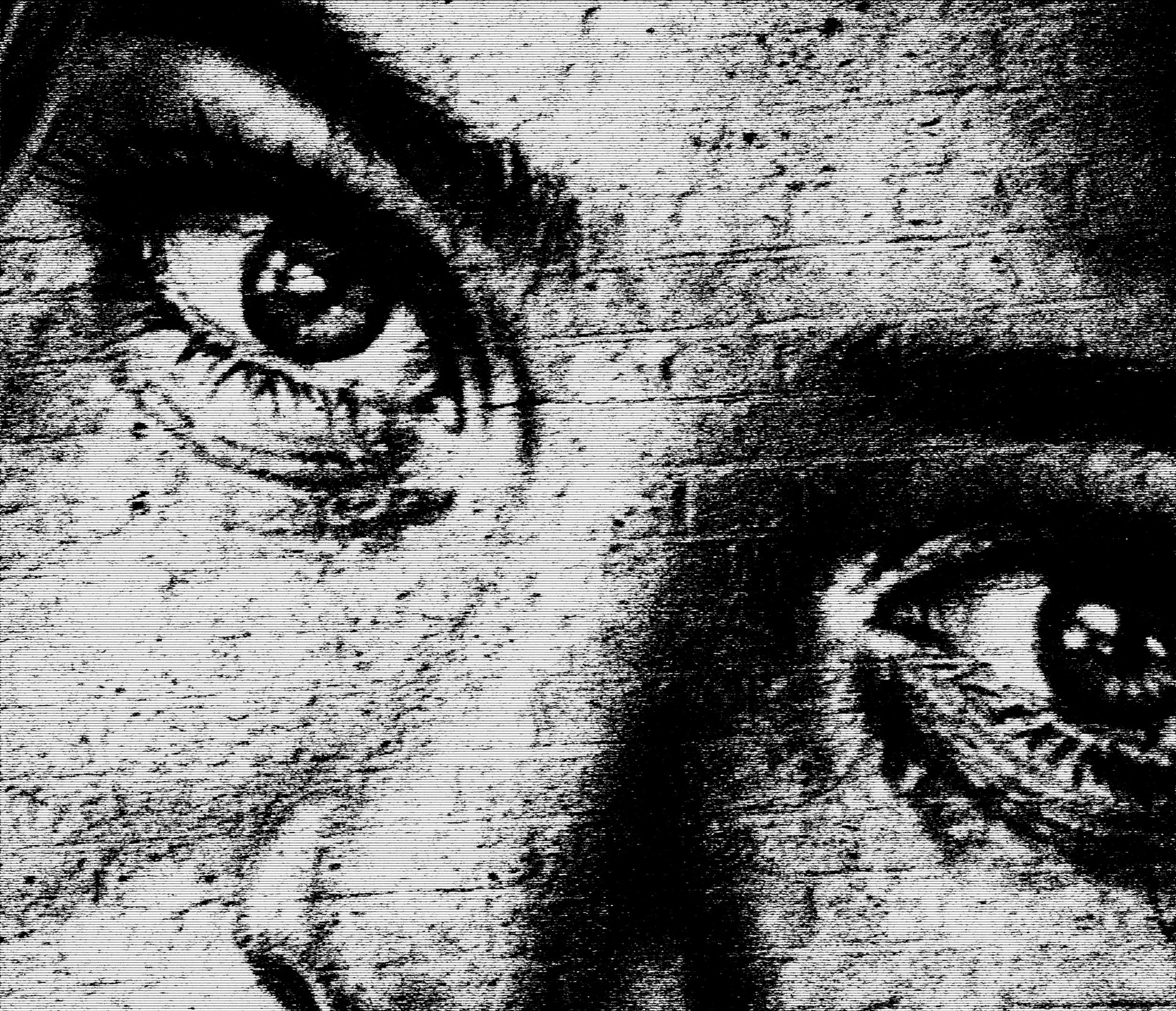
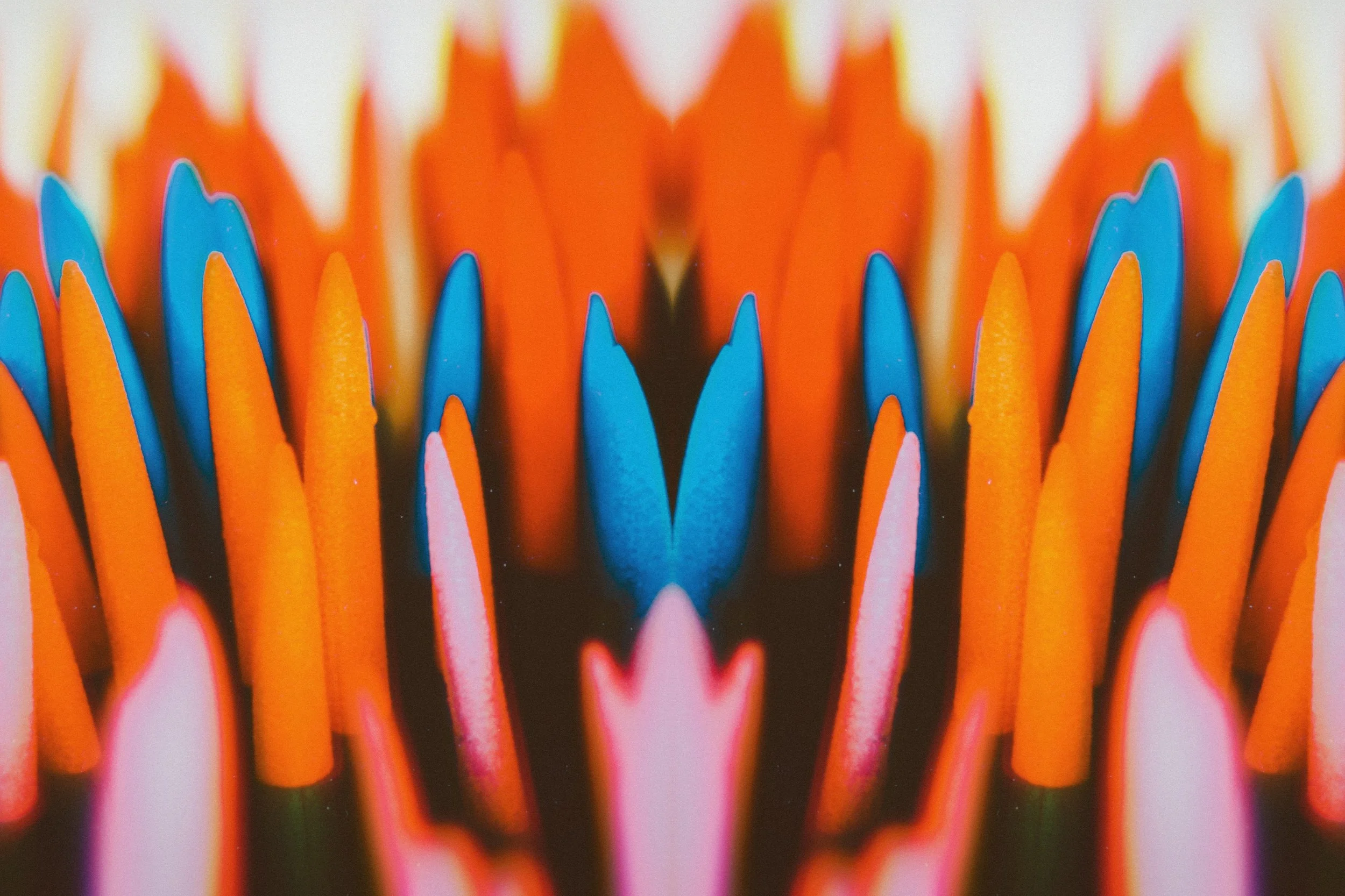
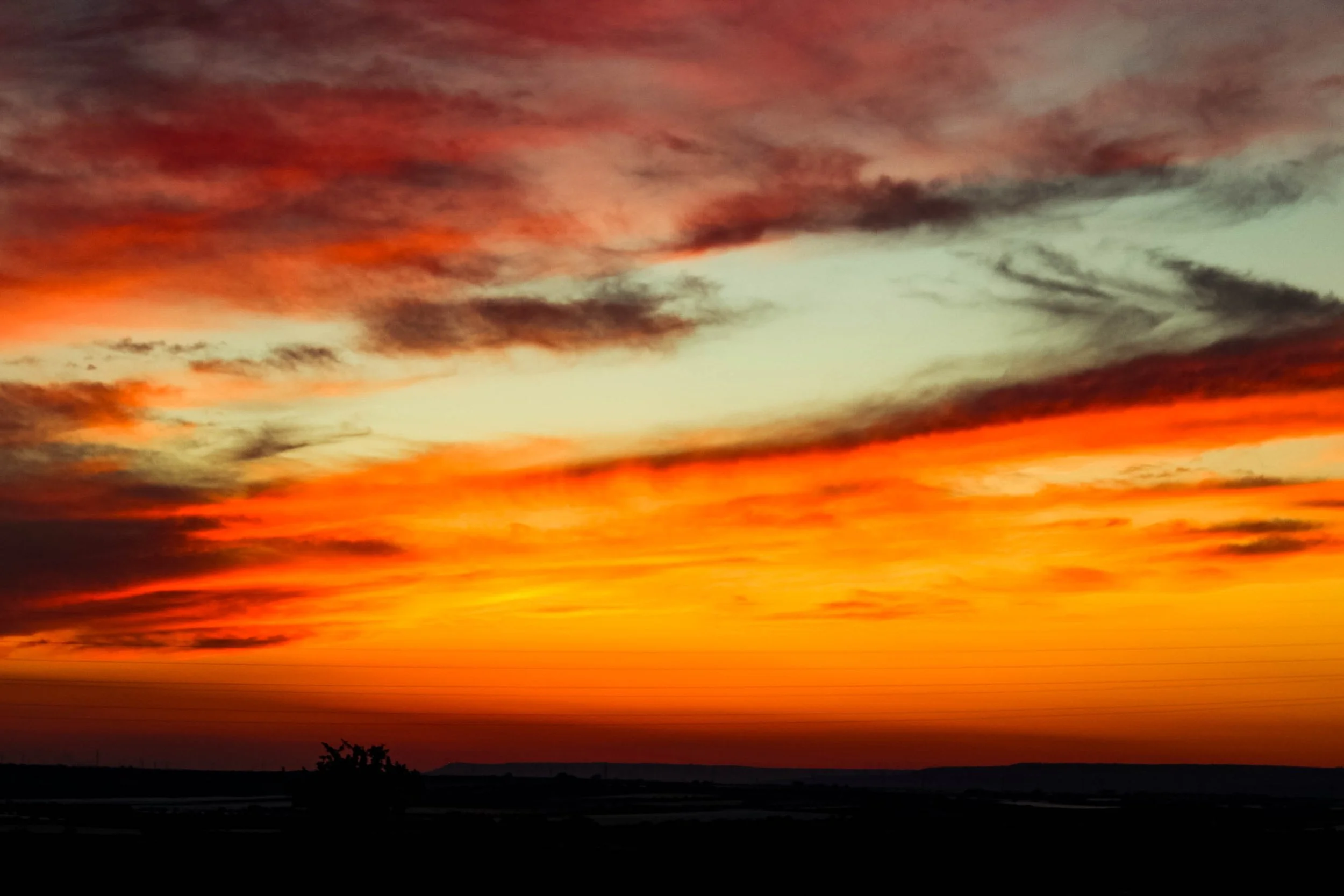
Art, like life, is never static. Every image is the outcome of a journey, of an evolving vision, of a perspective that changes with the artist. That journey never stops: it grows, it deepens, it shifts. This constant transformation is the essence of fine art photography. And today, this energy takes shape in two exciting novelties: the New Collection and the Access Series, two different but complementary ways to experience the photographic vision of Simon Joyce Photo.
Why novelty matters
Why release new works when the existing collection is already solid and recognizable? The answer is simple: without novelty, art risks becoming static, predictable, even boring.
Our homes and workplaces need visual stimuli that keep them alive. A new photographic artwork is not just another picture; it’s a spark that renews the atmosphere, a detail that can transform the perception of an entire room.
Photography has the power to turn a space into an experience. That’s why the Simon Joyce new photography collection is not just a set of images: it’s an invitation to rediscover art every day, to refuse the comfort of the familiar, to embrace change.
The New Collection – 20 new fine art photographs
At the heart of this launch lies the New Collection: 20 new original photographs, created for those who want to own something unique and exclusive.
Each print is produced on museum-quality fine art paper, offering extraordinary detail and longevity. These are not just decorations; they are fine art photography prints capable of telling stories, capturing unrepeatable moments, and bringing the universal language of emotions into your living spaces.
The New Collection is perfect for those who seek authenticity and want to invest in a piece that is not only beautiful but also deeply personal, a work of art that becomes part of your identity.
The Access Series – same emotion, affordable price
Alongside the exclusivity of the New Collection comes a second line: the Access Series.
Here, the same photographs are offered in an entry-level format, with high-quality art prints at an affordable price. Perfect for photography lovers who wish to live with contemporary art without heavy investment.
Why give up when you can enjoy the same visual impact in a different form? The Access Series is not a compromise but an opening: a way to make contemporary art truly inclusive, without losing its essence. It’s a bridge between the world of exclusive collecting and the everyday desire for beauty.
Evolution as a value
These two lines – the New Collection and the Access Series – are not just product categories. They represent an artistic journey in continuous evolution.
Each new photograph is a chapter in Simon Joyce’s creative story; each series is an opportunity to approach his language and become part of an ongoing journey.
Fine art photography is not a static object but a living experience. Bringing it into your space means allowing art to evolve with you, to grow and transform as your life does.
Stay connected to art
Buying a print today doesn’t mean closing a circle, but opening a new one. It means entering into a relationship with the artist, following his developments, staying connected to future collections.
That’s why we invite you to explore the New Collection and the Access Series at www.simonjoycephoto.com. Because staying connected to art means never stopping to feel inspired.
Whether you choose the exclusivity of the New Collection or the accessibility of the Access Series, the important thing is not to stop seeking beauty – to surround yourself with visual stimuli that transform spaces into life experiences.
Don’t let your walls stand still: Don’t Be Static. Choose novelty, choose your art.
Visit our shop to stay up to date with new collections and initiatives.
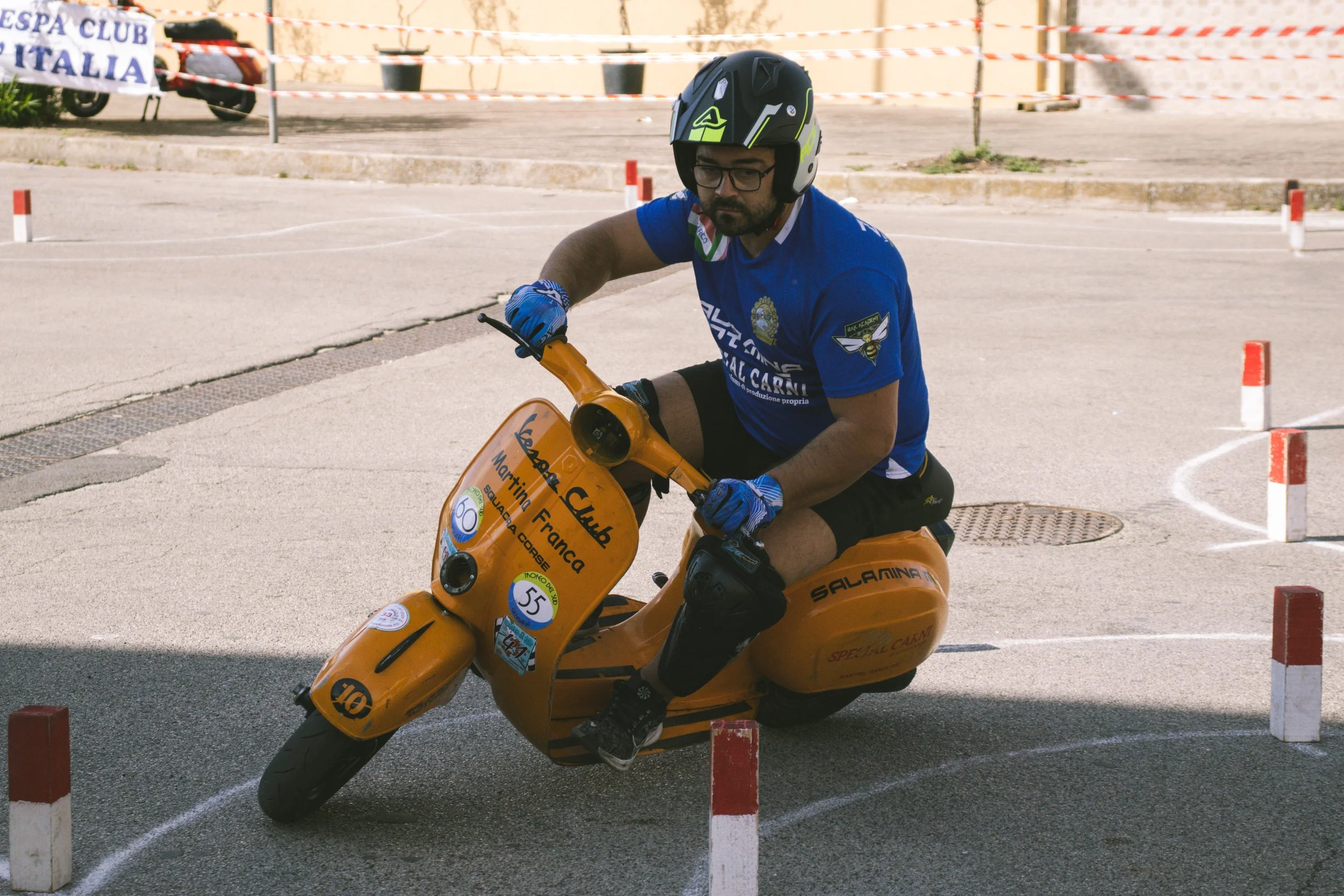
A Sunday as Sharp as the Vespas
This past Sunday was one of those occasions. I attended, as a spectator and observer, an interregional Vespa gimkana championship in Puglia and Basilicata. It’s a discipline of skill I didn’t know deeply before, but it surprised me with its contagious energy. The protagonists? The Piaggio Vespa, in different versions and ages, and above all the riders who ride them with passion, facing curves and slalom with a lightness that feels almost playful.
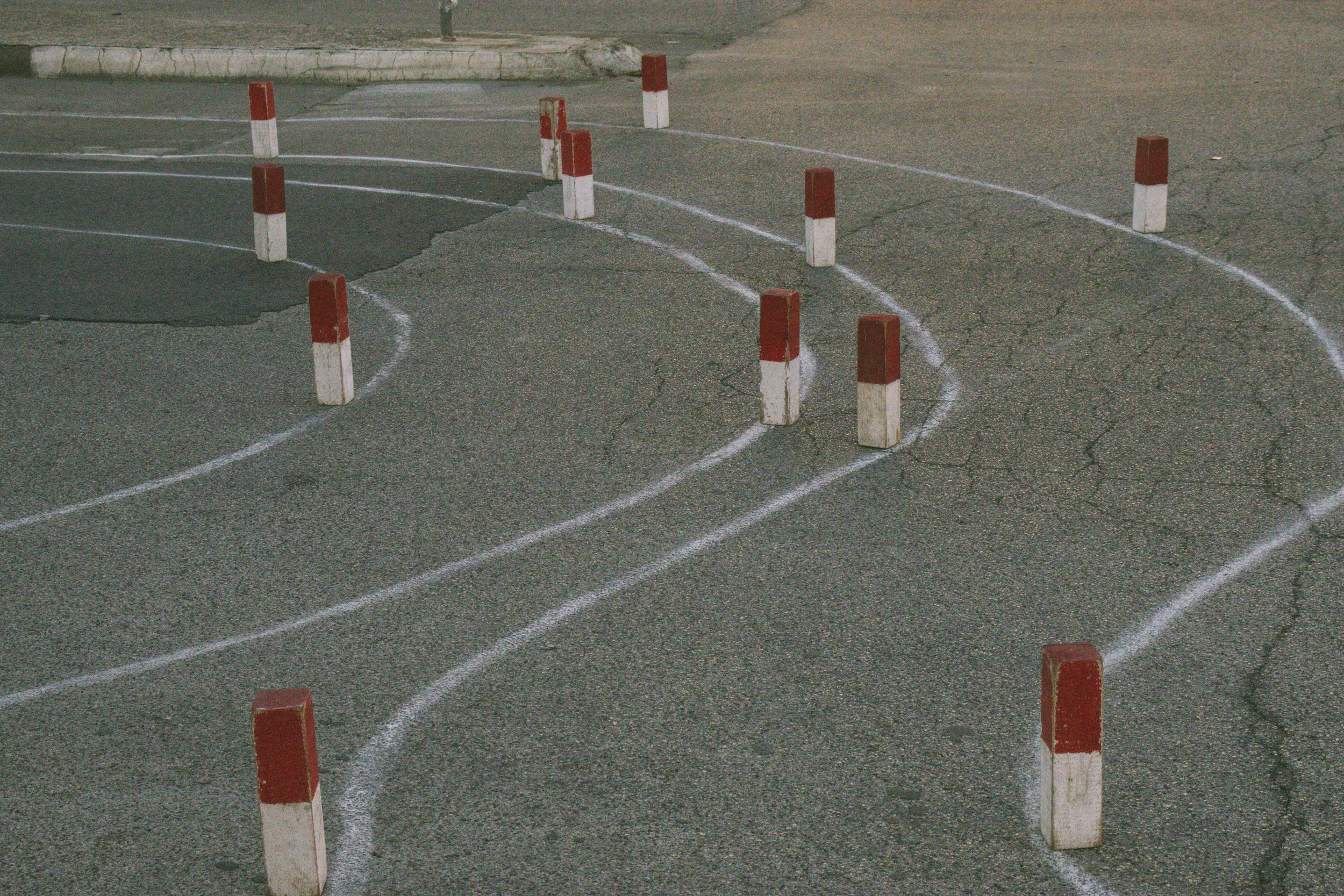
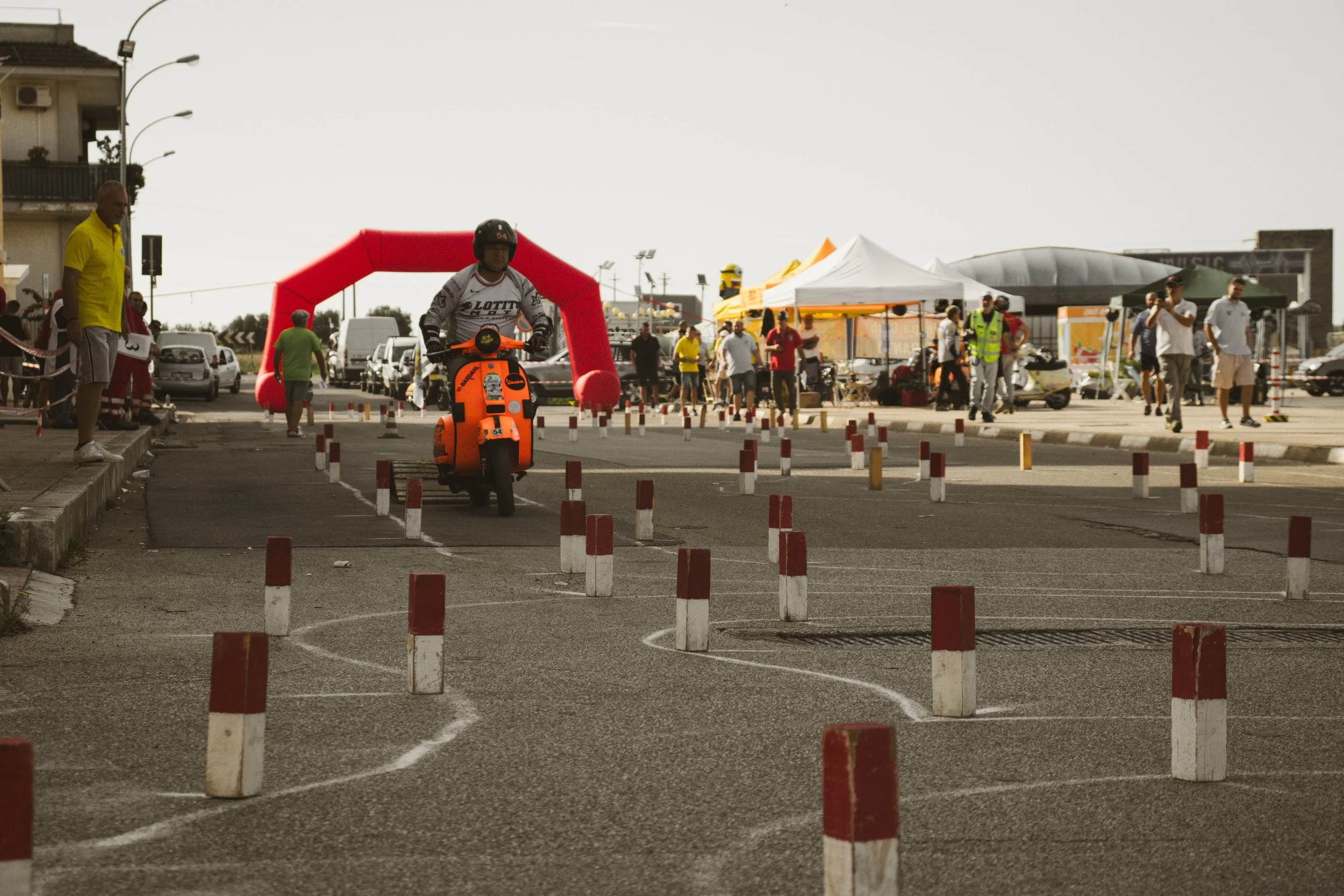
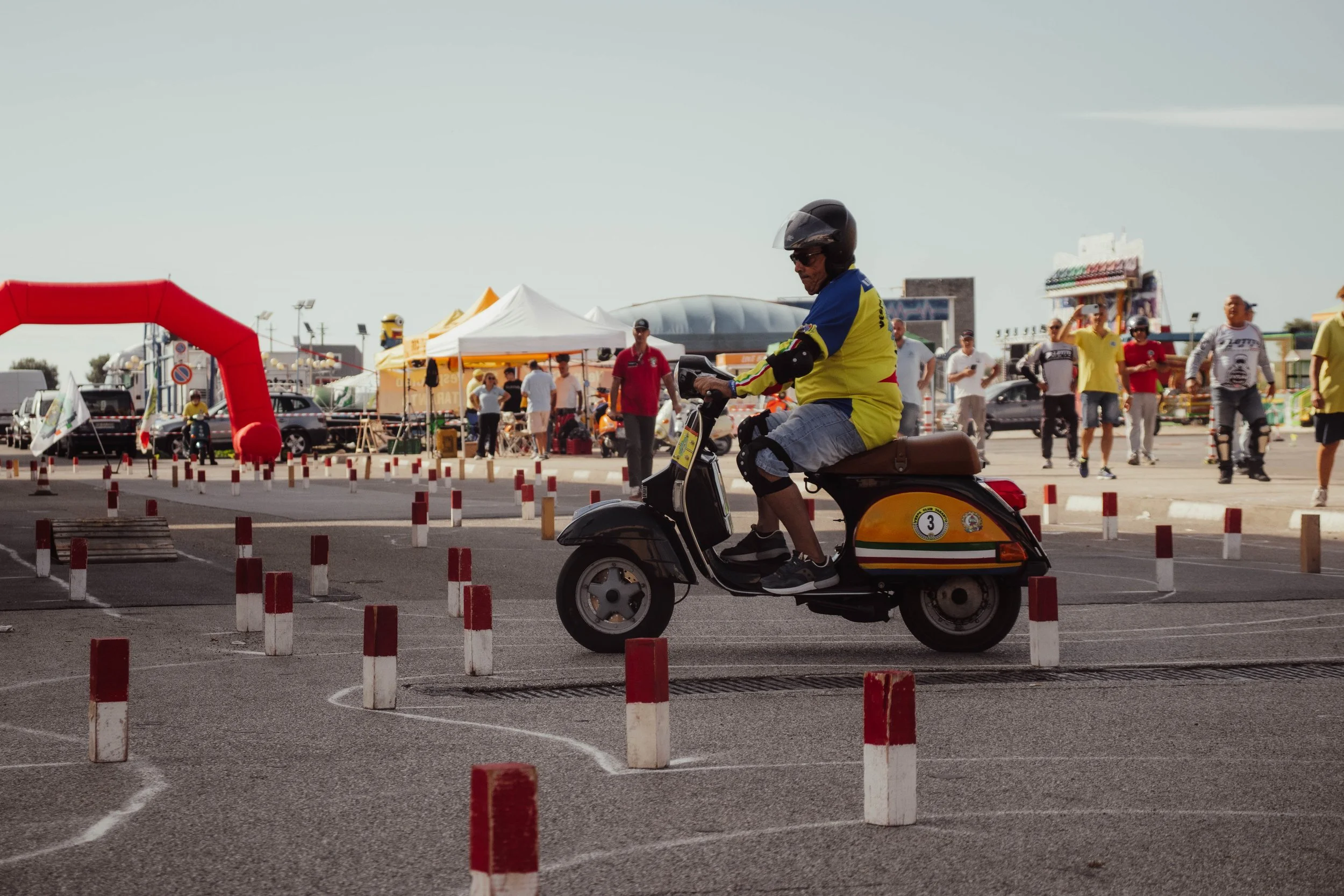
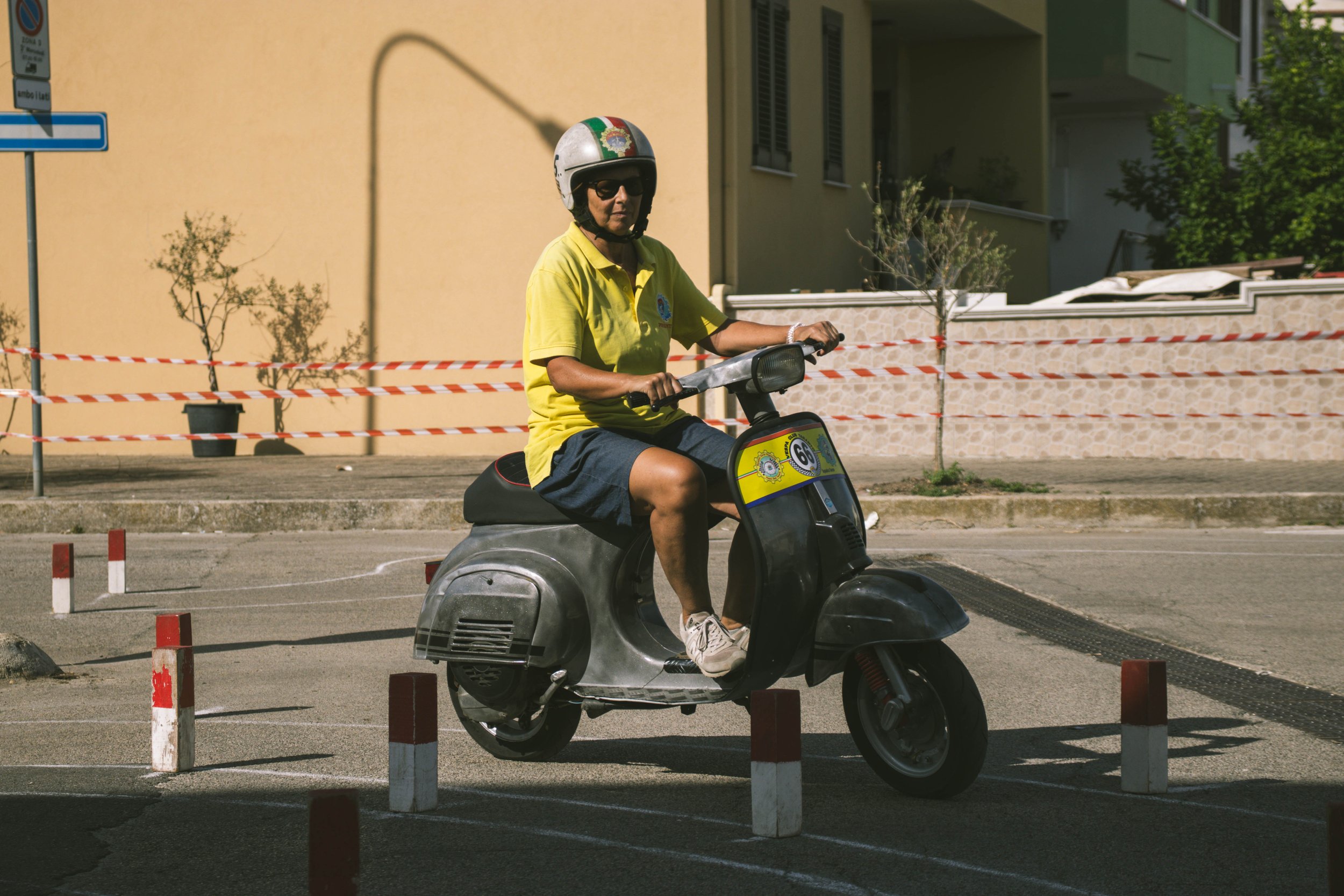
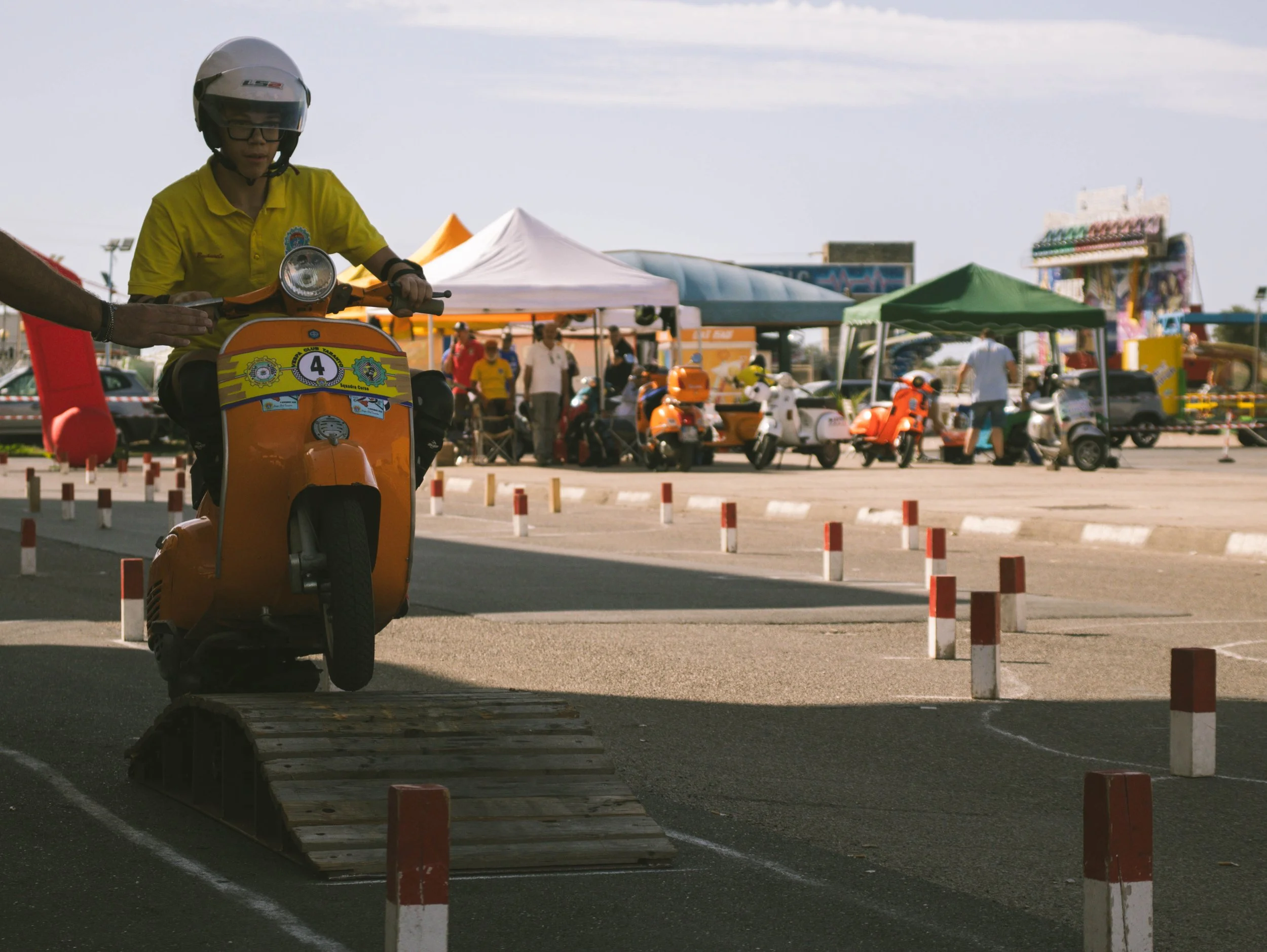
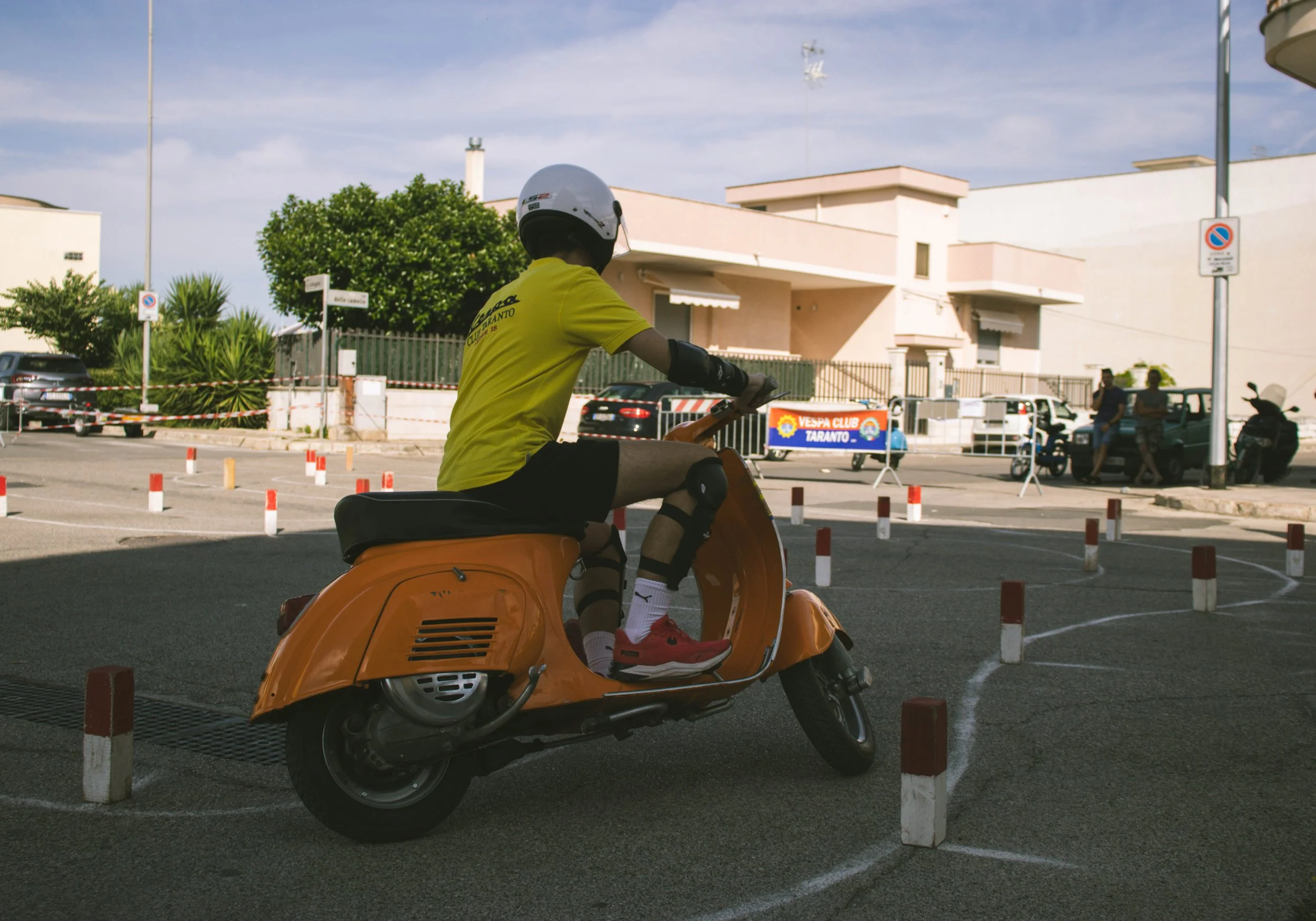
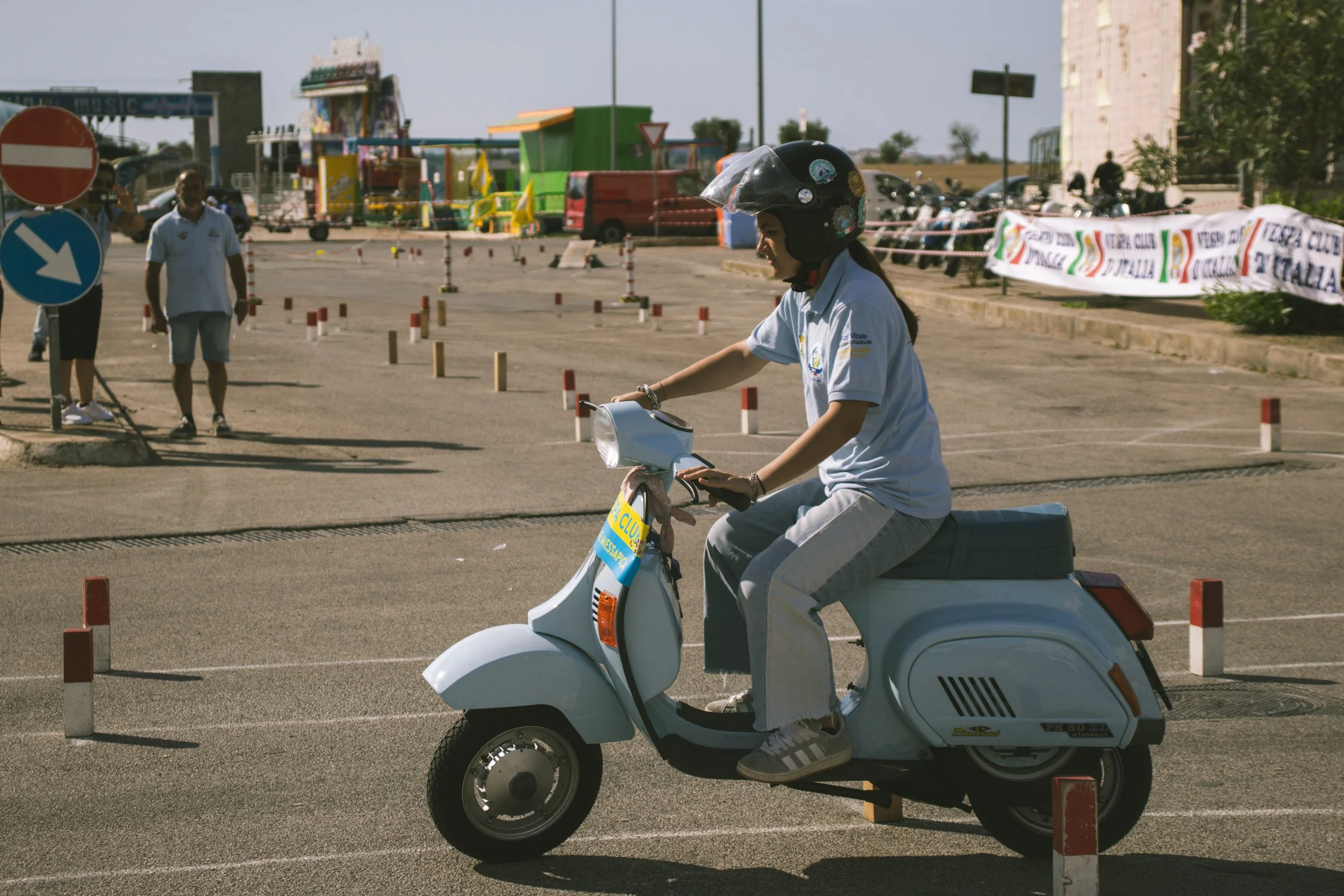
There are days when I feel the need to breathe a little fresh air. Not just stepping outside the studio or taking a break from daily tasks, but allowing myself a moment where photography returns to its most genuine roots: pure fun, curiosity, instinct. Not fine art, not complex projects, not the constant pressure to create something “serious.” Just the joy of looking, listening, and capturing.
This past Sunday was one of those occasions. I attended, as a spectator and observer, an interregional Vespa gimkana championship in Puglia and Basilicata. It’s a discipline of skill I didn’t know deeply before, but it surprised me with its contagious energy. The protagonists? The Piaggio Vespa, in different versions and ages, and above all the riders who ride them with passion, facing curves and slalom with a lightness that feels almost playful.
I wasn’t the official photographer of the event, and perhaps that was the most liberating detail: no rules to follow, no assignments to deliver, no deadlines to meet. Just me, my camera, and a new context to dive into. It was like going back to the early days, when taking pictures simply meant exploring without expectations. I observed the track, the riders preparing, the focus in their eyes. I followed, through the lens, the sudden trajectories, the fast turns, the precise maneuvers.
Gimkana racing is not pure speed like track competitions: it’s technique, balance, and precision. And for a photographer, it means chasing motion while never losing sight of the gesture. I discovered that mistakes aren’t the enemy here: sometimes a blur tells the story better than sharpness, capturing the vibration of a moment, the fleeting passage, the tension that transforms into dynamism.
Around me, the audience. Families, enthusiasts, curious visitors. All united by one thing: a smile. The atmosphere was light, convivial, far away from the solemnity of an art exhibition or the silence of a gallery. And yet, even here, among the roar of engines and chalk-drawn curves, I found photographic material. Maybe not the kind that will end up in fine art photography portfolios, but definitely the kind that becomes part of my personal archive of memories and experiences.
This Sunday reminded me that photography is a language that adapts to everything: it can be an instrument of artistic research, a tool of documentary storytelling, but it can also remain a simple game. And within play lies a truth we often forget: there is no need for a “higher” purpose to give value to an image. It is enough that an eye turns into memory, that a fleeting instant remains carved into time, even if only for myself.
Some might ask: what does this have to do with fine art photography? Maybe little, maybe a lot. It depends on perspective. I believe that experiences like these feed the most genuine part of creative vision. They’re like stretching exercises for the eye and the mind: loosening up, stepping outside of one’s usual frameworks, experimenting with rhythms and situations that normally don’t belong to artistic practice. And when I return to structured projects, something fresh always sneaks in, shaped by these side experiences.
At the end of the day, driving back home, I realized how precious this break had been. A Sunday as sharp as the Vespas racing on the track. Sharp because it woke me up from a certain dullness, because it reminded me that photography is not only about work, recognition, or results. It’s also — and above all — about freedom of vision, the desire to be present, to capture ephemeral moments that will never return.
These images may not find a place in my official collections. They may never become prints or hang on a wall. But they are proof that there are times when I’ve lived photography with lightness, with authenticity, with joy. And that, I believe, is worth as much as any portfolio.
Alessandra Sanguinetti: time as a photographic narrative
To talk about Alessandra Sanguinetti is to enter a visual universe that moves between reality and fiction, between documentation and symbolic narrative. Born in New York in 1968, raised in Argentina and now living in the United States, Sanguinetti is a photographer who has chosen to build her work on long-term projects. She is not interested in the speed of visual consumption, but in the sedimentation of stories, the possibility that photography can become a window on time.
To talk about Alessandra Sanguinetti is to enter a visual universe that moves between reality and fiction, between documentation and symbolic narrative. Born in New York in 1968, raised in Argentina and now living in the United States, Sanguinetti is a photographer who has chosen to build her work on long-term projects. She is not interested in the speed of visual consumption, but in the sedimentation of stories, the possibility that photography can become a window on time.
Her name is often linked to The Adventures of Guille and Belinda, a series she began in the late 1990s and which continues today. Two Argentine girls – cousins – have become the unwitting protagonists of a photographic narrative that accompanies them from childhood to adulthood. These images are not simply portraits of two people: they are visible traces of how the years transform bodies, friendships and dreams, and at the same time of how photography can be the guardian of silent metamorphoses.
Beyond documentary: photography as personal myth
One of Sanguinetti's most fascinating aspects is her ability to go beyond pure documentation. Although her training and membership of Magnum Photos place her in the tradition of reportage and documentary photography, her images are never strictly chronicles.
In Guille and Belinda, for example, the shots are not limited to recording moments in the lives of the two girls. The scenes are often constructed with a certain amount of theatricality: poses, gestures, small symbolic objects. All this transforms the subjects into almost mythological figures, suspended in a realm that is as reminiscent of fairy tales as it is of dreams. The boundary between what happened and what was imagined becomes blurred, and this is precisely where the strength of his work lies: reality is not denied, but enriched by a poetic dimension.
His photography reminds us that truth is never just a fact, but also a feeling, a perception, a story that constructs meaning.
Il tempo come protagonista invisibile
Ciò che rende Sanguinetti unica nel panorama fotografico contemporaneo è la durata dei suoi progetti. In un’epoca segnata dall’istantaneità – in cui ogni immagine è consumata e dimenticata nel giro di pochi secondi – lei sceglie la via opposta: tornare, aspettare, osservare.
Seguiamo Guille e Belinda da bambine a donne, e con loro attraversiamo anche i cambiamenti sociali e culturali dell’Argentina rurale. La fotografia diventa un archivio intimo che documenta non solo due vite, ma anche un contesto più ampio. È un’opera che parla di memoria, di appartenenza, di radici.
In questo senso, Sanguinetti sembra lavorare contro il tempo, o meglio: con il tempo. Ogni sua immagine ci ricorda che la fotografia, pur essendo un frammento istantaneo, ha il potere di estendersi, di stratificarsi, di raccontare più di ciò che appare in superficie.
Sguardo femminile e intimità
Un altro elemento centrale del lavoro di Sanguinetti è la prospettiva femminile. Nei suoi ritratti emerge un’intimità che difficilmente sarebbe raggiungibile con un approccio distaccato. La sua relazione con le due protagoniste è fatta di fiducia reciproca, di affetto e vicinanza. Questo legame traspare dalle immagini e ne costituisce la forza emotiva.
Non c’è voyeurismo, non c’è distanza: piuttosto, un’alleanza silenziosa tra fotografa e soggetti. Questo aspetto apre anche una riflessione sul ruolo dell’autore nella fotografia contemporanea: quanto possiamo essere testimoni neutrali? E quanto, invece, il nostro sguardo modifica, interpreta e addirittura inventa ciò che vediamo?
Sanguinetti non nasconde questa ambivalenza, anzi la valorizza. Nei suoi scatti, l’intimità diventa linguaggio, e lo sguardo femminile si fa strumento per indagare la crescita, la vulnerabilità, l’identità.
La fotografia come racconto universale
Pur nascendo da una storia personale e locale, il lavoro di Alessandra Sanguinetti ha una portata universale. Chi guarda Guille and Belinda riconosce nelle immagini frammenti della propria esperienza: l’amicizia, l’infanzia, la trasformazione, la perdita di innocenza. È questo equilibrio tra particolare e universale che rende il suo lavoro così potente.
La sua ricerca visiva continua anche in altri progetti, sempre legati al rapporto con le persone e al desiderio di costruire narrazioni fotografiche a lungo termine. Ma è soprattutto con Guille e Belinda che la fotografa argentina ha lasciato un segno duraturo: un corpus di immagini che, come un romanzo visivo, accompagna lo spettatore pagina dopo pagina, anno dopo anno.
perché parlarne oggi
Raccontare Alessandra Sanguinetti significa ricordarci che la fotografia non è solo estetica o tecnica, ma anche tempo, relazione, memoria. In un’epoca di immagini effimere, il suo lavoro ci invita a rallentare e a considerare la fotografia come un viaggio, non come un istante isolato.
Per un’associazione fotografica, discutere del suo approccio è anche un’occasione per riflettere su quanto la pratica fotografica possa essere più di un gesto estetico: può diventare un modo di costruire legami, di interrogare la realtà e di restituirle nuove forme narrative.
Che si tratti di guardare le immagini di Guille e Belinda o di esplorare i suoi altri progetti, l’impressione è sempre la stessa: la fotografia, nelle mani di Alessandra Sanguinetti, è uno strumento per ascoltare il tempo e trasformarlo in racconto.
No photographs are included that violate copyright laws. Please consult the appropriate sources for further information.
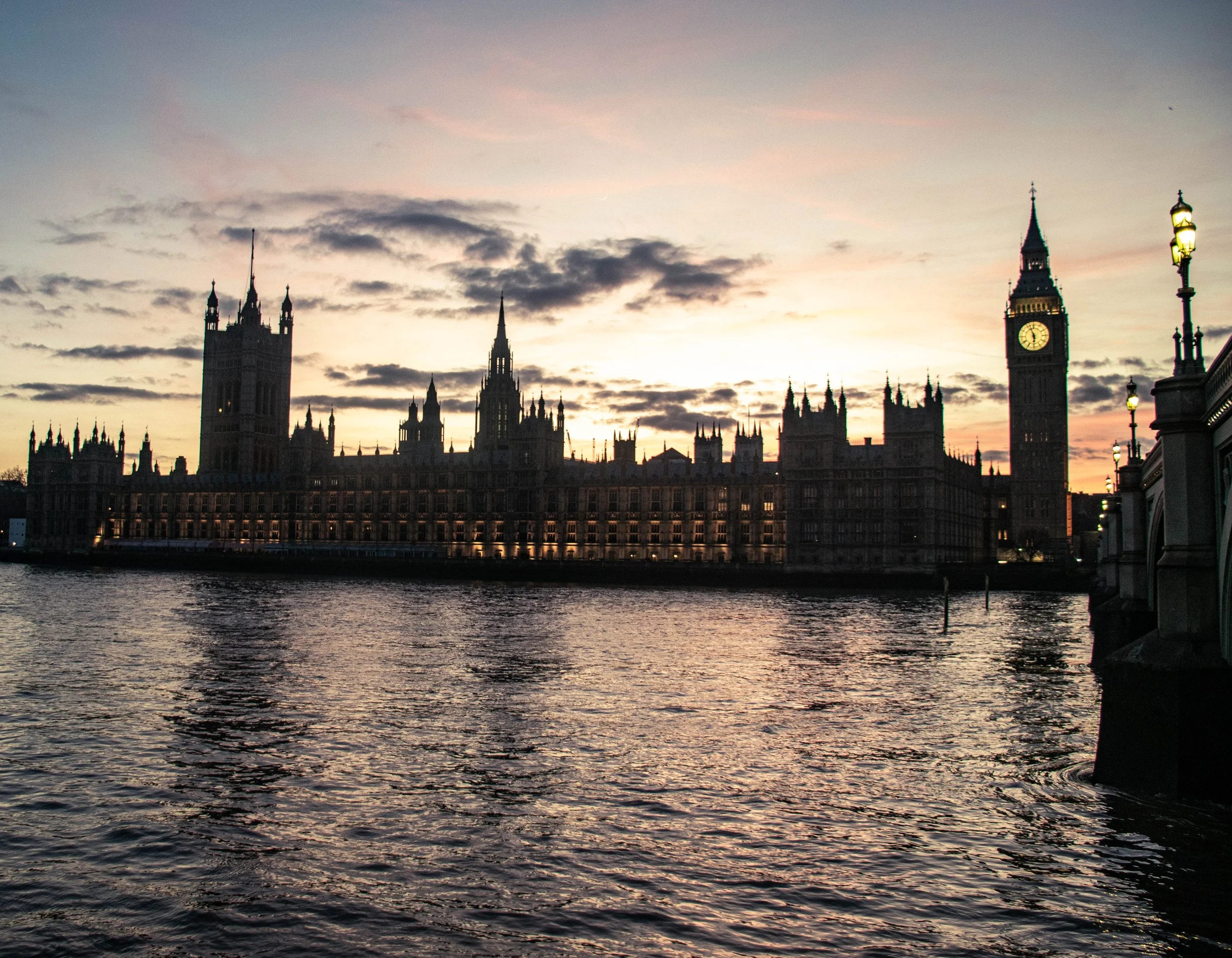
London Through My Lens | Photography & City Inspiration
The United Kingdom has always held a unique fascination for me. I’ve visited cities such as Birmingham and Cardiff, but it is London that keeps calling me back, again and again. Each return feels different: the city seems to have something new to reveal, as if it were constantly in dialogue with those who look at it closely.

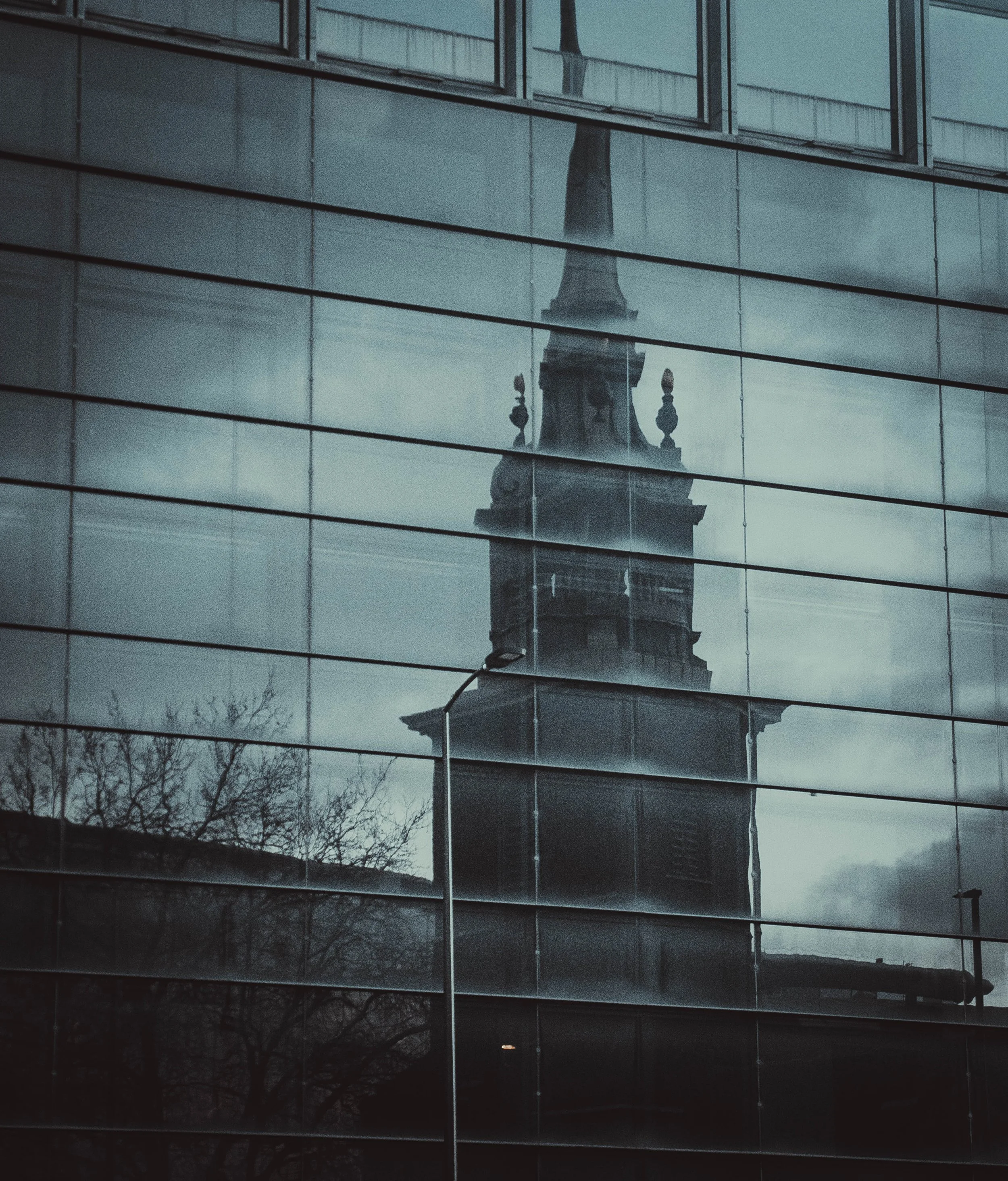

A Special Bond with the United Kingdom
The United Kingdom has always fascinated me. Over the years, I’ve explored cities like Birmingham and Cardiff, yet it is London that continuously calls me back. Every visit feels unique, as if the city is in constant conversation with those who take the time to observe it carefully.
London is more than a destination; it is a living, breathing source of inspiration for anyone who loves culture, history, and photography. From historic landmarks to contemporary architecture, London’s contrasts make every street a canvas for exploration.
London, a City That Surprises at Every Corner
Walking through London is a journey across contrasts. Ancient history coexists with modern life: grand cathedrals share space with skyscrapers, and serene parks like Hyde Park or Regent’s Park offer a peaceful pause before you dive back into the city’s energy.
What fascinates me most is London’s diversity. Cultures, languages, faces, and stories converge here, making every corner a microcosm of the world. This blend encourages open-minded observation and invites photographers to notice subtle details that often go unnoticed.
Photography as a Dialogue with the City
For a photographer, London is an endless playground. The city offers striking contrasts: old and new, quiet and chaotic, symmetrical geometry and spontaneous imperfections. Every street, alley, or square has the potential to become a captivating frame.
Capturing London is about more than taking photos—it’s about listening to the city, interpreting its rhythm, and finding connections between elements that initially seem unrelated. In this sense, photography becomes a dialogue between the observer and the urban environment.
Museums and Endless Sources of Inspiration
London is home to some of the world’s most iconic museums, each offering a wealth of artistic inspiration. I have visited the British Museum, the Victoria & Albert Museum, and the National Gallery multiple times, each visit revealing new insights.
Tate Modern remains on my “to-explore” list, a promise of future discoveries. For photographers and art lovers alike, London’s museums provide a deep dive into culture, history, and creativity, enriching both personal perspective and artistic vision.
A Personal Memory at Piccadilly Circus
One of my most cherished moments in London was a quiet afternoon at Caffè Concerto, near Piccadilly Circus. I sat with a cup of tea and a slice of mille-feuille, watching life unfold outside the window.
Red double-decker buses raced through the streets, tourists and locals mingled, and historic architecture framed the vibrant scene. It was a simple pause, yet it became a profound moment of inspiration. London has a unique way of revealing beauty even in ordinary moments, offering photographers endless opportunities to capture the city’s soul.
Losing Myself to Find Myself Again
If I had to describe London in a few words, I would say it is a city where memory and future coexist. Each visit allows me to lose myself and find myself anew, uncovering hidden corners, unexpected details, and new stories.
Every walk through London opens doors to fresh perspectives, enriching my work as a photographer and my life as an observer. It’s a city that constantly inspires, challenges, and rewards those willing to truly see it.
London continues to inspire me and finds its way, in subtle and profound ways, into my photography.
If this visual language speaks to your space, you can explore more works.