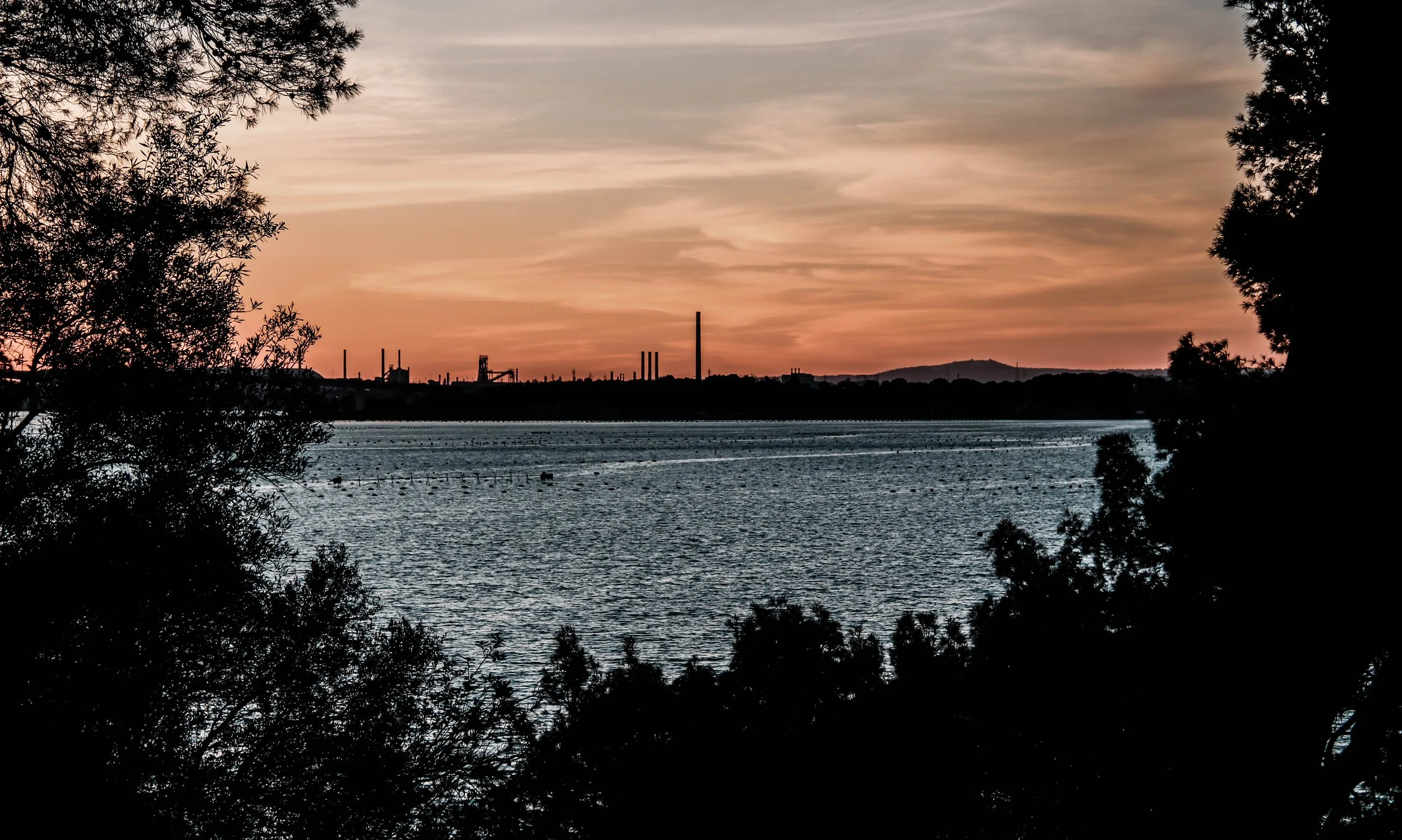
Photography is often described as a way to capture reality, but perhaps it would be more honest to say that photography is an attempt to negotiate with reality. Between what we want to see and what the world is willing to give us, there is a fragile space, and it is in that space that photography happens. We choose the lens, the framing, the moment, and yet something always escapes us. Light changes, people move, weather shifts, and meaning transforms. In this constant tension between intention and accident, between control and surrender, photography finds its most authentic voice.
From a technical point of view, photography is built on control. We control exposure, focus, composition, color, depth of field and perspective. We study rules, we learn a grammar, we refine technique. All of this is necessary, but it is not sufficient. No matter how precise our preparation is, the world does not follow our plans. Even in a studio, with artificial lights and fixed subjects, something unpredictable always enters the frame: a reflection, a gesture, a shadow, a hesitation. Outside, in streets, landscapes and human encounters, control becomes even more fragile, and perhaps that is exactly the point. As Henri Cartier-Bresson famously said, photography is an immediate reaction, and that immediacy means that the photograph is born in a fraction of a second that never fully belongs to us.
At some point, every photographer learns that the image does not belong entirely to them. You can wait, you can search, you can prepare, but when the moment arrives you must accept what is there, not what you imagined. This is where surrender begins. Surrender is not weakness, it is attention. It is the ability to recognize that reality has its own rhythm, its own intentions, its own mysteries. When we surrender, we stop forcing meaning onto the scene and we start listening instead. Often, what we receive is richer, more complex and more alive than what we had planned. In this sense, photography becomes less about taking and more about receiving, less about conquering and more about encountering.
We all know the difference between a technically perfect image and an image that feels alive. The first can impress, the second can move. That difference does not come from resolution, sharpness or equipment. It comes from the presence of something that cannot be fully controlled: emotion, tension, silence, contradiction. An image feels alive when it carries a trace of uncertainty, when it suggests more than it explains, when it leaves space for the viewer to enter. Roland Barthes called this the punctum, the detail that wounds, that disturbs, that breaks the surface of the image. You cannot plan a punctum, you can only be open to it.
Too often we think of photography as an act of capture, as if we were taking something away from the world. But capture implies possession, and photography in its deepest form is not about possession, it is about dialogue. A dialogue between the inner world and the outer world, between memory and presence, between intention and chance. When that dialogue is absent, the image may still be correct, but it will rarely be meaningful. Meaning is not imposed, it emerges, and it emerges precisely in the space where we accept that we are not fully in charge.
When photography becomes a physical object, a print, a book, an exhibition, the question of control becomes even more complex. A print freezes an instant and gives it weight, duration and material presence. It says that this moment deserves to stay. But even then, interpretation remains open. The same image will live differently in different homes, under different lights and within different personal histories. Once the photograph leaves the author’s hands, it becomes part of someone else’s story, and this too requires surrender. Perhaps this is why choosing which images deserve to become prints is such a delicate act. Not every photograph wants to be permanent, not every image is meant to inhabit walls and rooms. Some images belong to the flow, others ask to stay. Learning to listen to that difference is part of the photographer’s responsibility.
There is a dangerous myth in photography that mastery comes from eliminating uncertainty. In reality, mastery often comes from learning how to stay present inside uncertainty. Technique gives us tools, but vulnerability gives us access. It takes courage to accept that we do not always know what we are looking for and that sometimes we discover it only after we have pressed the shutter. In this sense, photography is not only a visual practice, it is also an emotional and philosophical one. It teaches patience, humility and attention, and perhaps more than anything else, it teaches us to tolerate not knowing.
So why do we keep photographing if we cannot fully control the outcome? Because in that fragile balance between control and surrender, something true can appear. Because photography allows us to meet the world halfway, not as masters and not as passive observers, but as participants. Because every photograph is, in its own way, a small act of trust: trust that what is happening matters, trust that this fraction of time is worth remembering, trust that meaning can arise even when we do not fully understand it. In the end, photography may not be about freezing life. It may be about learning how to be present while life moves, and accepting, again and again, that some of the most beautiful images are not the ones we planned, but the ones we were humble enough to receive.
If this image resonates with your space, you can explore the full collection.