Art Is Not Content
Why Fine Art Photography Must Exist Beyond the Feed
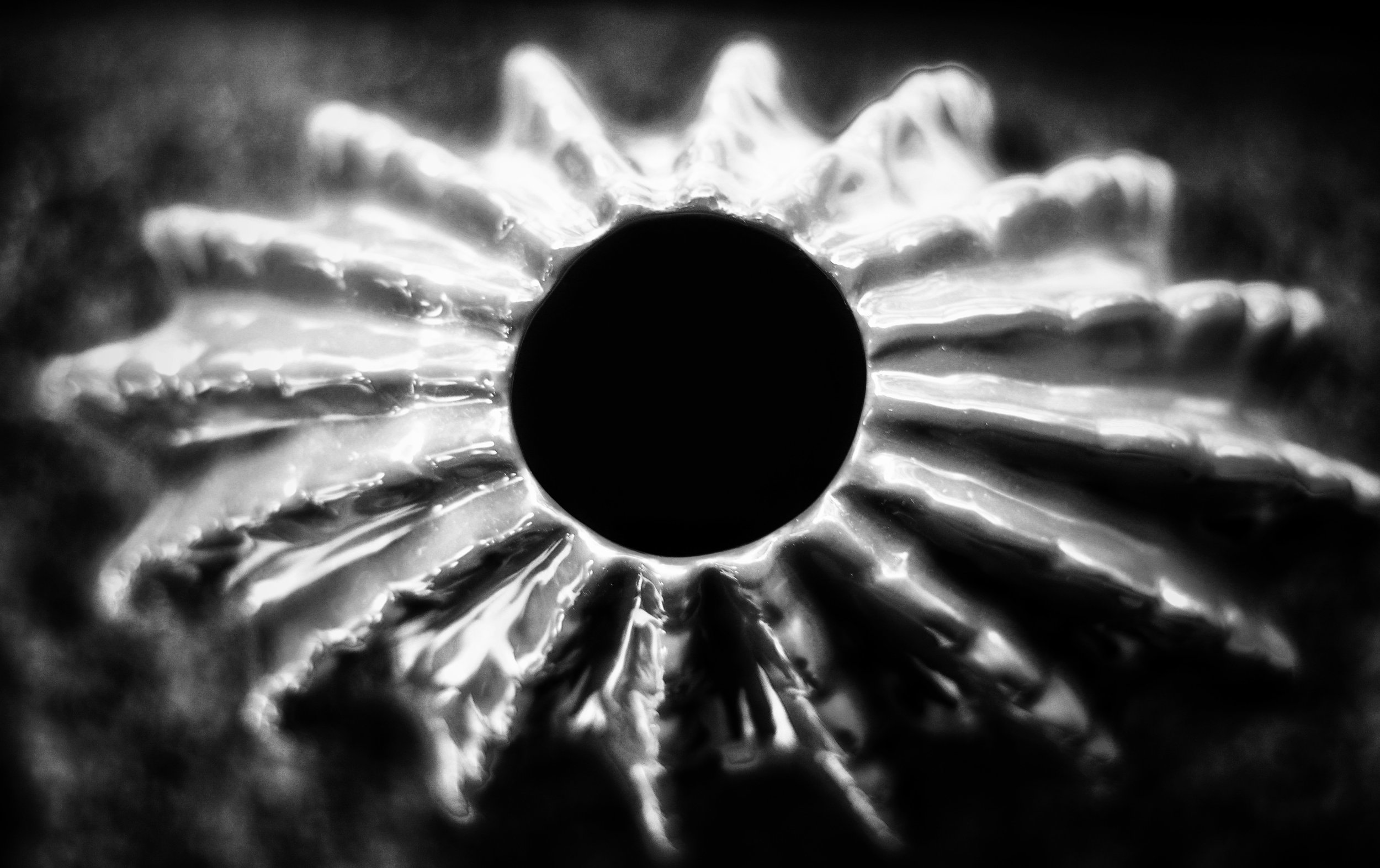
There was a time when photographs were made to last. They were printed, framed, placed on walls, collected in books and preserved in private archives. They occupied space and interacted with light. They aged alongside the rooms that hosted them. Their purpose was not immediacy but endurance. Today, in the digital era, images circulate at unprecedented speed. We scroll, pause for a second, react, and move on. The rhythm of the feed has reshaped our relationship with visual culture. Everything risks becoming content. Even art. Even photography.
Yet fine art photography is not content, and it should not be treated as such. Content is designed for consumption. It follows trends, adapts to formats, answers to algorithms and performance metrics. It is optimized for visibility and engagement. Its life cycle is short by design. Art operates differently. Art is not primarily concerned with performance. It does not exist to be validated by metrics. It demands time, reflection and, above all, physical presence. When photography is conceived as fine art rather than as digital material, the intention shifts radically. The question is no longer how the image will perform on a screen, but whether it will endure beyond it.
This distinction is philosophical before being technical. A photograph created as content asks how it will be received in the next twenty-four hours. A photograph created as art asks whether it will remain relevant in ten years. The difference influences every decision. Composition is no longer optimized for a smartphone display but designed for scale and spatial balance. Contrast is evaluated in relation to natural and artificial light within an interior. Negative space becomes architectural rather than decorative. Silence within the frame becomes structural rather than incidental. The image is not built to capture attention quickly but to sustain presence over time.
In contemporary photography the boundary between visual production and artistic creation has become increasingly blurred. The democratization of image-making has expanded creative possibilities and given voice to countless perspectives. This is a positive development. However, it has also encouraged the perception that every image is interchangeable and infinitely reproducible. Not every photograph is meant to become a collectible work, and not every image should aspire to permanence. Fine art prints are deliberate objects. They are the result of a process that considers material quality, scale, edition size and long-term context. They are conceived with the understanding that they will inhabit physical environments.
This is where limited edition photography acquires its true meaning. Limitation is not merely a commercial strategy; it is a conceptual position. To limit an edition is to affirm that the work has boundaries and that authorship carries responsibility. A limited edition fine art print, signed and numbered, situates the photograph within a tradition of collectible photography. It acknowledges rarity, intentionality and commitment. The limitation of quantity reinforces the idea that the image is not infinitely replicable in its original form. It establishes a framework of value that extends beyond digital circulation.
Ownership transforms the relationship between viewer and image. An image on a social platform belongs to everyone and to no one. It is shared, reposted and quickly replaced. A fine art print, by contrast, belongs to a specific individual or institution. It becomes part of a private interior, a curated environment, a personal narrative. It interacts with architecture, furniture and natural light. Its perception changes throughout the day as shadows move and illumination shifts. Over time, it acquires context and memory. It ceases to be a transient visual stimulus and becomes a stable presence.
Within the ecosystem of contemporary art, the physical print remains central. Galleries, collectors and interior designers continue to engage with photography as a material medium. A screen inevitably flattens scale and texture. A print restores dimensionality. Paper choice, printing process and size contribute to the final experience of the work. These elements cannot be fully translated into digital form. While digital platforms provide visibility and access, they do not complete the artistic process. They introduce the work but do not finalize it.
To create fine art photography today means acknowledging the role of digital dissemination without confusing it with artistic fulfillment. Social media can generate exposure and dialogue, but exposure is not permanence. The feed moves continuously forward, guided by novelty and speed. A wall, by contrast, is stable. It offers continuity. When a photograph is printed in a carefully selected format and produced in a limited edition, it exits the cycle of constant replacement. It enters a slower temporal dimension in which observation replaces scrolling.
Value in art does not arise from noise or frequency. It emerges from clarity of intention and consistency of vision. Fine art photography requires a conscious decision to resist pure optimization for digital engagement. It requires accepting that some works are not meant to circulate endlessly but to exist deliberately within defined parameters. This approach does not reject the contemporary digital environment; it contextualizes it. It distinguishes between distribution and essence.
To treat photography exclusively as content is to accept disposability as a norm. To treat photography as art is to assume responsibility toward the image and toward those who will live with it. Not every photograph must become a fine art print, and not every image deserves permanence. However, certain works are conceived with depth, scale and intentionality that surpass the limits of a screen. These images call for material realization. They require limitation, signature and context. They require space.
Fine art photography does not exist to decorate a feed. It exists to inhabit environments, to engage with architecture and to accompany daily life beyond the digital interface. It is defined not by the speed of its circulation but by the strength of its presence. In a culture dominated by immediacy, choosing permanence is a deliberate act. Choosing limitation is a statement. Choosing materiality is a commitment.
If this visual language speaks to your space, you can explore more works.