The photographic composition: the invisible order that gives meaning to the gaze
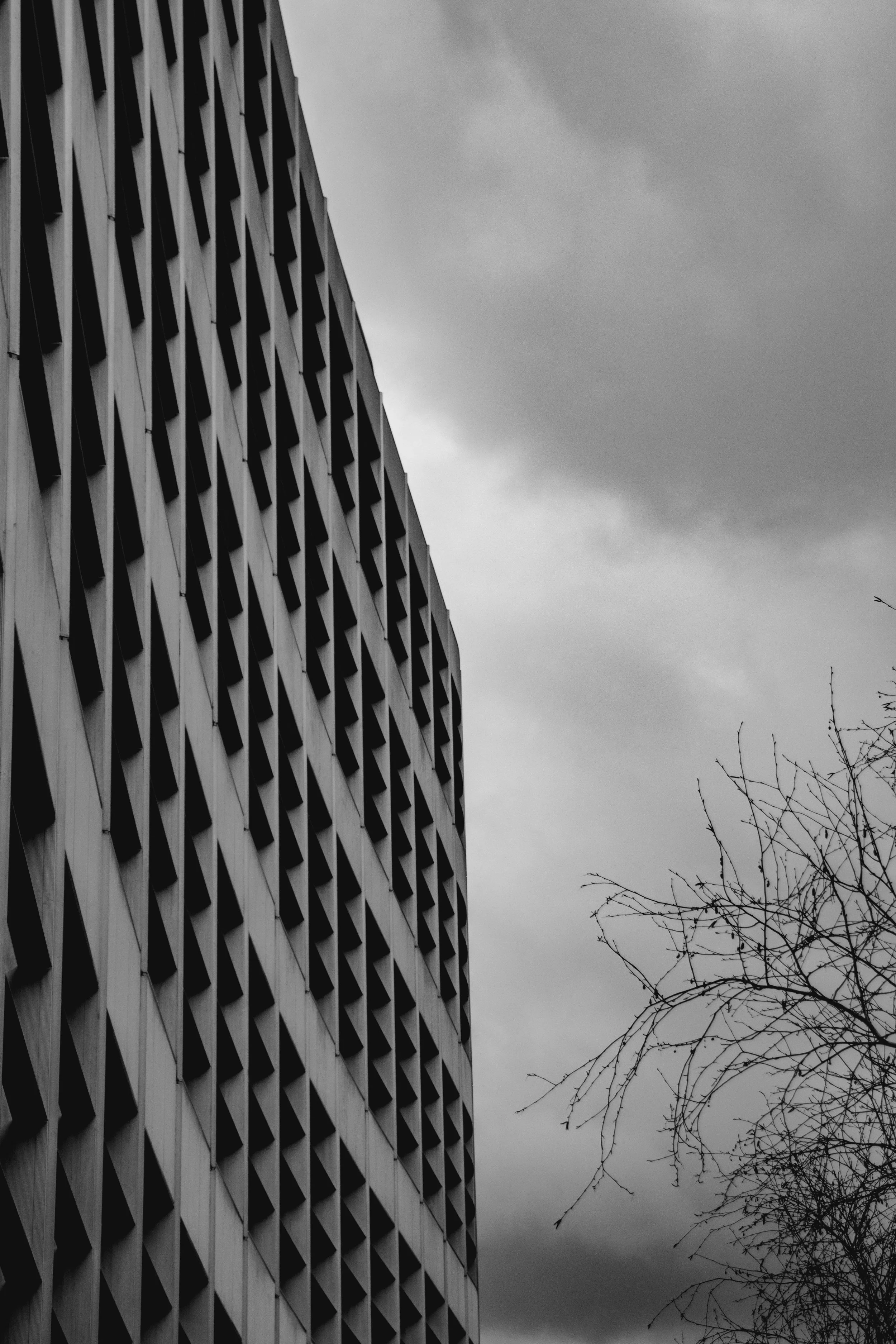
There are images that remain, and images that disappear the moment after we see them. The difference is almost never the subject itself. It is what sustains it. It is the invisible structure that makes it necessary, inevitable, alive.
When I photograph, I realise that composition comes even before the visible content: it is the secret grammar through which the world takes form — the space where an image stops being “something to look at” and becomes “something that speaks”.
Many people think of composition as a set of rules, a kind of operational system to be applied to make images “more beautiful”. Others treat it as a cage, from which they try to emancipate themselves in the name of the famous “I break the rules”, often obtaining nothing more than a confused or fragile picture.
For me it is the opposite. Composition is not ornament, not decoration, and certainly not a prison. It is the founding act of photography. Before I press the shutter, the photograph already exists — in the gaze. It lives in the act of framing, of choosing, of defining what remains and what is excluded. That is the moment in which the voice of the image is born.
Every time I frame, I perform a gesture that is both mental and perceptive: I delimit a field, I set a threshold, I decide which relationships have the right to exist and which will disappear. The camera is only the terminal medium. Real photography happens earlier — and it happens in the eye. It is worth repeating, in a world obsessed with megapixels: never confuse the pen with the text.
Choice as origin
An image is never the mere recording of what was in front of me. It is what I chose to retain. And equally, what I chose to leave outside.
The photographic act is not additive — it is subtractive. It is an act of distillation: from a world that is complex, ambiguous, and overflowing with stimuli, I extract a precise balance. A tiny but irreversible decision: here yes, here no.
When a collector encounters an image and perceives it as “complete”, what they recognise is not the subject, but the invisible order that sustains it. They sense that nothing is accidental, and that every element is necessary. That inevitability is the true hallmark of authorship — what makes an image unrepeatable. Nothing is truly “by chance”: it is the manifestation of an inner design shaped by memory, by experience, by knowledge and sensitivity.
Before the gaze, there is order
We live as if vision were natural, spontaneous, neutral. It is not. Our perceptual system constantly organises the chaos of the visible world into structures we can understand. Even someone who never picks up a camera is already “composing”, unconsciously: the mind selects, emphasises, reduces, connects.
Photography simply brings this hidden process into awareness.
To compose is to take responsibility for a gesture that the mind already performs at a primordial level. When I look, I am already shaping reality into relations; when I photograph, I give that gesture a definitive form.
The frame as a field of forces
A photographic frame is never just a rectangle: it is a field of tension. Every element inside it has weight, direction, gravity, pull.
Composition is the art of orchestrating these forces.
When I place a line in the frame, I am not “filling a space”, I am directing a movement through the viewer’s perception. When I leave a wide margin, I am not leaving emptiness — I am creating breath. When I bring a subject toward the edge, I am not merely repositioning it — I am placing it in a state of visual risk, a delicate vibration.
The images that endure are the ones in which this field of forces can be felt, even when not consciously recognised. The viewer may not know how to explain it technically — but the body understands it long before the intellect intervenes. Composition always acts before thought.
Visual sensing and recognition
Before we register what a picture shows, we feel how it holds itself: order or disorder, stability or tension, attraction or escape.
The psychology of form — from Gestalt theory to contemporary neuro-aesthetics — confirms that we do not see “objects”, we see relationships.
Meaning is not in the things, but between them.
A photograph that succeeds does not merely display: it discloses. It does not illustrate: it reveals structure. And structure is never neutral.
Composition is not a geometric exercise — it is an emotional orientation of space.
This is why I believe composition is not something that is added to the world, but the very thing that makes the world readable. It is the bridge between phenomenon and meaning. The hidden scaffolding that prevents the visible from collapsing into noise.
The decisive moment (before the click)
When I look at a scene, before asking myself what to show, I ask how that space wants to be heard. The true compositional gesture is not imposed on reality — it emerges from it. I do not force a grid onto the world; I uncover the rhythm already inscribed within it.
It is as though each scene carried a latent geometry, and the photographer were the one who allows it to surface.
This instant — the moment in which the image aligns itself internally — is perhaps the most photographic moment of all.
The click that follows is simply its consequence.
I do not photograph to test a hypothesis: I photograph because the image has already happened inside me.
The grammar of placement: balance, tension, and the living edge of the frame
To compose is not to place things inside the frame, but to define the relationships that occur because they are there.
The difference seems subtle — in realtà, it changes everything. Space is never passive. It reacts. It either breathes or it collapses, it opens or constrains, it invites or rejects. A photograph is not the sum of its elements, but the field of energy that those elements generate.
This is why balance in photography is not symmetry. Balance is resonance — the way forms weigh against one another, not in a static way, but dynamically, like tension held in suspension. A photograph that works carries this sensation of poised inevitability: it could not be otherwise.
Where the untrained eye seeks “where to put the subject,” the authorial gaze listens instead to where the subject is already speaking within the field. What matters is not placement, but relation. Composition is the craft of orchestrating gravity.
The role of the negative space
One of the most misunderstood aspects of composition is negative space.
Many treat it as “emptiness,” a remainder of the image, something left unused. But negative space is not absence. It is the territory where the image breathes — and where meaning expands. It is the room in which the gaze can move, rest, or wait.
A dense image without breathing room becomes sealed off, suffocating.
An image with calibrated emptiness allows the subject to arrive to the viewer.
Silence is to music what negative space is to composition: it does not interrupt sound — it makes sound meaningful.
When I leave space around a subject, I am not stepping back: I am giving it time to unfold, like a phrase held long enough to be heard inwardly. The more the viewer feels that room, the more they can inhabit the image rather than merely observe it.
What collectors often experience as “presence” is precisely this: not the object itself, but the resonance of its breathing space.
Edges, thresholds, and the psychology of the border
The border of the frame is not a decorative perimeter; it is an active threshold.
Each decision close to the edge creates a psychological effect — tension when the subject is pushed outward, serenity when it is centred but anchored by counterweights, uncertainty when the edge cuts through a relational line.
The border is where composition becomes irreversible.
Inside, meaning forms; at the edge, it becomes definitive.
To bring something near the threshold is to expose it to gravity.
To pull it inward is to shelter it.
These small distances change the emotional architecture of the image more than most “rules” ever will.
Rhythm, not geometry
Many visual manuals reduce composition to geometry: lines, diagonals, thirds. These are tools, certainly — but they are not the essence.
The true structure of an image is rhythmic, not mathematical. It unfolds like breath: contraction and expansion, weight and release, approach and retreat.
If geometry is the skeleton, rhythm is the bloodstream.
And rhythm is something you do not apply — you feel. When composition is alive, you don’t “think” it: you sense its rightness the same way a musician senses tempo without counting.
This is why genuine composition cannot be automated, and why high-end collectors instinctively recognise authorship: not because they understand the grammar intellectually, but because they feel the coherence of the inner pulse.
Seeing with intention
Composition is not a technique; it is a way of being present in the act of looking.
Technical mastery matters — but only when it is married to intention. Without intention, technique is ornament. With intention, even the most minimal gesture carries weight.
Before I take a photograph, I don’t ask: what is the subject?
I ask: what is the relationship that wants to become visible?
The stronger the relationship, the more the image radiates necessity.
Where technique becomes vision
There is a moment in photography when craft ceases to feel like craft and becomes intuition. You are no longer “applying” composition — you are inhabiting it. It stops being something you do, and becomes something you listen for.
At that point, technique is no longer a ladder you climb, but the floor you can finally stand on. You are free not because you have abandoned structure, but because you have interiorised it.
This is the moment in which authorship matures: when choices no longer feel like choices, but consequences of a deeper alignment between perception and form.
Every image that endures is born twice.
First inwardly — as recognition. Then outwardly — as form.
Before the shutter is released, there is a stillness in which the world arranges itself before your eyes, not because you force it, but because you grant it attention. In that moment, composition is no longer technique but listening — not intervention, but accord.
The camera captures only the second birth.
The first remains the invisible origin, the place where the act of seeing becomes an act of becoming.
This is why truly authorial photography cannot be improvised: not because it is difficult, but because it requires presence — a gaze that does not merely frame the world, but meets it.
In this meeting, composition is no longer a method, but a covenant.
An agreement between what appears, and what asks to be seen.
If this image resonates with your space, you can explore the full collection.