WHEN SINGULAR IMAGES BECOME A COLLECTIVE
How individual photographs can become a photographic project
A photographic project does not always begin with the intention of creating a project. Sometimes it begins with a single photograph. Then another appears. Perhaps months later, perhaps in a completely different context. At first, there may be no obvious connection between them. Each image has its own identity, its own reason for existing, and can stand perfectly well on its own. But occasionally, something begins to emerge. The photographs start to speak to each other.
A project can arrive afterwards
We often imagine a photographic project as something deliberately constructed from the beginning. A subject is chosen, a visual language is established, a body of work is planned and the photographer goes out to produce the images needed to complete it. That is certainly one way of working. But photography can also work in the opposite direction. The project can arrive afterwards. Individual photographs can accumulate until a relationship between them becomes visible. The photographer does not necessarily invent that relationship. Sometimes it was already there, hidden beneath the surface, waiting to be recognised. This is where a group of singular images can become something more than a collection. The interesting part is that this process can happen without the photographer having planned it. A photograph made for one reason can later find a completely different context. Another image, apparently unrelated, can suddenly reveal a common visual or conceptual language. The project is discovered rather than designed.
From the image to the relationship
A photograph has its own existence. It can communicate something independently and retain its meaning without needing another image beside it. Place it next to a second photograph, however, and the situation changes. The second image does not simply add information. It changes the way the first one is perceived. A third image can alter the relationship again. Suddenly, separate photographs begin to behave like parts of a structure. The connection does not necessarily have to be narrative. There does not have to be a beginning, a middle and an end. It can be formal, conceptual, emotional or perceptual.
A recurring gesture. A particular use of negative space. A similar tension between presence and absence. A relationship between body and geometry. A recurring ambiguity. Sometimes these invisible connections are enough.
Four photographs can be a project
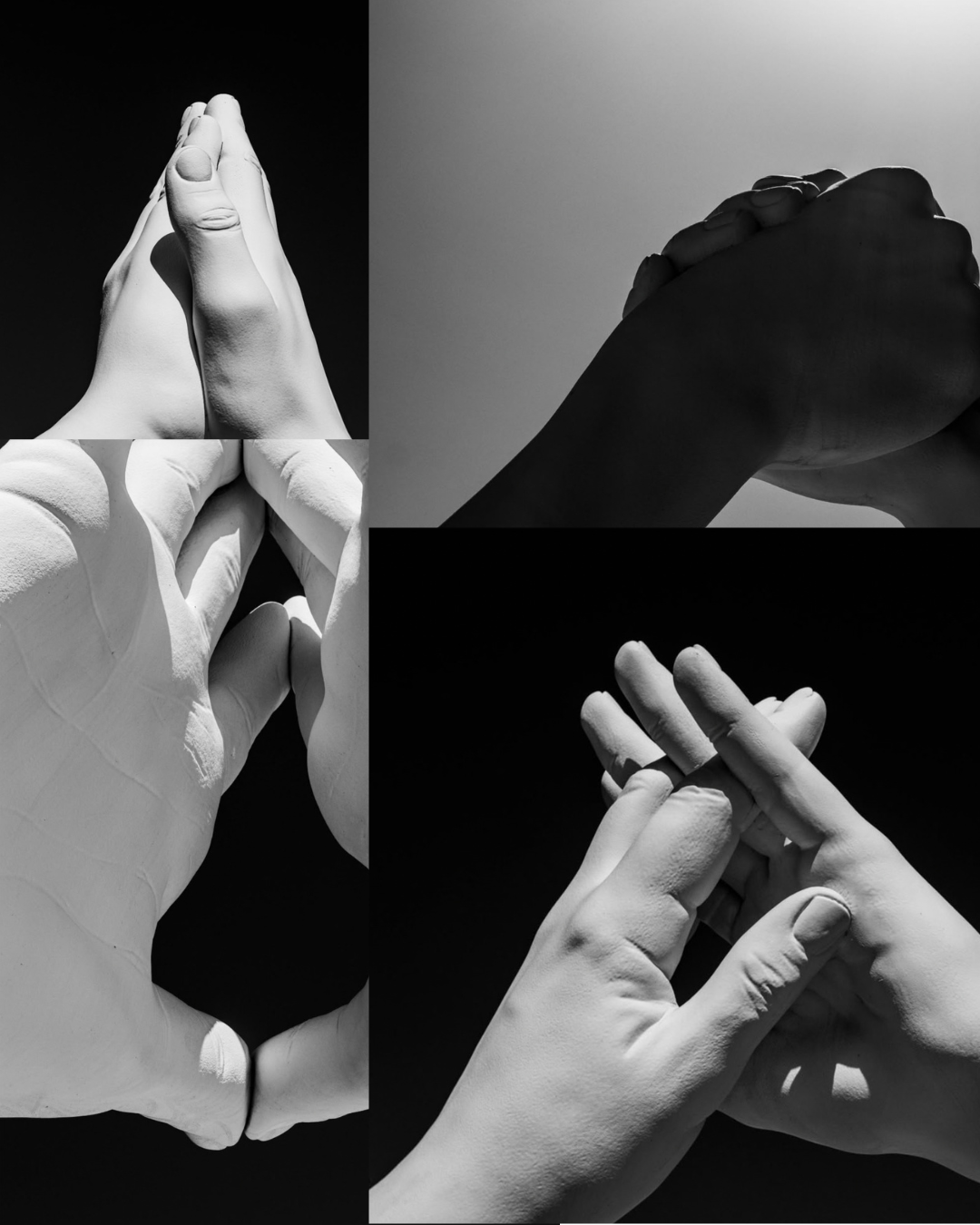
There is a tendency to associate photographic projects with large bodies of work. The more photographs there are, the more substantial the project appears to be. But quantity does not create coherence. Sometimes four photographs are enough. This became clear to me through Absence of Space, Convergence, Interlace and Hold. They were not conceived as four chapters of the same project from the beginning. Each photograph could exist independently. Each had its own visual identity and could be read without knowing anything about the others. Yet, when placed together, something changed.
Absence of Space considers the relationship between the body and the space it creates. Convergence brings two forms towards contact. Interlace transforms contact into intertwining. Hold introduces pressure, resistance and the possibility of connection or restraint.
There is no conventional narrative connecting them. There is instead a movement of ideas. Space becomes contact. Contact becomes relationship. Relationship becomes tension. The images remain singular, but their proximity creates a collective meaning.
The space between photographs
Perhaps the most interesting part of a photographic project is not always contained within the photographs themselves. It can exist between them.
When two images are placed together, the viewer begins to establish connections. A gesture in one photograph can acquire a different meaning when seen beside another. A shape can suddenly appear architectural, anatomical or symbolic. A physical relationship can suggest a psychological one. The photographer provides the material. The viewer completes part of the structure. This is particularly important when working with ambiguity. Not everything needs to be resolved or explained. In fact, explaining every possible meaning can sometimes weaken the work. A project can be strong precisely because it leaves room for interpretation. The photographs do not necessarily need to tell the viewer what to think. They can create the conditions for the viewer to think.
Editing is part of making
This is where editing becomes more than a technical step. Selecting a small number of photographs from a larger body of work is itself a creative act. Which images belong together? Where does the visual rhythm change? Where does tension begin? Which photograph should open the sequence? Which one should close it? And, perhaps most importantly, when is there enough? Stopping matters. A small, coherent body of work can sometimes communicate more effectively than a large collection in which every photograph demands attention. The project is not necessarily stronger because it is bigger. Sometimes reduction creates the structure. This also means accepting that some photographs may need to remain outside the project. An image can be interesting, successful or personally important without necessarily belonging to the same conversation. Editing is therefore not only about choosing what stays. It is also about understanding what does not belong.
Let the photographs find each other
Not every photograph needs to belong to a project. But every photograph can potentially become part of one. The important thing is not to force connections where they do not exist. It is to remain attentive when they begin to appear. A photograph made for one reason can acquire another meaning years later. An image that once seemed isolated can become the missing element in a new body of work. This is one of the reasons I keep photographs, ideas and unfinished experiments alive. Photography is not always a process of deciding what an image means before making it. Sometimes it is the opposite. You make the photograph first. Then, much later, you discover what it was trying to tell you.
And sometimes, when several singular images begin to recognise each other, a project quietly appears between them.