Photography does not necessarily provoke through scandal. Sometimes, provocation happens much more quietly. A photograph can disturb simply because it interrupts the automatic way we look at things. Not through violence or excess, but through displacement. A small shift in meaning capable of transforming an ordinary object into a metaphor, a symbol, or an uncomfortable question. In contemporary visual culture, provocation is often associated with noise. Images designed to shock immediately, to generate reactions before reflection. Yet some of the most unsettling photographs are not the loudest ones. They are the images that remain suspended in the mind because they resist immediate consumption. For me, provocation in photography has never meant seeking controversy for its own sake. It has always been connected to language.
A fork and a spoon photographed as if they were a human couple.
Broken eggshells becoming a metaphor for freedom.
A steak, intensely red, titled Youth.
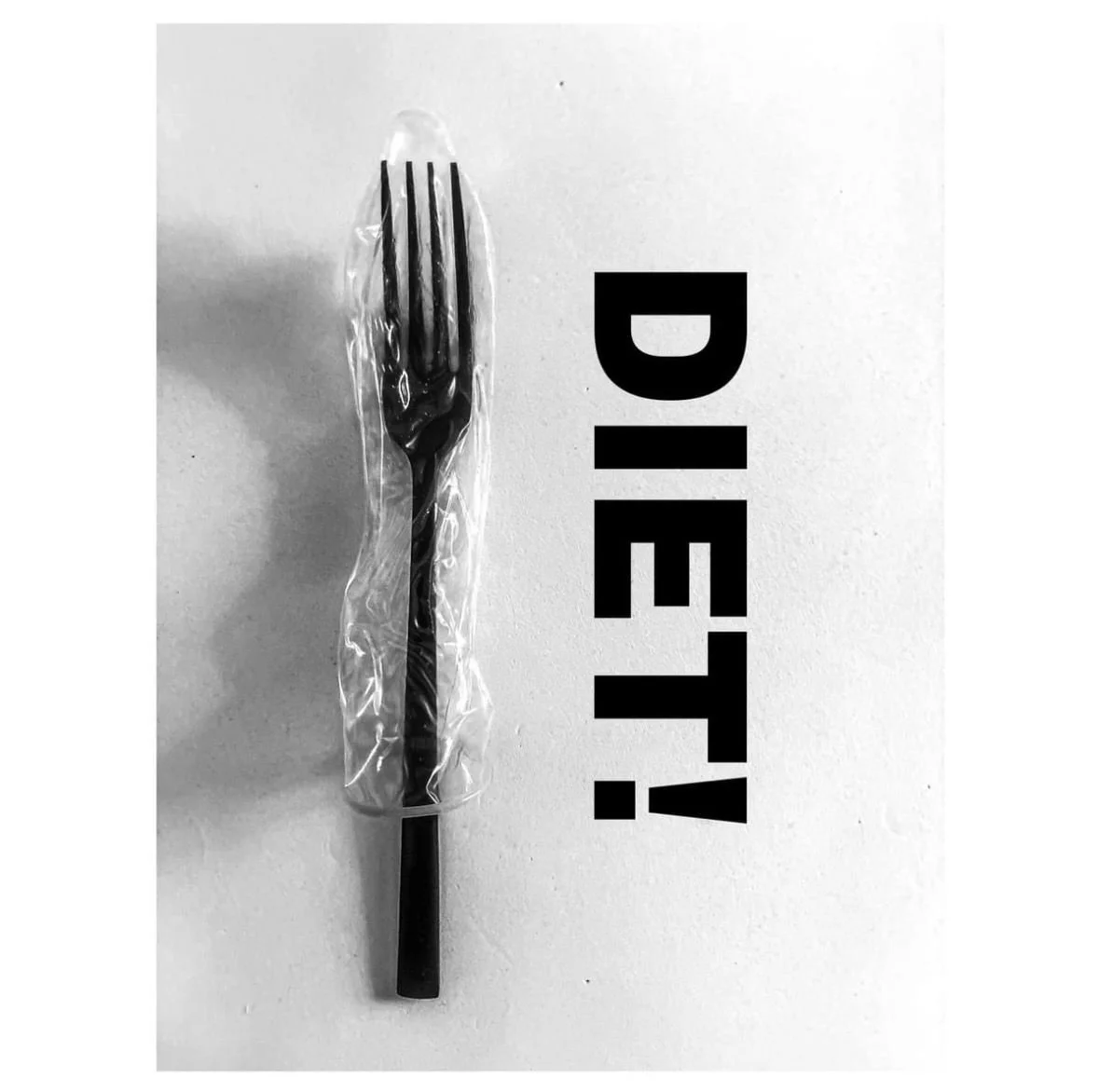
A fork enclosed in a condom beside the word Diet!.
The subjects themselves are simple, almost banal. What changes is the relationship between the object and the meaning projected onto it. That transformation interests me more than technical perfection. Photography becomes powerful when it stops documenting objects and starts constructing associations. When an image no longer says only “this exists,” but begins to suggest “this means something else.” Sometimes the provocation is minimal.
Years ago, I photographed a dead cockroach lying on its back on the floor of a bar. The image itself was visually insignificant. But the title changed everything: Goodbye Gregor. The reference to Kafka’s Metamorphosis transformed the insect into something human, tragic, fragile. The photograph stopped being about an insect and became a reflection on alienation, exclusion and identity. That is the kind of provocation that interests me. Not scandal as spectacle, but discomfort as reflection. I believe photography can still create moments of interruption in a world saturated with images. We scroll constantly. We consume photographs rapidly. Most images disappear seconds after being seen because they ask nothing from us.
A provocative image, in the deepest sense, asks for time. It creates hesitation. It slows perception. It forces interpretation. And often this does not require extraordinary subjects. Everyday objects can become visually unstable once removed from their normal function. A spoon can become loneliness. An eggshell can become emancipation. Meat can become mortality. Photography, at least for me, is not simply about showing reality. It is about transforming reality into visual language. That is why technique alone has never been enough. Technical experimentation only becomes meaningful when it expands the vocabulary available to express an idea. Light, contrast, framing, repetition, abstraction — these are not goals in themselves. They are words inside a visual sentence. Perhaps this is also why my photographs have gradually become more minimal over time. Less descriptive. Less dependent on the subject itself. More interested in structure, tension, silence and symbolic possibility. The image stops explaining. It begins suggesting. And maybe that is where provocation truly begins: not in shouting at the viewer, but in quietly destabilising the way they look at ordinary things. A photograph does not need to scream to become impossible to forget.