The Things We Don't Photograph
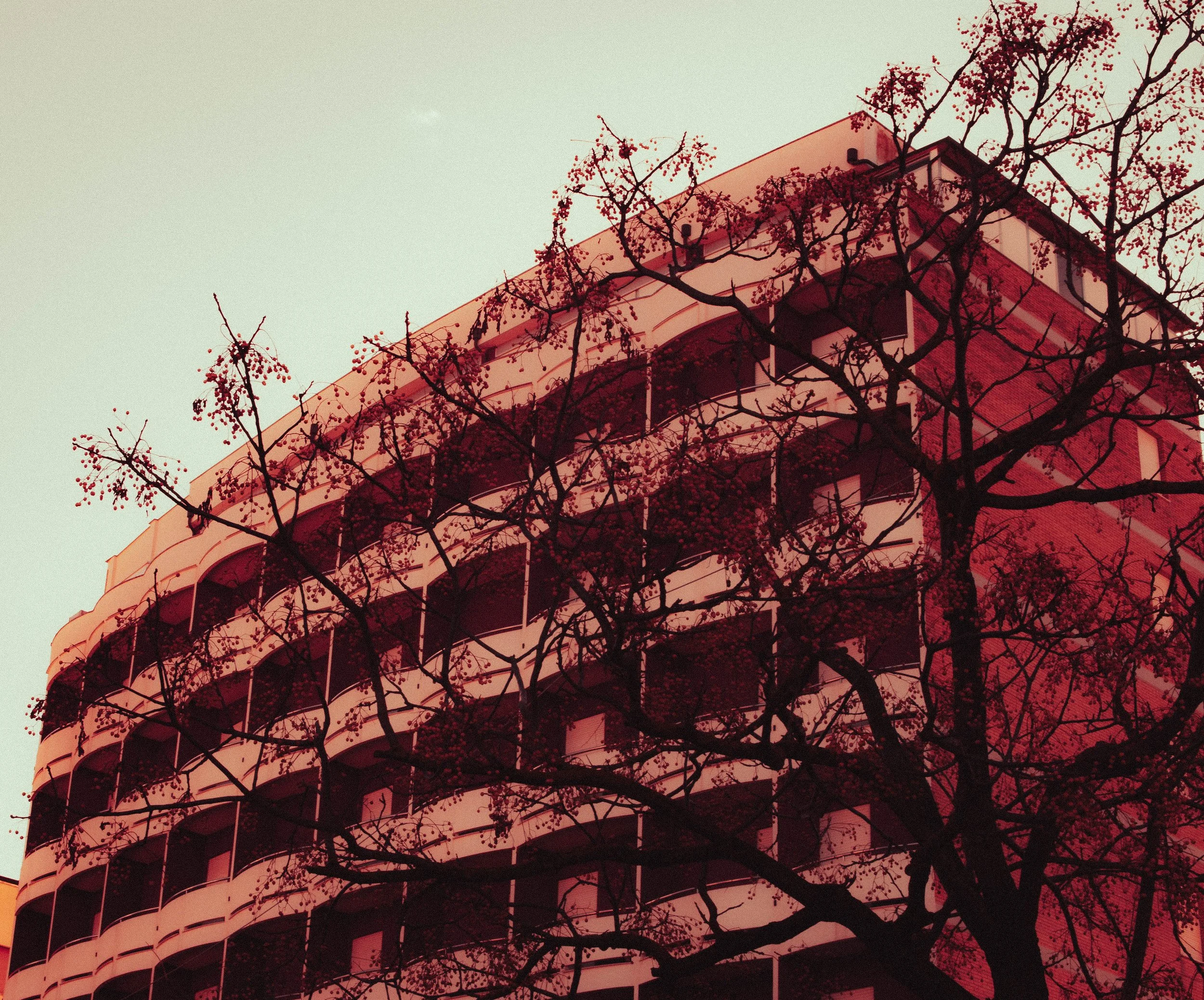
A close-up of a hotel in Riccione (Italy)
Photography is often described as the art of seeing. We talk about learning to notice light, composition, colour, geometry, gestures and details that other people might overlook. We look for unusual places, decisive moments and subjects that seem worthy of being photographed. But perhaps photography also begins somewhere else: with the things we normally decide not to photograph.
Most of everyday life is visually ordinary. A chair, a wall, an old piece of clothing, a window, a table, a shadow on the floor. We see these things repeatedly and eventually stop seeing them at all. They become part of the background of our lives. They are present, but visually invisible. Photography can interrupt that process. It can take something that has become familiar and make it unfamiliar again.
This does not necessarily require travelling somewhere extraordinary. Sometimes the most interesting subject is already there, in the room where we live. The difficulty is not finding something to photograph, but changing the way we look at it. An ordinary object can become a shape, a texture, a colour, a memory or a symbol. Its practical function may disappear, leaving behind something else. A photograph can therefore transform an object without physically changing it.
This is one of the reasons I am increasingly interested in the relationship between photography and everyday objects. An object can carry a history that is invisible to everyone except the person who owns it. It may have belonged to someone else, survived for decades or simply remained in the same place for so long that its presence has become almost unnoticed. When photographed, however, it can acquire a new kind of presence. The camera does not necessarily document its importance. It can create it.
There is also something liberating about photographing what we normally ignore. It removes the pressure to constantly search for the spectacular. Photography does not have to depend on extraordinary landscapes, famous architecture or dramatic events. It can exist in a much smaller space. Sometimes a photograph begins with a question as simple as: What happens if I look at this differently?
The answer may be purely visual. Or it may be personal. The object may become connected to a memory, a relationship or an absence. At that point, the photograph stops being simply a record of what was in front of the camera. It becomes a way of reorganising reality. The photographer chooses what to include, what to remove, what to emphasise and what to leave unresolved. The ordinary is not necessarily made beautiful. It is given another possibility.
Perhaps this is also why some photographs need time before they reveal what they are about. An image can remain on a hard drive or in an archive for months without seeming particularly important. Then something changes. A memory returns. A different image appears beside it. A sentence from a song suddenly makes sense. An object that seemed insignificant becomes the centre of a new idea. The photograph has not changed. Our relationship with it has.
We live in a culture that encourages us to photograph everything, yet perhaps the real challenge is to photograph with intention. Not every interesting thing needs to become an image. Not every image needs to be published. And not every photograph needs to explain itself. Sometimes the act of deciding what deserves to be photographed is already part of the creative process.
The things we don't photograph are therefore just as interesting as the things we do. They remind us that photography is not simply about recording the world. It is about choosing a way of looking at it.
Perhaps the next photograph is not waiting somewhere far away.
Perhaps it is waiting in plain sight, among all the things we have stopped seeing.