The Photographer Behind the Photograph
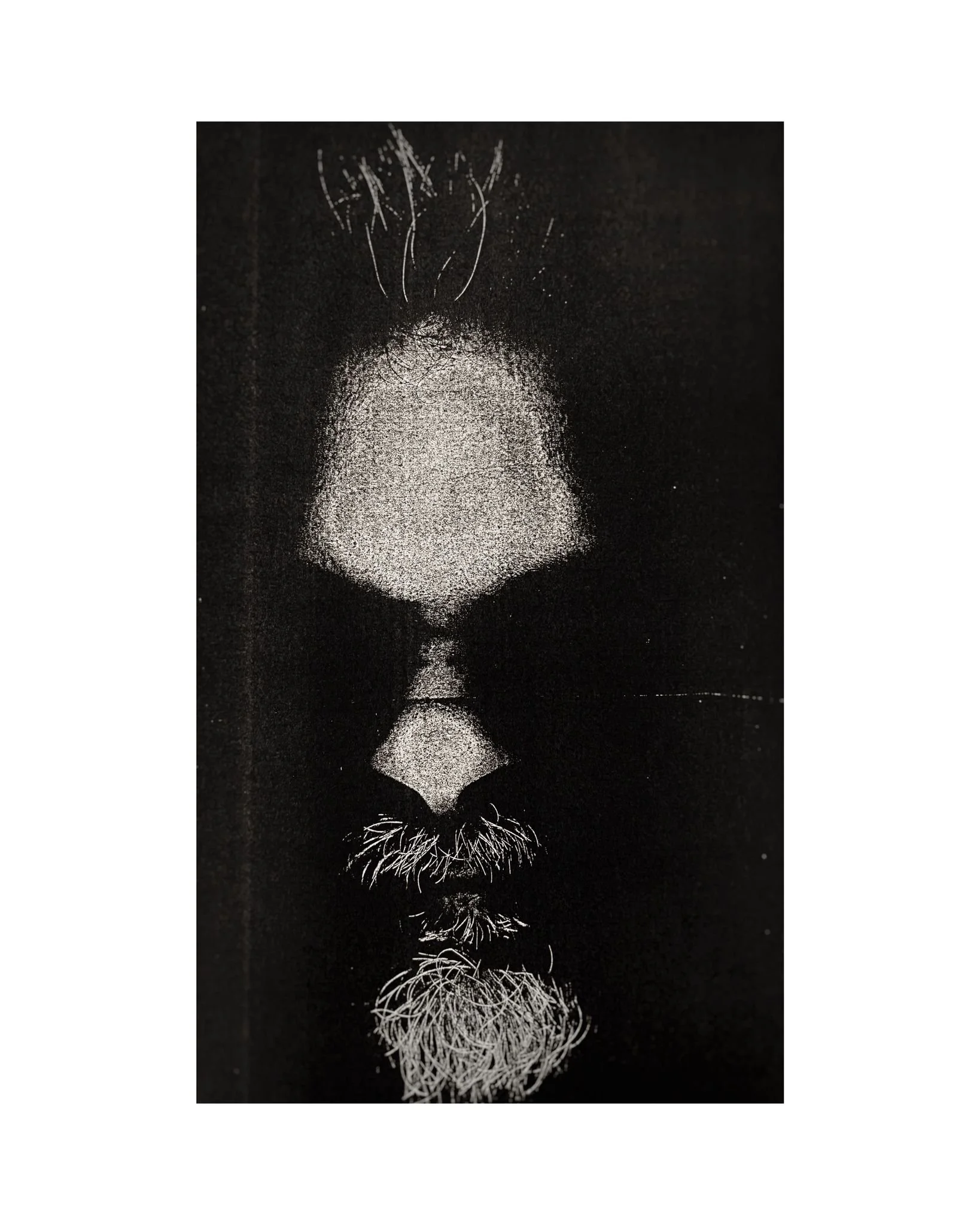
a high-contrast black-and-white self-portrait
For much of photography's history, photographers remained invisible. Their work was meant to speak for itself. The person behind the camera was often absent from the narrative, allowing the images to become the only point of contact between author and audience.
Today, that relationship has changed.
Contemporary photographers are increasingly expected to do more than create photographs. They write articles, publish books, share their creative process, participate in interviews, build websites, communicate through social media and develop independent editorial projects. Their identity has become part of the experience surrounding their work.
This evolution raises an interesting question.
How visible should the photographer become?
There are two opposite extremes. One is complete invisibility, where the author almost disappears behind the images. The other is the culture of constant self-promotion, where the artist gradually becomes more important than the work itself. Neither approach seems entirely satisfying.
Perhaps the role of the contemporary photographer lies somewhere in between.
An author does not need to dominate the conversation, but neither should they pretend not to exist. Every photograph is influenced by the experiences, memories, interests and personal sensitivity of the person who created it. Even the most minimal image contains traces of its author.
This is why self-portraiture remains one of photography's most fascinating forms of expression.
A self-portrait is not necessarily about showing a face. It is about revealing a perspective. Throughout the history of photography, artists have used self-portraiture not simply to document their appearance but to explore identity, vulnerability, transformation and presence.
Sometimes the photographer appears directly within the frame. Sometimes they remain hidden, visible only through objects, gestures or carefully constructed visual metaphors. In both cases, the image becomes a dialogue between the observer and the person behind the camera.
This relationship has become even more significant in the digital era. Audiences increasingly seek authenticity. They are interested not only in what photographers create, but also in why they create it. Understanding the author often changes the way we interpret the work.
This does not mean every photograph requires an explanation. Mystery remains an essential part of visual storytelling. Images should retain the freedom to generate multiple interpretations.
Yet knowing something about the person behind the work can create a deeper connection.
Books, journals, artist statements and occasional self-portraits allow viewers to recognise the human presence shaping an artistic practice. They reveal that photography is never purely technical. It is always filtered through individual experience.
For this reason, we believe the photographer should neither disappear nor become the centre of attention.
The work deserves to remain the protagonist.
The author simply reminds us that every photograph begins with a human gaze.
Perhaps this is the true role of the contemporary photographer.
Not a celebrity.
Not an invisible technician.
But an author willing to step into the light just enough for others to understand where the images come from—before quietly stepping back and allowing the photographs to continue the conversation.