Gestalt in Photography: Beyond Composition
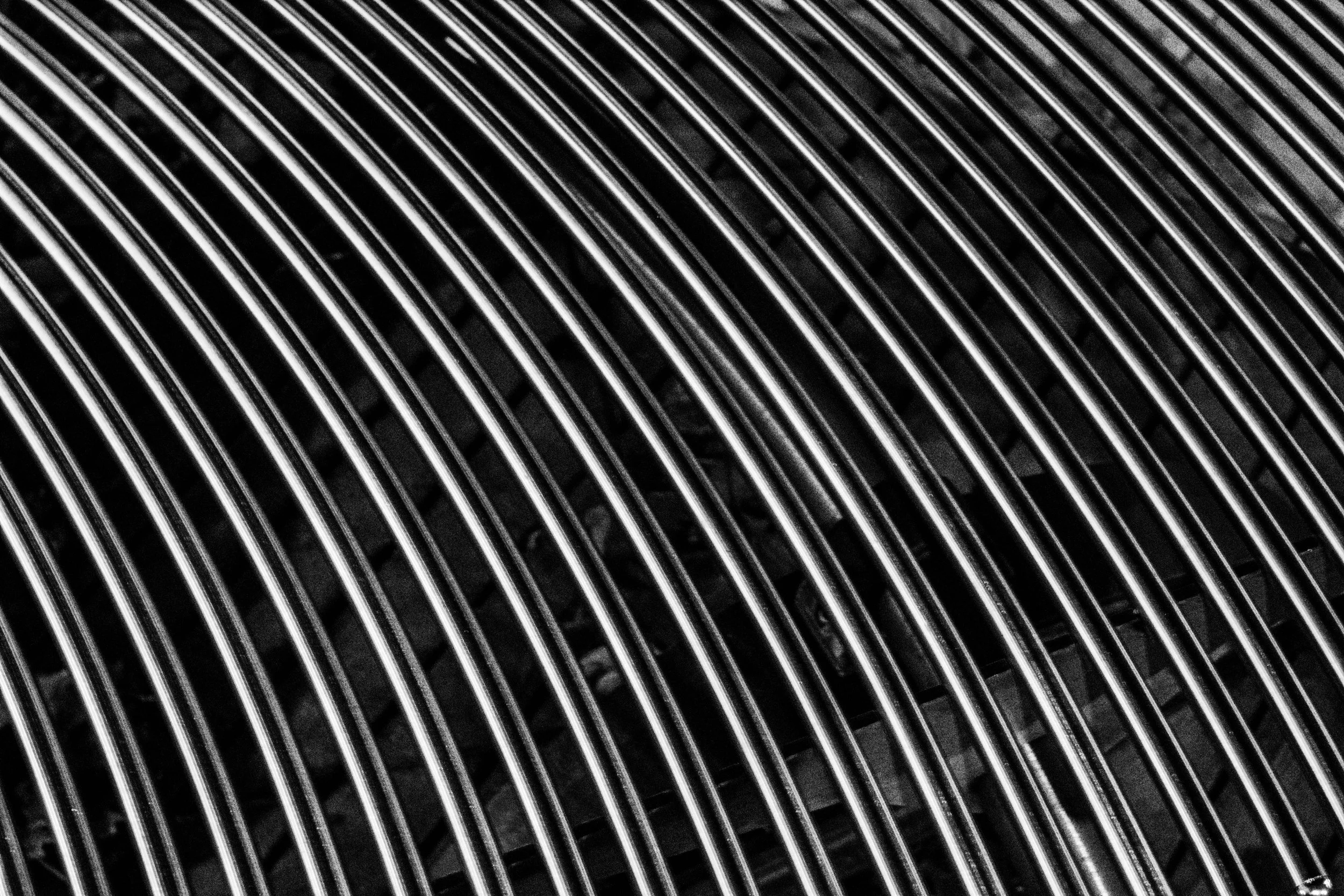
Photography is often taught through compositional rules. The rule of thirds, leading lines, symmetry, negative space and the golden ratio have become familiar concepts for photographers at every stage of their journey. They undoubtedly provide valuable guidance, helping to organise a scene and develop visual awareness. Yet there is also a risk in relying too heavily on these principles: they can suggest that compelling photographs are simply the result of applying a series of formulas. In reality, the images that remain with us rarely do so because they obey a checklist. They endure because they resonate with the way human beings naturally perceive the world. This is precisely where Gestalt psychology offers a deeper perspective.
Developed in the early twentieth century by German psychologists, Gestalt theory investigates how the human mind organises visual information. Rather than processing isolated elements one by one, our perception instinctively searches for relationships, patterns and coherent structures. We do not merely recognise individual objects; we connect them into meaningful wholes. For photographers, this represents an important shift in perspective. Instead of asking how an image should be composed, Gestalt encourages us to consider how it will be experienced. The emphasis moves away from arranging subjects within a frame and towards understanding the invisible mechanisms that guide a viewer's attention.
Several Gestalt principles illustrate this process. The principle of proximity explains why objects positioned close to one another are perceived as belonging together, even when no actual relationship exists. Similarity allows repeated shapes, colours or textures to generate rhythm and visual harmony without requiring identical subjects. Figure and ground determine which elements naturally emerge as the subject of an image and which quietly recede into the background, creating clarity without the need for obvious visual emphasis. Closure enables the observer to mentally complete incomplete forms, while continuity encourages the eye to follow lines and visual pathways almost instinctively. These principles are not compositional tricks or shortcuts; they are reflections of the way perception itself operates.
Understanding Gestalt does not necessarily make a photographer more technical. Instead, it cultivates a greater awareness of how images communicate. Composition gradually becomes less about placing objects in the correct position and more about anticipating the visual and emotional journey of the observer. The frame is no longer organised solely according to aesthetic conventions but shaped with an understanding of how the mind naturally constructs meaning.
Interestingly, many experienced photographers apply these principles without consciously thinking about them. Years of observation and practice transform theoretical knowledge into intuition, allowing decisions to emerge almost instinctively. At this stage, the camera becomes less a device for applying compositional rules and more an extension of perception itself. This is perhaps the greatest strength of Gestalt: it does not replace creativity or prescribe a particular style. Instead, it helps explain the subtle dialogue that takes place between an image and the person looking at it.
For photographers working within contemporary, conceptual or fine art photography, this understanding becomes particularly valuable. Such images often communicate through ambiguity rather than explicit narrative, inviting viewers to establish their own connections between forms, spaces and symbols. The photograph succeeds not because every meaning is clearly stated, but because perception actively participates in constructing those meanings. Gestalt therefore becomes something far richer than another set of compositional guidelines. It offers a deeper understanding of visual language itself.
Every photographer gradually develops a personal visual vocabulary. Some are drawn to silence and minimalism, others to complexity, rhythm or abstraction. Whatever the direction, understanding the principles of perception allows these choices to become deliberate rather than accidental. Ultimately, photography is not simply about recording reality as it appears before the lens. It is about shaping the way that reality will be perceived. This is why Gestalt remains as relevant today as it was more than a century ago—not because it teaches us how to compose better photographs, but because it reminds us that every image begins long before the shutter is released and continues to evolve within the mind of the person who observes it.