The Life of a Fine Art Print
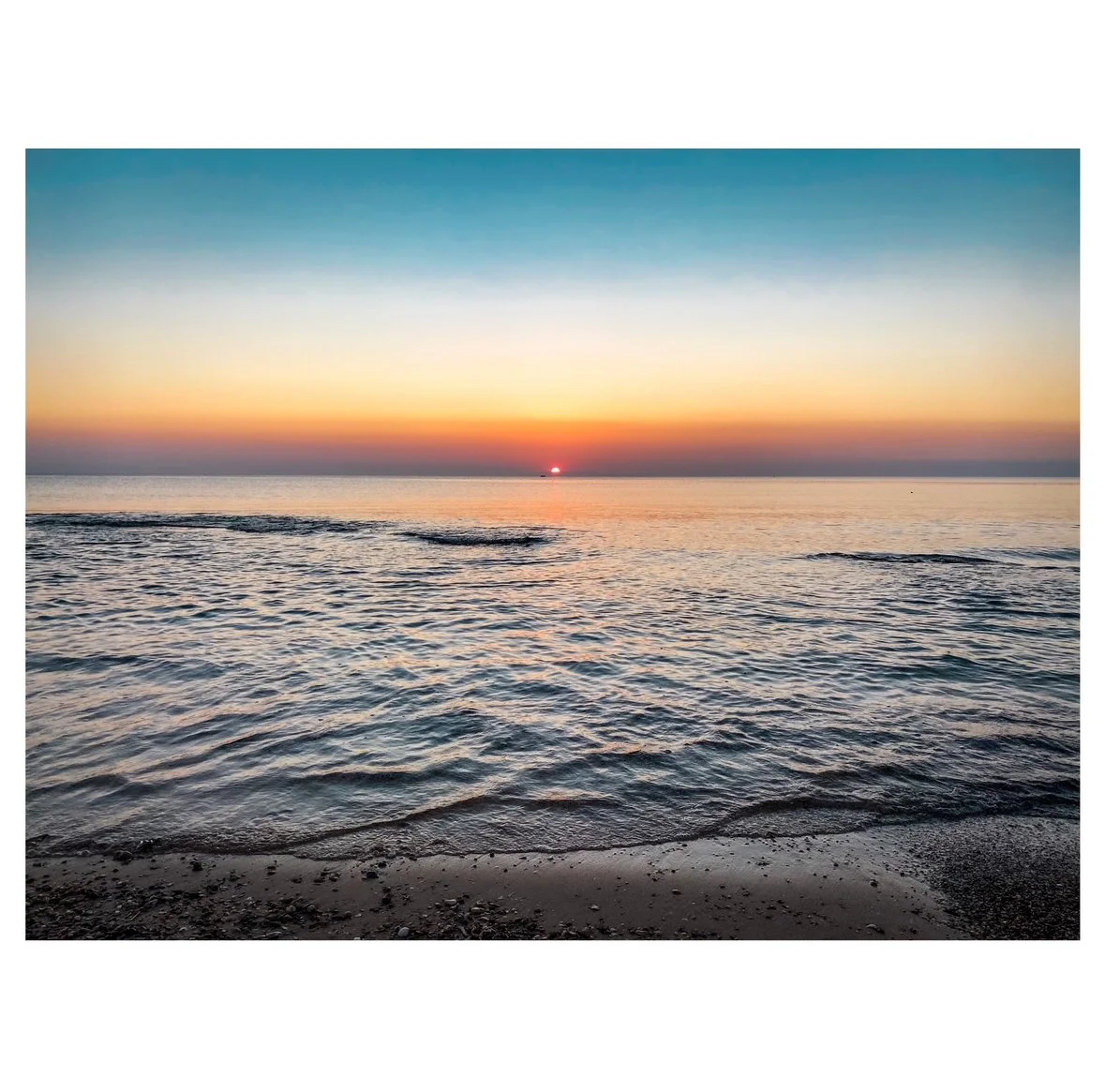
sunset by the sea
In an age where millions of photographs are created every day, it has become increasingly common to think of an image as something temporary. A photograph is captured, shared on social media, viewed for a few seconds and quickly replaced by the next. Yet fine art photography follows a completely different path. Long before it becomes a print hanging on a wall, every image begins as an idea, gradually evolving through observation, experimentation and careful decision-making. The finished print is therefore not simply a reproduction of a photograph, but the final stage of a creative process that often starts long before the shutter is released.
Every fine art print begins with a question rather than an answer. Some projects emerge from a visual intuition, others from a recurring symbol, an architectural detail or an emotional experience that refuses to disappear. The camera records only one moment within a much larger journey. Contemporary photography is rarely about documenting reality exactly as it appears. Instead, it transforms observation into interpretation, allowing the photographer to build a personal visual language through composition, light, timing and symbolism.
Once the image has been created, another equally important phase begins: selection. Contrary to popular belief, photographers rarely choose the technically perfect photograph. They choose the one that best represents the idea behind the project. A successful body of work depends not on quantity but on coherence. This is why editing remains one of the most creative stages of photography. Every image included strengthens the visual narrative, while every excluded photograph helps maintain its clarity.
Only after this process does printing become relevant. A fine art print is not simply a larger version of a digital file. It is a physical object designed to preserve both the visual qualities and the longevity of the artwork. Professional photographers carefully consider paper texture, surface finish, tonal range and archival permanence before producing a final print. Museum-quality papers, pigment-based inks and colour-managed workflows ensure that the image remains stable for decades while preserving subtle details that are often invisible on digital screens.
Material choice significantly influences how a photograph is perceived. A matte cotton paper creates a different emotional response from a glossy photographic surface. Soft textures absorb light and encourage slower observation, while smoother papers enhance contrast and sharpness. These decisions are never purely technical. They become part of the artistic language itself, shaping the relationship between the photograph and the viewer.
Presentation is equally important. Limited editions, certificates of authenticity, signed prints and carefully considered formats all contribute to transforming a photograph into a collectable artwork rather than a simple decorative image. Collectors do not only acquire a picture; they acquire a fragment of a wider artistic research. Knowing that an image belongs to a coherent project, accompanied by editorial publications, photographic books or curated portfolios, enriches its cultural and emotional value.
Ironically, the final print often represents the slowest stage within the entire photographic process. In a world dominated by instant digital consumption, the physical print asks for time. It invites the viewer to stop, observe details, appreciate texture and establish a more personal relationship with the image. Unlike a photograph viewed for a few seconds on a smartphone, a fine art print becomes part of a living space. It changes with natural light, accompanies everyday life and gradually reveals new details over months and years.
This permanence explains why printed photography continues to maintain such a significant role within contemporary art despite the growth of digital media. Screens display images. Prints preserve experiences. They transform visual ideas into tangible objects capable of surviving technological change and remaining meaningful across generations.
Ultimately, the life of a fine art print is not defined by the moment it leaves the printer. That is only the beginning of a new journey. The photograph now belongs to someone else's environment, where it will continue to generate interpretations, memories and emotions impossible to predict. Perhaps this is the greatest difference between a digital photograph and a fine art print. One is designed to be consumed quickly. The other is created to remain.