One Year of Weekly Writing: What Photography Taught Me Beyond the Camera
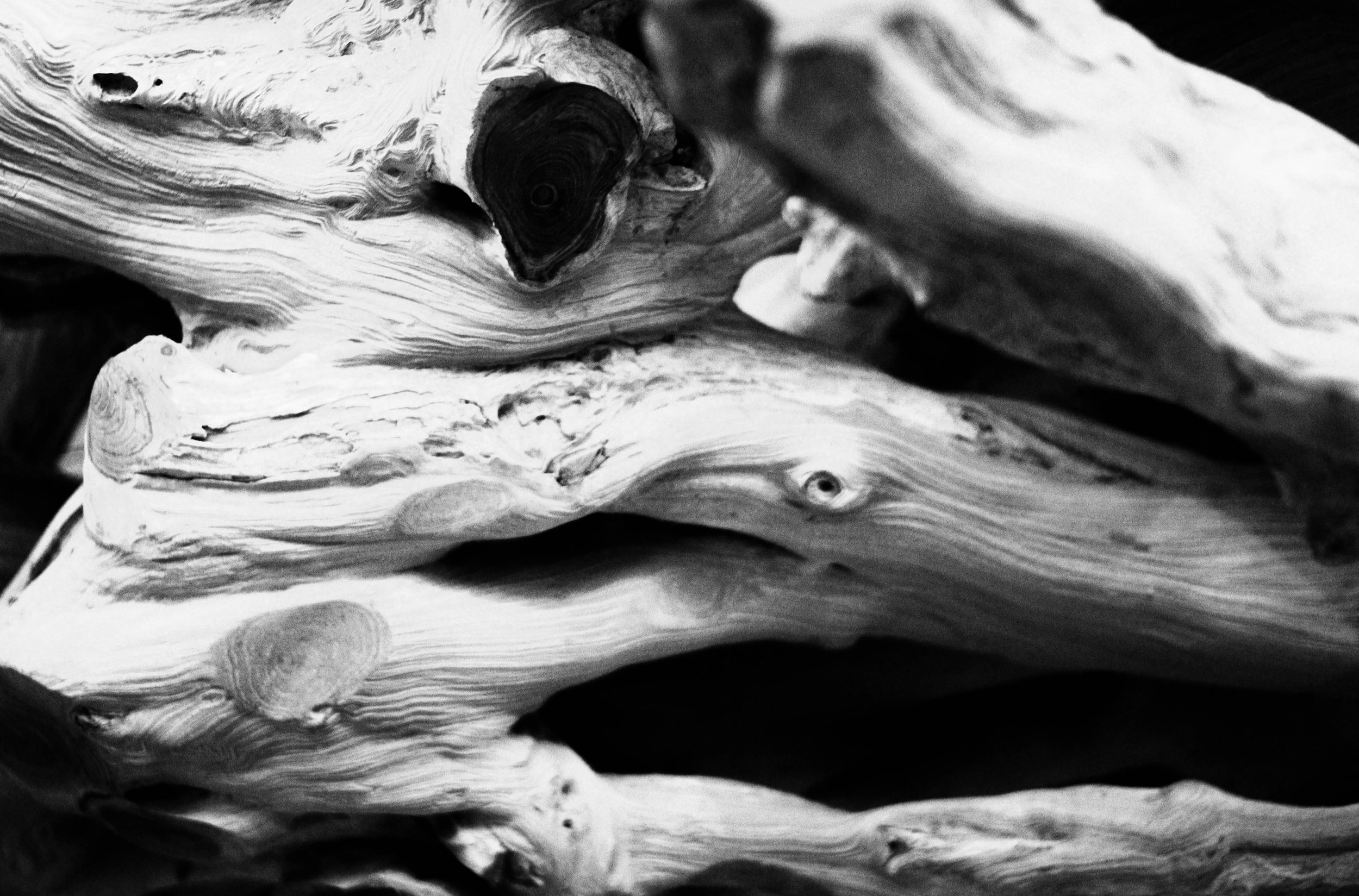
Fine art photographs of dry tree trunks
One year ago, this Journal began with a simple purpose: to talk about photography. The first article explored how to choose fine art photography prints for interior spaces, introducing ideas about visual harmony, materials and the relationship between photographs and the environments they inhabit. At the time, it felt like the beginning of a conversation. Looking back today, after more than fifty weekly articles, I realise that something unexpected happened along the way. This Journal gradually stopped being a place where I explained photography. Instead, it became a place where photography quietly explained something to me.
Writing every week is a discipline that leaves very little room for shortcuts. Inspiration can help, but consistency matters more. Some Mondays begin with a clear idea, while others start with an empty page and a single question: what is still worth saying? Surprisingly, the answer has rarely come from searching for new subjects. It has come from looking more carefully at familiar ones. Photography, after all, is built on the same principle. The world rarely changes overnight. What changes is the way we learn to observe it.
Throughout this first year, the Journal explored many different themes. Composition, visual perception, Gestalt theory, storytelling, fine art printing, archival papers, photographic projects, authorship, books, collecting and the relationship between images and space. At first glance these may appear to be separate topics, yet they all revolve around a single idea: photography is not merely about making pictures. It is about building meaning.
Perhaps this has been the greatest lesson of the past twelve months. A photograph does not begin when the shutter is pressed, nor does it end when the editing is complete. Images continue to evolve through sequencing, printing, publishing and sharing. A photograph can become part of a book, a fine art print, an exhibition, a visual essay or an ongoing body of work. Every new context expands its meaning without changing its essence.
This realisation also changed the way I think about authorship. Technical skills remain essential, but they are only the starting point. Cameras improve every year, software becomes more sophisticated and artificial intelligence generates increasingly convincing images. Yet none of these developments replace the one element that remains entirely human: perspective. Two photographers can stand in the same place, use the same equipment and photograph the same subject. The resulting images will never be identical because vision cannot be standardised.
Writing every week reinforced another important idea. Photography and language share more similarities than I once imagined. Both require editing. Both depend on rhythm, balance and clarity. Every unnecessary word weakens a paragraph just as every unnecessary photograph weakens a project. Learning to remove has become just as important as learning to create.
Interestingly, the Journal also transformed the way I approach my own work. Instead of seeing photographs as isolated images, I increasingly began thinking in terms of projects. Books, editorial booklets, parallel series and thematic collections gradually became natural extensions of the photographic process. A single image can be powerful, but a coherent body of work allows ideas to breathe, evolve and establish deeper connections with those who experience them.
Perhaps this explains why printed photography continues to fascinate me. Screens are temporary by nature. They constantly invite us to move on. A book or a fine art print does the opposite. It asks us to slow down. To return. To observe again. In an increasingly fast digital world, permanence has quietly become a form of resistance.
Looking back, I realise that this Journal was never simply about sharing knowledge. It became a record of a creative journey still very much in progress. Every article captured a small fragment of an evolving vision, sometimes answering questions, sometimes generating new ones. There is comfort in recognising that not every thought needs a definitive conclusion. Photography itself rarely offers complete answers. It simply encourages us to keep looking.
After one year of weekly writing, I feel less interested in explaining photography than in continuing to explore it. There are still books to create, projects to develop, prints to produce and places to discover. More importantly, there are still questions worth asking.
Perhaps that is the most valuable lesson photography has taught me beyond the camera.
The journey is never really about finding the final image.
It is about learning to see a little more clearly every step of the way.