The Quiet Power of Abstract Photography in Contemporary Interiors
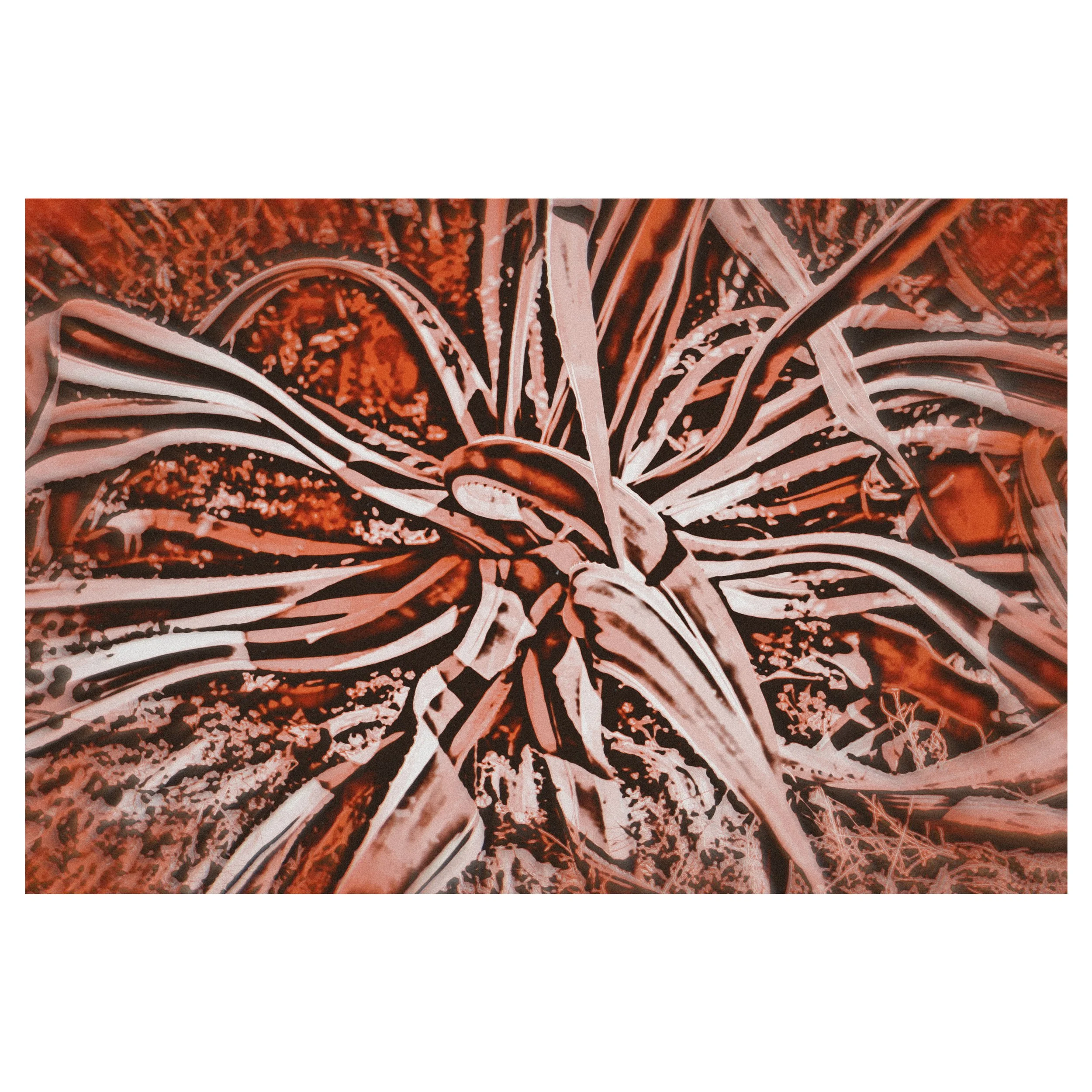
In a visual world increasingly dominated by immediacy, literal meaning, and constant stimulation, abstract photography occupies a quieter, more demanding space. It does not explain itself. It does not ask to be understood immediately. And for this very reason, it has become one of the most powerful visual languages in contemporary and luxury interiors. Abstract photography is not a trend, nor a decorative shortcut. It is a form of visual thinking. When placed within an interior space, it does not simply “fill a wall” but alters the way that space is perceived, lived in, and remembered.
Beyond Representation: Why Abstract Works
Unlike figurative photography, abstract imagery does not anchor the viewer to a specific subject, location, or narrative. There is no place to recognize, no face to interpret, no event to decode. What remains is form, rhythm, tension, balance, and absence. This openness is precisely what makes abstract photography so compatible with contemporary interiors. Modern living spaces are no longer designed merely to host objects; they are environments meant to support moods, identities, and states of mind. Abstract photography functions as a visual pause, allowing inhabitants to project their own emotions rather than consume someone else’s story. In luxury interiors especially, abstraction introduces restraint. It avoids the obvious. It refuses spectacle. And in doing so, it communicates confidence.
Abstraction as a Spatial Tool
Abstract photography interacts with space differently than representational imagery. It does not compete with furniture, architecture, or materials. Instead, it resonates with them. Lines echo architectural structures. Colors converse with surfaces. Empty areas create breathing room in environments often overloaded with design statements. In this sense, abstract photography becomes a spatial tool, not an accessory. It can enlarge a room perceptually, soften rigid geometries, or introduce tension where everything feels too resolved. Interior designers often return to abstract works precisely because of this versatility: one image can live differently in different contexts without losing coherence.
Emotional Neutrality and Emotional Depth
One of the great misunderstandings about abstract photography is that it is “cold” or emotionally detached. In reality, abstraction removes specific emotion in order to make room for personal emotion. A figurative image tells you what to feel. An abstract image asks how you feel. This is particularly relevant in private spaces such as bedrooms, studies, and living rooms. Few people want to wake up facing a stranger’s face or a narrative they did not choose. Abstract photography offers intimacy without intrusion. Presence without imposition.
The Luxury of Time
Abstract photography also demands time. It does not deliver instant gratification. Its meaning unfolds slowly, through repeated encounters. In luxury environments—where quality is defined not by excess but by longevity—this temporal dimension matters. A work that reveals itself over years, rather than minutes, aligns with a mature idea of luxury: one based on experience, not novelty. This is why abstract photographic prints often age better than highly specific images. They do not become dated because they are not tied to a moment, a place, or a visual trend.
Materiality Matters
In abstract photography, the choice of print material is not secondary. Paper texture, surface reflection, tonal depth, and scale all contribute to the final experience. Fine art papers enhance subtle transitions and micro-contrasts. Matte surfaces reduce distraction and invite proximity. Large formats allow the viewer to enter the image physically rather than observe it from a distance. When abstraction meets high-quality printing, the photograph becomes less an image and more an object—something that occupies space with intention.
Abstract Photography as Identity
Choosing abstract photography for an interior is not a neutral act. It is a declaration of openness, curiosity, and self-awareness. It signals a willingness to live with ambiguity. To accept that not everything needs to be explained. To value atmosphere over instruction. In this sense, abstract photography does not decorate a space; it defines it. In contemporary interiors, especially those aspiring to timelessness rather than trendiness, abstract photography offers something rare: silence with depth. It does not shout. It does not persuade. It remains. And in remaining, it transforms the space around it—quietly, continuously, and profoundly.
If this visual language speaks to your space, you can explore more works.