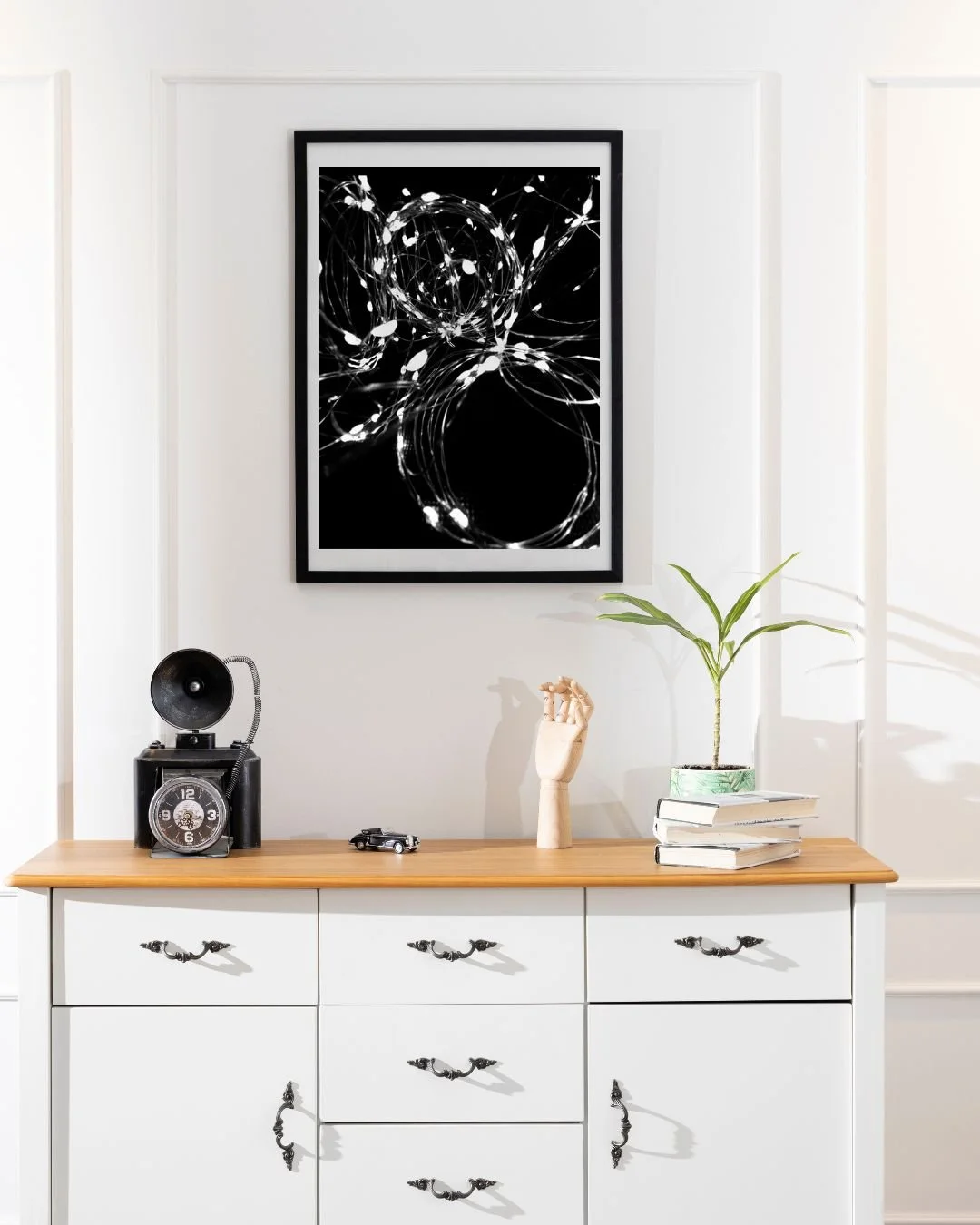
A photograph does more than occupy a wall. Placed within an interior, an image becomes part of the space around it. It interacts with light, architecture, furniture and empty space. It can create a pause, introduce tension, alter a sense of scale or simply change the way a room feels. This is why choosing a photographic print for an interior is not only a matter of decoration. It is a matter of perception.
An image becomes part of the room.
When we look at a photograph on a screen, we experience it almost entirely as an image. When the same photograph becomes a physical print, the experience changes. Its size becomes tangible. Its surface catches the light. The distance from which we see it changes our perception. The wall around it becomes part of the composition. A photograph therefore does not exist independently of its surroundings. It becomes one of the elements that define the visual character of a room. The relationship between image and space can be subtle. Sometimes the photograph blends naturally into its surroundings. At other times, contrast is what makes it work. The strongest choice is not necessarily the one that matches the furniture. It may be the one that creates a new relationship with it.
Scale changes perception.
A small photograph can invite a close and intimate reading. A larger print can become architectural in itself, changing the rhythm of a wall and influencing the perception of the entire room. Scale is therefore not simply a technical decision. It is part of the meaning of the image. A photograph with a quiet composition may gain strength when given generous space around it. Conversely, a highly structured or detailed image can create a stronger visual presence when its dimensions correspond to the scale of the architecture. There is no universal formula. The relationship between the image and the room has to be considered as a whole.
The importance of empty space.
One of the most overlooked elements in an interior is empty space. We often think about what should be added to a room, but not about what should remain untouched. The same principle applies to photography. An image surrounded by visual breathing room can feel completely different from the same image placed among numerous objects. The wall becomes part of the composition, and the distance between the photograph and everything around it becomes meaningful. Sometimes the photograph needs space to speak. Sometimes it needs to interrupt the space. Both possibilities can work.
Light is part of the photograph.
Natural and artificial light constantly change the relationship between an artwork and its surroundings. During the day, a print may appear softer or more luminous. In the evening, directional lighting can emphasise texture, contrast or colour. This is particularly important with fine art photography, where the physical characteristics of the print contribute to the experience of the image. The photograph is no longer simply something we look at. It becomes something we encounter under changing conditions.
Beyond matching.
Interior decoration often encourages us to look for harmony: colours that match, materials that complement each other, objects that belong to the same visual language. Photography can work differently. A strong photographic work does not necessarily need to match an interior. It can introduce another visual language. A monochrome image can interrupt a colourful room. An abstract photograph can create a counterpoint to an ordered architectural space. A quiet image can slow down a visually busy interior. Contrast can create harmony too. The goal is not to make the photograph disappear into the room. It is to create a relationship between the two.
Living with an image.
Perhaps the most important difference between viewing photography online and living with a photographic print is time. A digital image is often encountered for a few seconds before we move on. A print remains. We pass it every day. We notice it in different light. Sometimes it disappears into the background; sometimes, months later, we suddenly see something in it that we had never noticed before. This is one of the reasons I believe photography still has an important place within physical spaces. A photographic print does not simply decorate a room. It becomes part of its atmosphere and, eventually, part of its memory.
Image and space.
For me, photography has always existed somewhere between image and space. The photograph itself is only one part of the experience. The wall, the architecture, the light, the distance and the viewer all contribute to what the image becomes. This is why a photographic print should not be considered merely as an object to fill an empty wall. It is an encounter between an image and a place. And sometimes, the right photograph does not complete a room.
It changes it.